

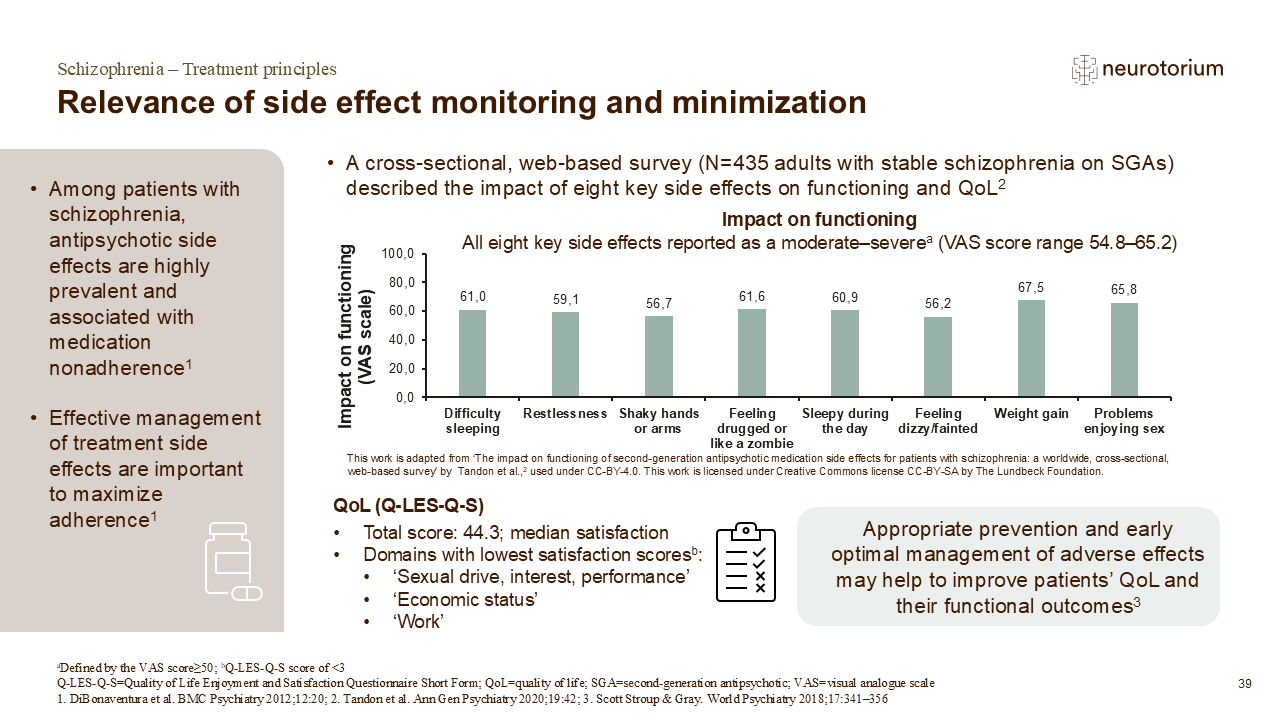
The cross-sectional, web-based survey was distributed across the US, Canada, Australia, Spain, Italy, Norway and Denmark.2 The survey included sociodemographic and clinical questions, the Q-LES-Q-S, and the Glasgow Antipsychotic Side-Effect Scale.2 Eight pre-defined key side effects classified as activating (‘Shaky hands or arms,’ ‘Restlessness’ and ‘Difficulty sleeping’), sedating (‘Sleepy during the day’, ‘Feeling drugged or like a zombie’ and ‘Feeling dizzy/Fainted’) or other side effects (‘Problems enjoying sex’ and ‘Weight gain’), and additional questions related to impacts on function and QoL were included.2
The most prevalent side effects were ‘Sleepy during the day’ (83.2%), ‘Difficulty sleeping’ (74.7%), ‘Dry mouth’ (63.9%), ‘Problems enjoying sex’ (53.4%) and ‘Gaining weight’ (52.4%).2
Abbreviations:
Q-LES-Q-S=Quality of Life Enjoyment and Satisfaction Questionnaire Short Form; QoL=quality of life
References: