

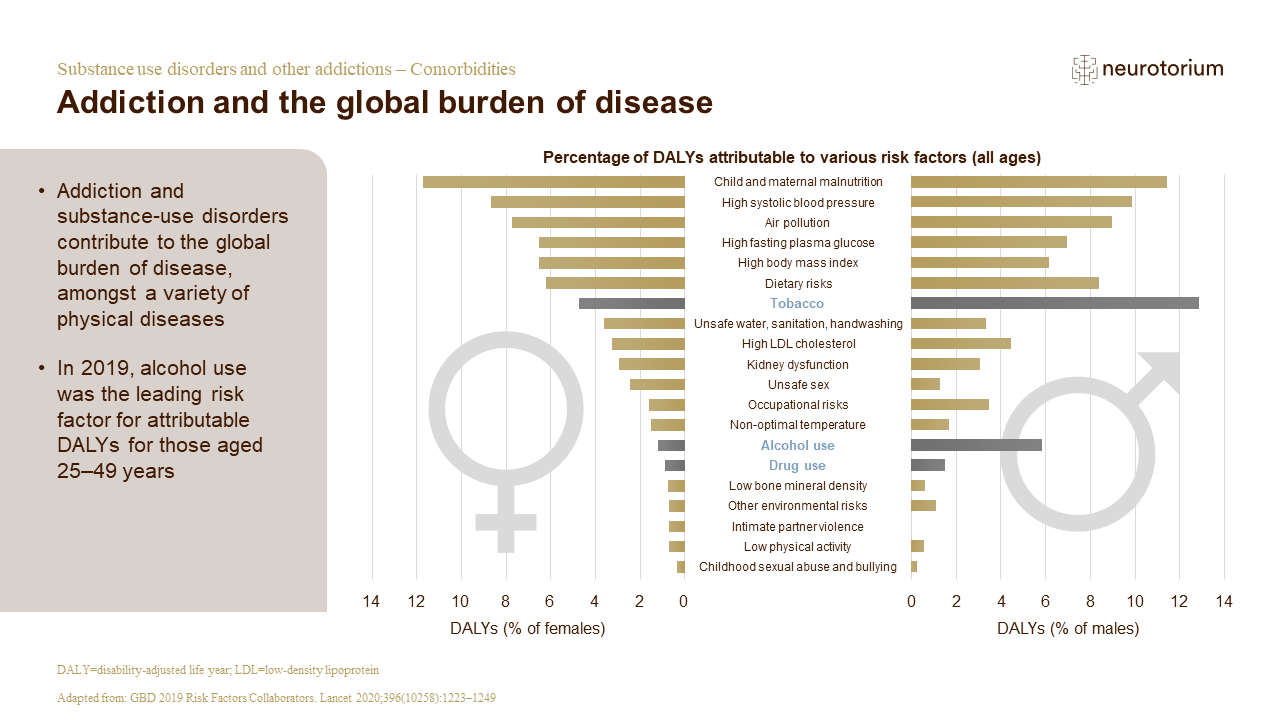
The slide shows the health burden of various diseases from the Global Burden of Disease studies, as measured in disability-adjusted life years (DALYs), which represent the loss of the equivalent of one year of full health.[3] The results of the Global Burden of Disease studies, and more comprehensive analyses focusing on alcohol consumption specifically, have demonstrated the burden that addiction and substance-use disorders place on global health.[2,3] Some have argued that the weight of evidence now available demonstrates that there is no ‘safe’ level of alcohol consumption – that small reductions in specific health harms at low levels of consumption are outweighed by increased risks of other harms.[1] This conclusion is a challenge to policy makers, who must balance this health burden against other considerations.
References:
[1] Burton R, Sheron N. No level of alcohol consumption improves health. Lancet. 2018; 392 (10152): 987–988.