

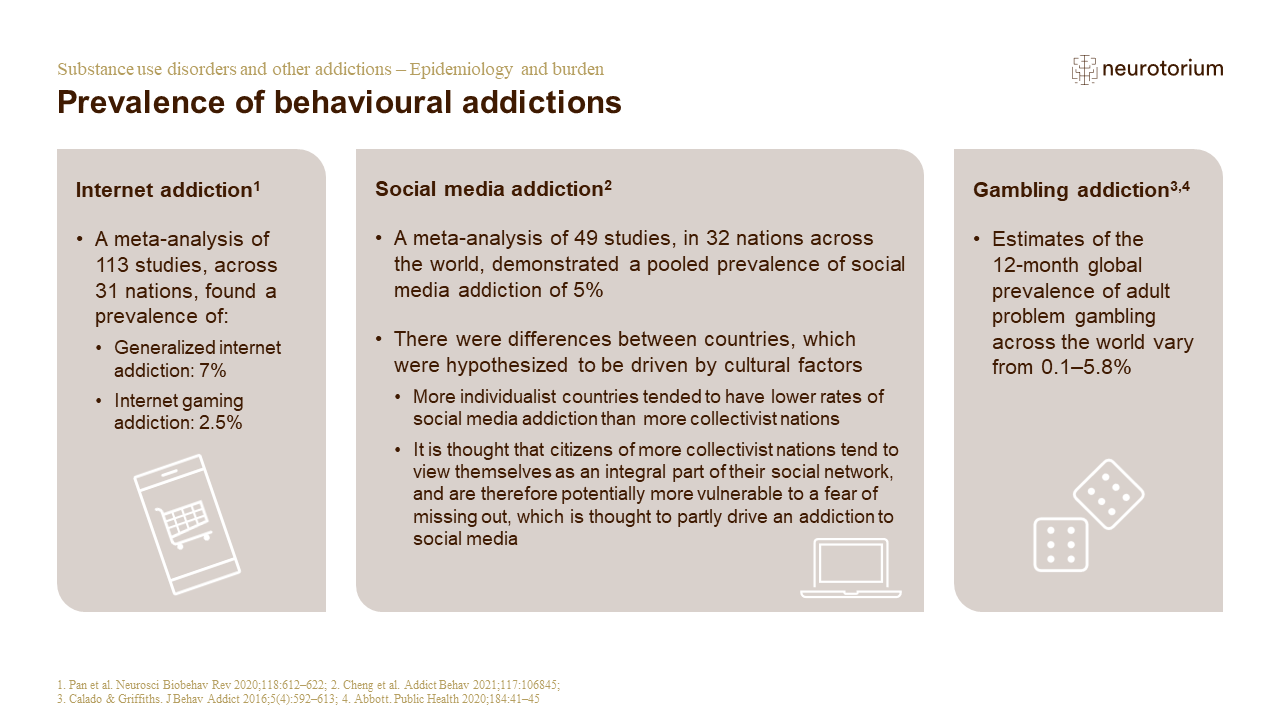
As outlined on the slide, meta-analyses of internet, gaming, and social media addiction have estimated that the prevalence of these addictions ranges from 2.5–7% of the population.[1,2] Most national surveys conclude that the majority of the population have at some point gambled during their lives; however, the estimates of the prevalence of gambling addiction and problem gambling vary widely, driven by differences in methodology and differences in screening techniques.[3,4] Some have argued that the increase in the availability of gambling services (e.g., via the expansion of online gambling platforms), and the ensuing harms from problem gambling, require a public-health response from policymakers.[4]
References:
[1] Pan YC, Chiu YC, Lin YH. Systematic review and meta-analysis of epidemiology of internet addiction. Neurosci Biobehav Rev 2020; 118: 612–622.