

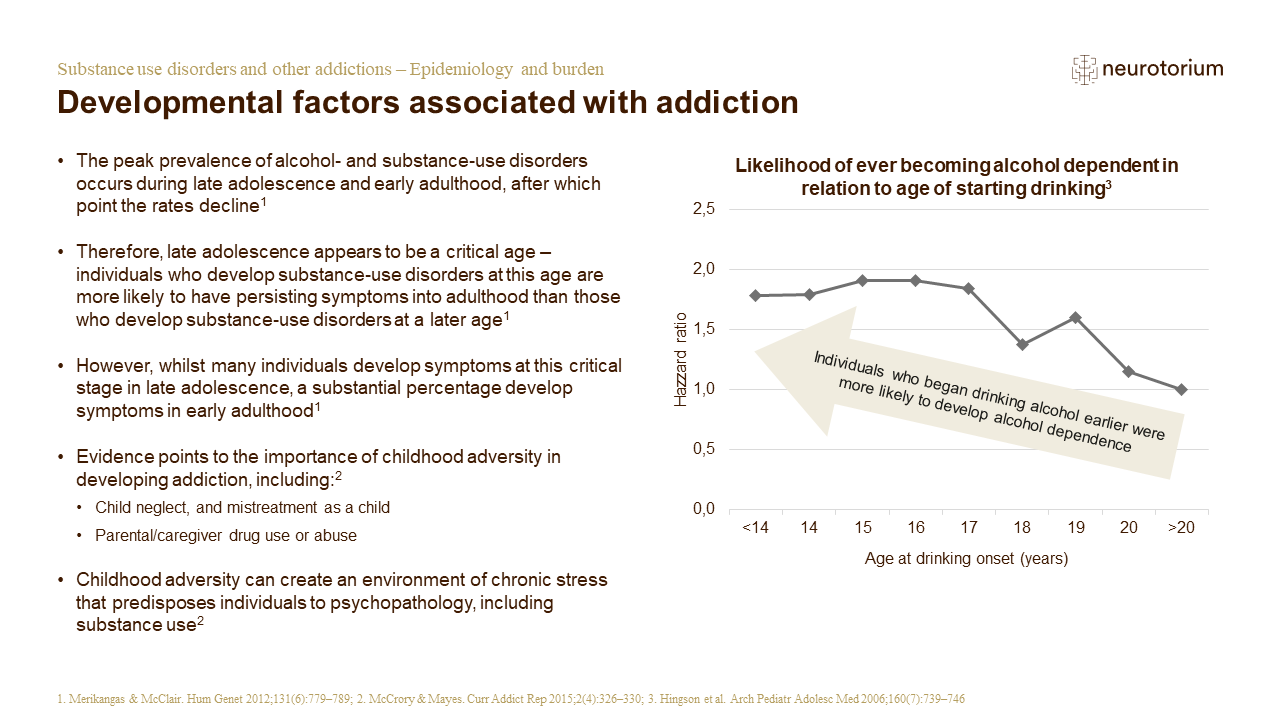
As outlined on the slide, adolescence is a critical age for the development of addiction in many people with substance-use disorders.[1] One of the key influences at that age is the influence of parents, and there are some developmental theories about how parental substance-use can affect children.[2] There is good evidence that the stress and reward circuitry in the brains of individuals with substance-use disorders and addictions are dysregulated by exposure to drugs.[2] This means that people with addiction might find caring for children and parenting itself less rewarding, which would have a detrimental effect on their children.[2] Therefore it is potentially not just pre-natal substance use that can be detrimental to child development, but post-natal substance use as well.[2]
References:
[1] Merikangas KR, McClair VL. Epidemiology of substance use disorders. Hum Genet 2012; 131 (6): 779–789.