

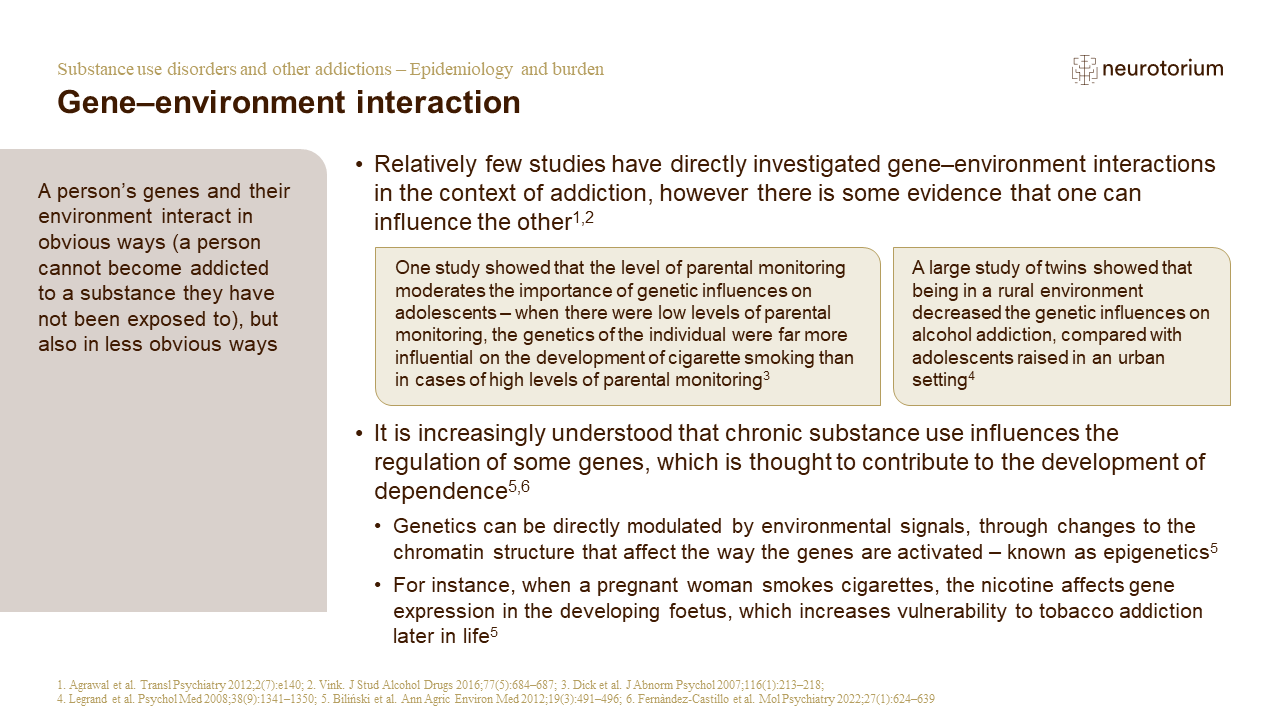
Genes alone do not determine whether a person develops an addiction or not – their environment plays a key role as well.[2] As outlined on the slide, there is some evidence that genetics and environment interact in the development of addiction.[2,5,6] Complicating the picture yet further, genetics and environment may exert stronger or weaker influences depending on the age of the individual.[7] An analysis of twin data from the Virginia Adult Twin Study of Psychiatric and Substance Use Disorders (VATSPSUD) cohort suggests that, in the development of addictions, social environmental factors are most important in adolescence, after which point genetic influences become more and more important into adulthood.[7]
References:
[1] Agrawal A, Verweij KJH, Gillespie NA, et al. The genetics of addiction – a translational perspective. Transl Psychiatry 2012; 2 (7): e140.
[4] Legrand LN, Keyes M, McGue M, et al. Rural environments reduce the genetic influence on adolescent substance use and rule-breaking behavior. Psychol Med 2008; 38 (9): 1341–1350.
[5] Biliński P, Wojtyła A, Kapka-Skrzypczak L, et al. Epigenetic regulation in drug addiction. Ann Agric Environ Med 2012; 19 (3): 491–496.