

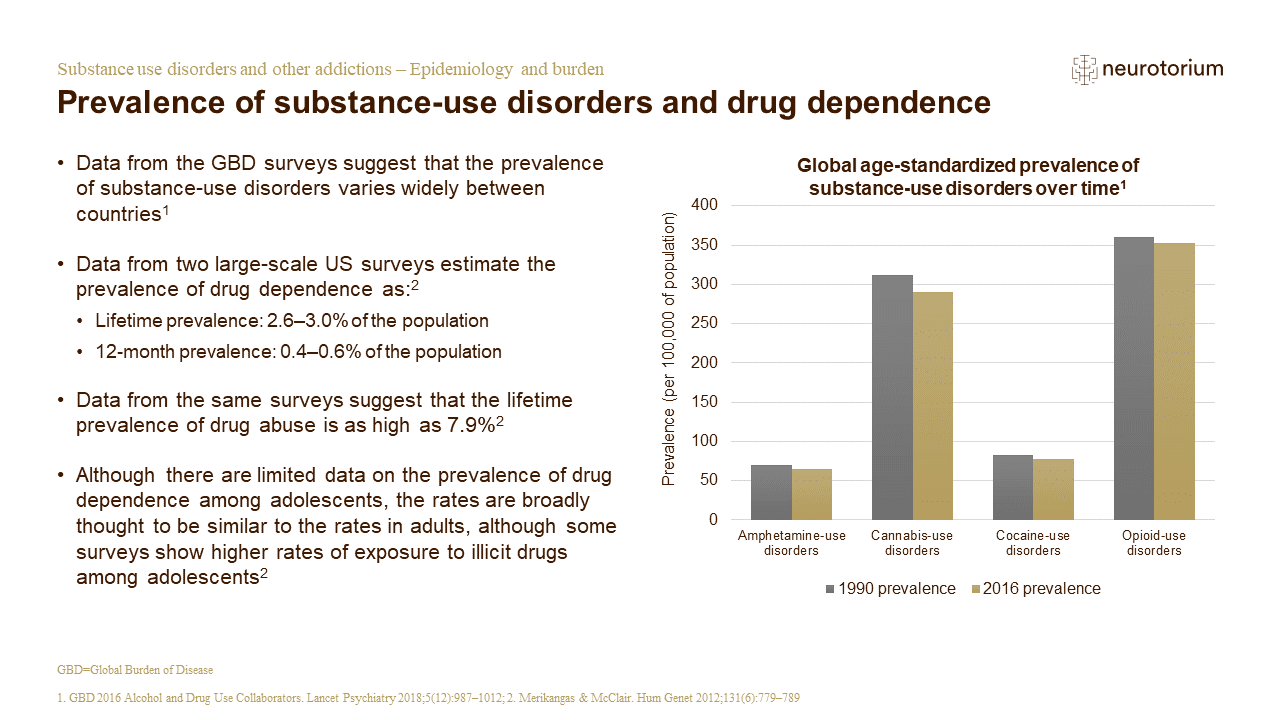
Although alcohol-use disorder is the most common substance-use disorder worldwide, other substance-use disorders are also highly prevalent.[1,2] Data from the GBD surveys show that cannabis dependence and opioid dependence were the most common worldwide, whilst amphetamine dependence and cocaine dependence were less common.[1] Between 1990–2016 the raw prevalence of substance-use disorders mostly increased, although the age-standardized rate per 100,000 of the population mostly decreased.[1] Along with the prevalence, the disease burden of substance-use disorders varied widely across the world.[1]
The office of the Surgeon General of the US published a report in 2016, calling for action on what the report describes as the addiction crisis in the US.[4] Whilst it has been methodologically criticized,[3] the report calls for a public health response to reduce the harms of substance use, akin to the response to the dangers of smoking cigarettes in the last century.[4]