

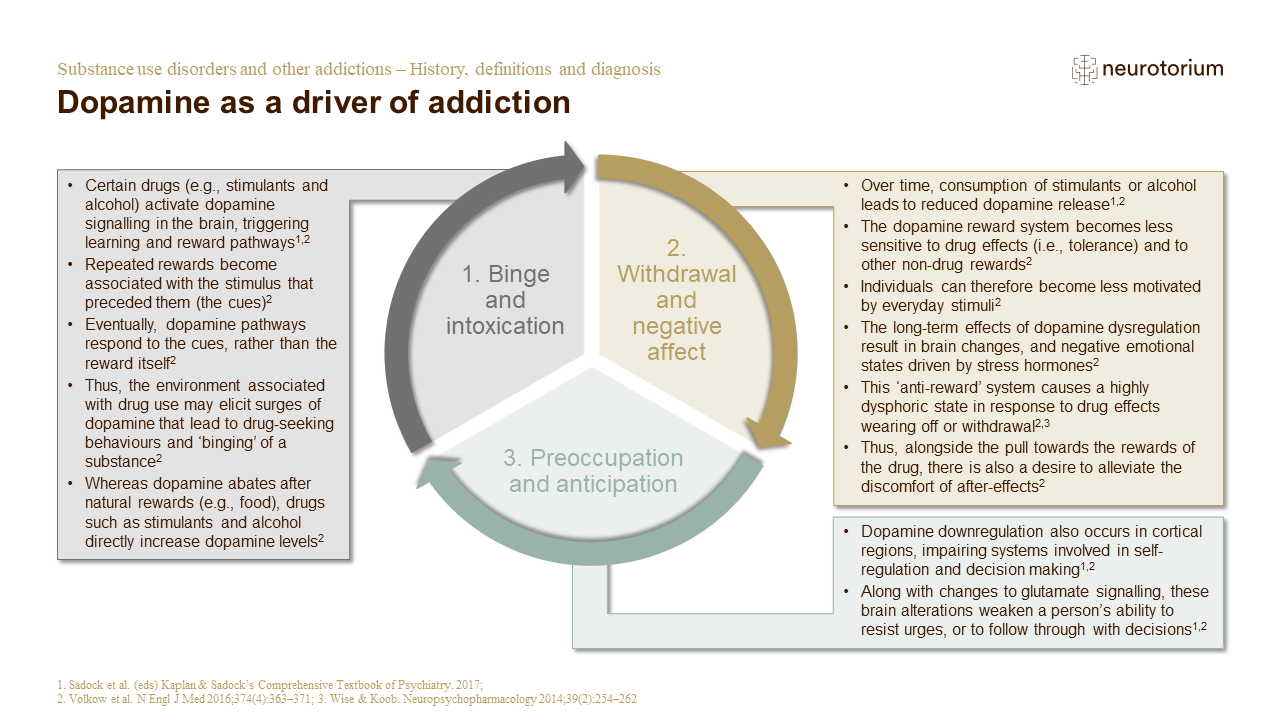
As shown on the slide, over time a person with addiction who starts taking stimulant drugs or alcohol for pleasure experiences brain changes that result in that person needing to taking drugs in order to relieve dysphoria.[1,2,4] The dysphoria and negative affect that come from long-term drug use, and the downregulation of the dopamine system, become deeply ingrained, and cannot be undone by simply stopping drug use.[3] However, it is hoped that with the deepening understanding of these brain changes new therapies for addiction can be designed and developed.[3]
References:
[1] Sadock BJ, Sadock VA, Ruiz P (eds). Kaplan & Sadock’s Comprehensive Textbook of Psychiatry, 10th edition. Wolters Kluwer, 2017.