

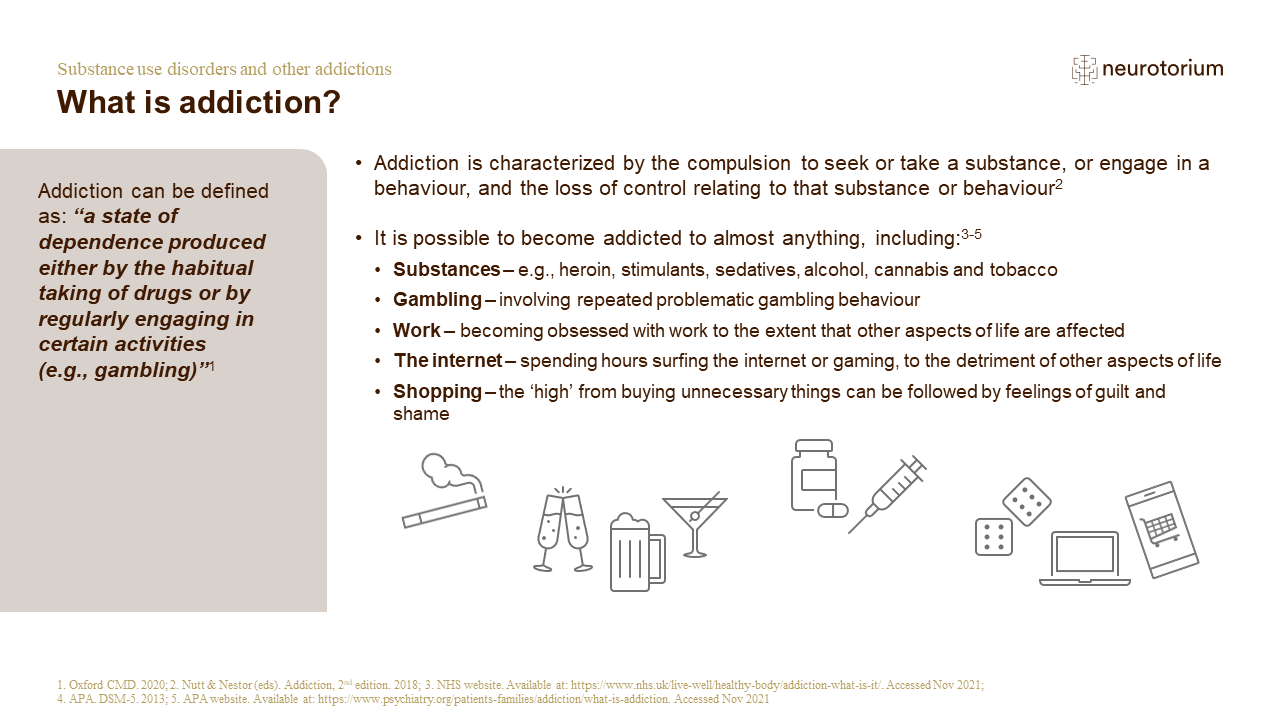
There are many possible reasons that an addiction can develop, but, once developed, an addiction can place considerable strain on an individual and on the people around them.[3,4] An addiction can impact a person’s work life, and relationships, and can have serious psychological effects.[3,4]
Recognising the importance of a clear definition of addiction, the American Society of Addiction Medicine convened a working group to develop a consensus definition.[6] The definition they established was:[6]
Addiction is a treatable, chronic medical disease involving complex interactions among brain circuits, genetics, the environment, and an individual’s life experiences. People with addiction use substances or engage in behaviors that become compulsive and often continue despite harmful consequences.
References:
[1] Oxford Concise Medical Dictionary, 10th edition. Oxford University Press, 2020.
[3] NHS website. Addiction: what is it? Accessed November 2021.
[6] American Society of Addiction Medicine (ASAM). Definition of Addiction. Accessed March 2022.