

The role and importance of dopamine in the rewarding and reinforcing effects of nicotine and cigarette smoking have been well studied.[4,5] Nicotine agonises nicotinic acetylcholine receptors, and increases dopamine signalling.[4,5] However, the importance of neurochemical systems other than the dopamine system has, perhaps, been overlooked.[4] Data from animal studies, and the lack of efficacious dopaminergic therapies, suggest that the neurobiological basis for nicotine addiction is more complicated than dopamine signalling.[4]
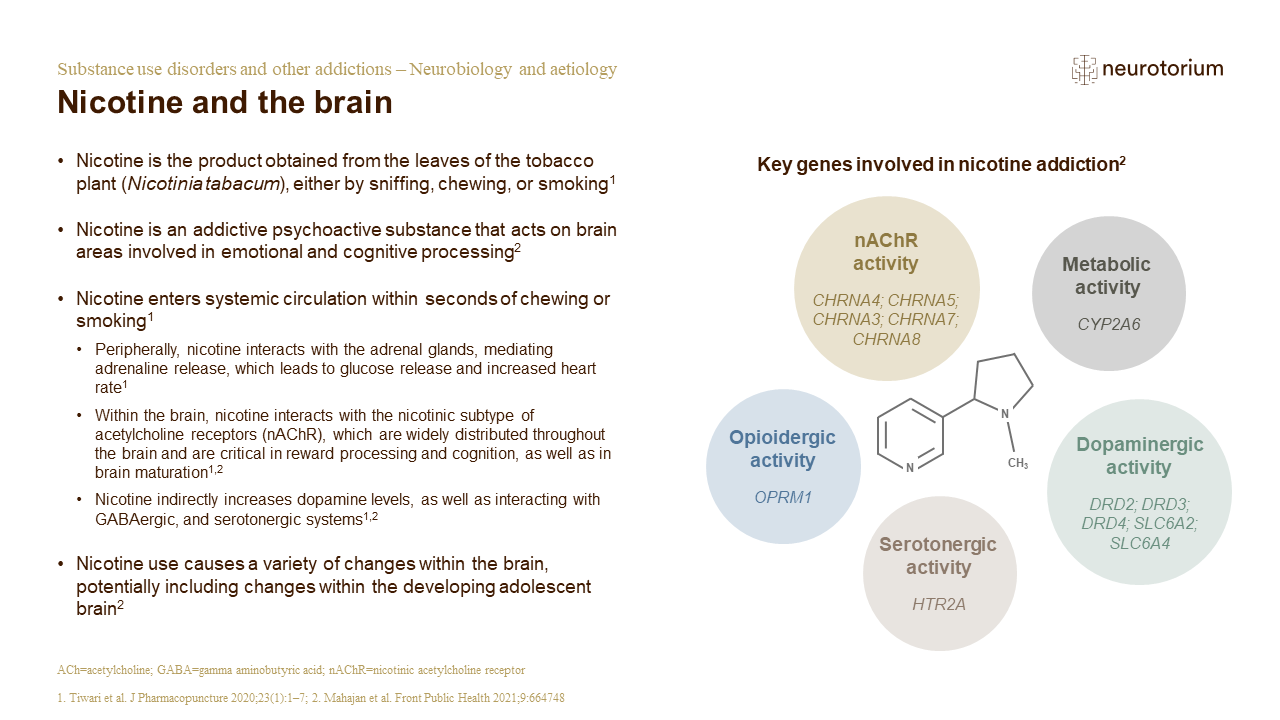
The genetics of nicotine addiction are complex; the figure on the slide shows some of the genes that are linked to nicotine metabolism, and that may mediate the effect of nicotine on the brain by modulating the direct or indirect effect of nicotine on dopamine and endogenous opioid signalling.[2] More research is needed to understand nicotine addiction, and to translate the complicated neurobiology into novel targets for therapy.[4]
References:
[1] Tiwari RK, Sharma V, Pandey RK, Shukla SS. Nicotine addiction: neurobiology and mechanism. J Pharmacopuncture 2020; 23 (1): 1–7.