

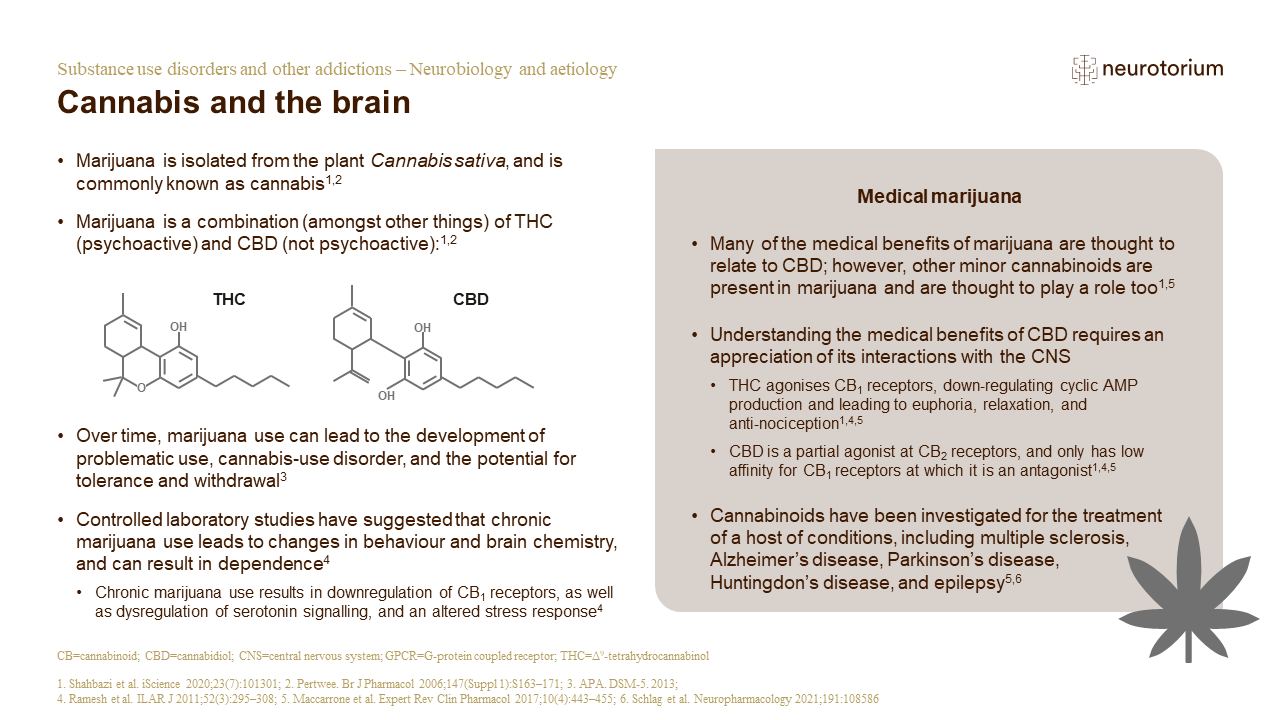
The preparation derived from the cannabis plant is one of the oldest known medicinal plants, thought to have been used for thousands of years.[2] However, pharmacological research into marijuana largely began in the 1940s, which lead to the identification of the cannabinoids in marijuana and of the endogenous cannabinoid system in the brain.[2] Research into cannabis was accelerated, in part, by the increased recreational use of marijuana.[2] Cannabis dependence and withdrawal has been studied in animal models of addiction, as well as in large human population studies and cohort and self-report studies.[4] However, despite the research that has been conducted to date, approved pharmacological treatments for cannabis dependence have not proven forthcoming.[4]
References:
[1] Shahbazi F, Grandi V, Banerjee A, Trant JF. Cannabinoids and cannabinoid receptors: the story so far. iScience 2020; 23 (7): 101301.