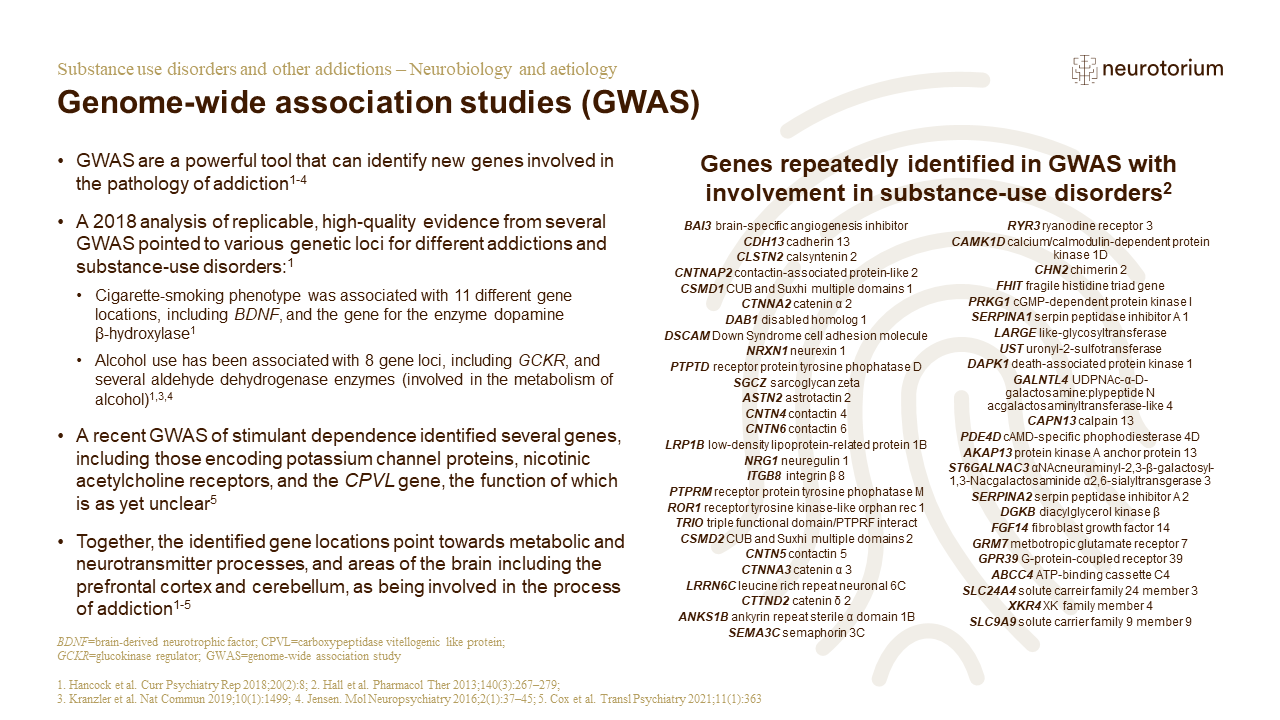
Genome-wide association studies (GWAS), in which whole genomes are compared between large samples of individuals, have opened new avenues to explore in the genetics of addictive disorders.[1] Rather than working from a hypothesis to the genetics, GWAS are a bottom-up, hypothesis-generating method.[1,2]
GWAS in individuals with alcohol- and substance-use disorders point to several interesting genetic loci and potential genes, including those encoding aldehyde dehydrogenase and alcohol dehydrogenase enzymes.[1,3,4,5] Evidence suggests that when individuals have genetic variations that cause changes within the kinetics of the alcohol metabolism pathway, then they can have a flushing reaction (a reddening of the face and neck) on exposure to alcohol.[6] Individuals with such genetic variation appear to be at lower risk of developing alcohol-use disorder.[6]
References:
[1] Hancock DB, Markunas CA, Bierut LJ, Johnson EO. Human genetics of addiction: new insights and future directions. Curr Psychiatry Rep 2018; 20 (2): 8.
[2] Hall FS, Drgonova J, Jain S, Uhl GR. Implications of genome wide association studies for addiction: are our a priori assumptions all wrong? Pharmacol Ther 2013; 140 (3): 267–279.
[3] Kranzler HR, Zhou H, Kember RL, et al. Genome-wide association study of alcohol consumption and use disorder in 274,424 individuals from multiple populations. Nat Commun 2019; 10 (1): 1499.
[4] Jensen KP. A review of genome-wide association studies of stimulant and opioid use disorders. Mol Neuropsychiatry 2016; 2 (1): 37–45.
[5] Cox J, Sherva R, Wetherill L, et al. Genome-wide association study of stimulant dependence. Transl Psychiatry 2021; 11 (1): 363.
[6] Edenberg HJ. The genetics of alcohol metabolism: role of alcohol dehydrogenase and aldehyde dehydrogenase variants. Alcohol Res Health 2007; 30 (1): 5–13.