

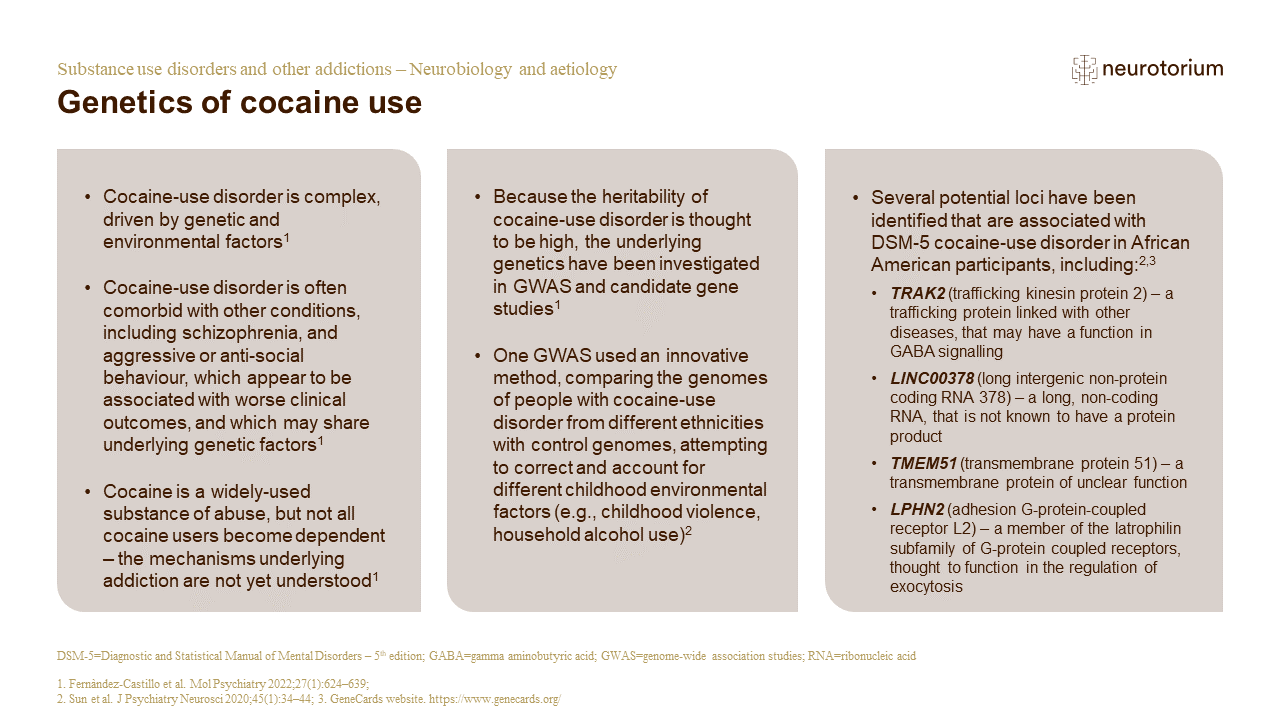
Understanding how an individual’s genetics interact with cocaine use could lead to more effective treatment for cocaine-use disorder.[1] This understanding could be translated into more intelligently designed therapies that target specific components within the disease pathway of cocaine-use disorder, as well as into more personalised treatments.[1] A field of therapy known as pharmacogenetics, wherein an individual’s genetics can be used to pick a therapy that best matches the individual, must driven by detailed understanding of how the genetics of a disorder interacts with other risk and protective factors.[1]
[3] GeneCards website. Available at: https://www.genecards.org/. Accessed March 2022.