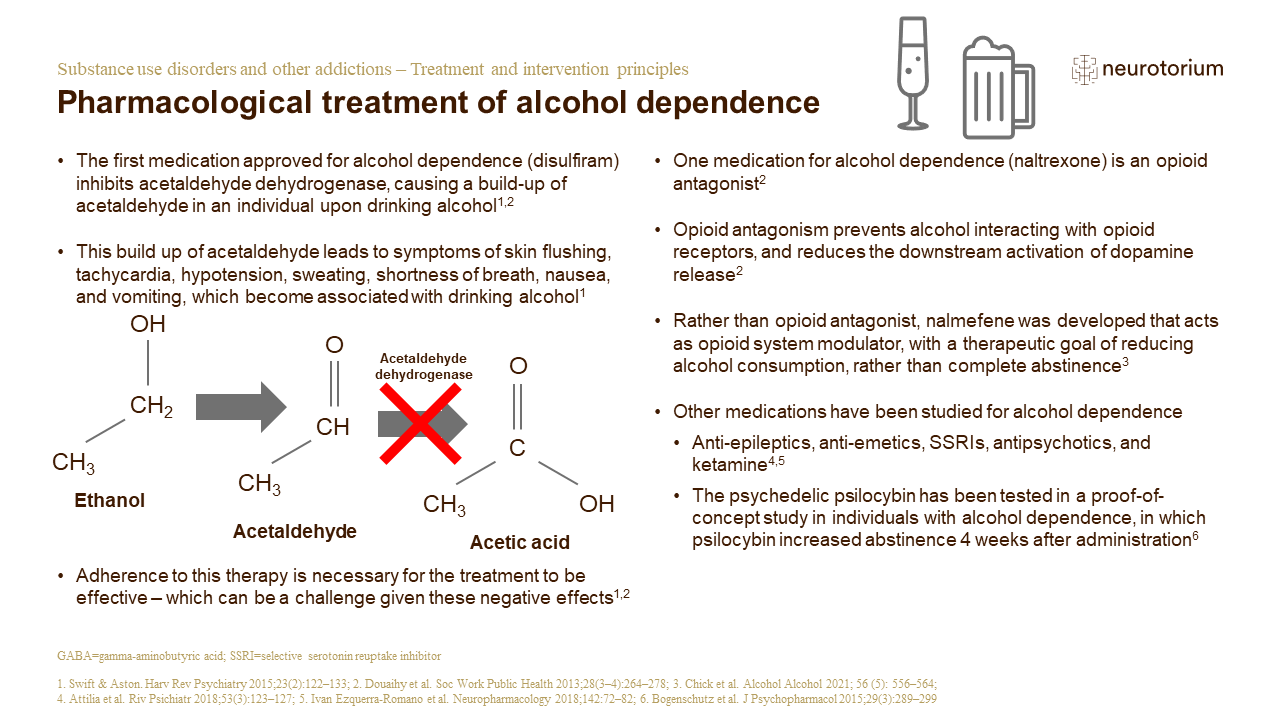
Alcohol-use disorder is a complex disease, with many different factors interacting, including biology, genetics, and the environment.1 The treatment options that are available, can provide benefits over psychotherapy alone.1 A greater understanding of alcohol-use disorder would enable better targeting of specific therapies to specific patient characteristics or genetics, allowing a personalised approach.1
Reference:
[1] Swift RM, Aston ER. Pharmacotherapy for alcohol use disorder: current and emerging therapies. Harv Rev Psychiatry 2015; 23 (2): 122–133.
[2] Douaihy AB, Kelly TM, Sullivan C. Medications for substance use disorders. Soc Work Public Health 2013; 28 (3–4): 264–278.
[3] Chick J, Andersohn F, Guillo S, et al. Safety and persistence of nalmefene treatment for alcohol dependence. Results from two post-authorisation safety studies. Alcohol Alcohol 2021; 56 (5): 556–564.
[4] Attilia F, Perciballi R, Rotondo C, et al.; Interdisciplinary Study Group CRARL, SITAC, SIPaD, SITD, SIPDip. Pharmacological treatment of alcohol use disorder. Scientific evidence. Riv Psichiatr 2018; 53 (3): 123–127.
[5] Ivan Ezquerra-Romano I, Lawn W, Krupitsky E, Morgan CJA. Ketamine for the treatment of addiction: evidence and potential mechanisms. Neuropharmacology 2018; 142: 72–82.
[6] Bogenschutz MP, Forcehimes AA, Pommy JA, et al. Psilocybin-assisted treatment for alcohol dependence: a proof-of-concept study. J Psychopharmacol 2015; 29 (3): 289–299.