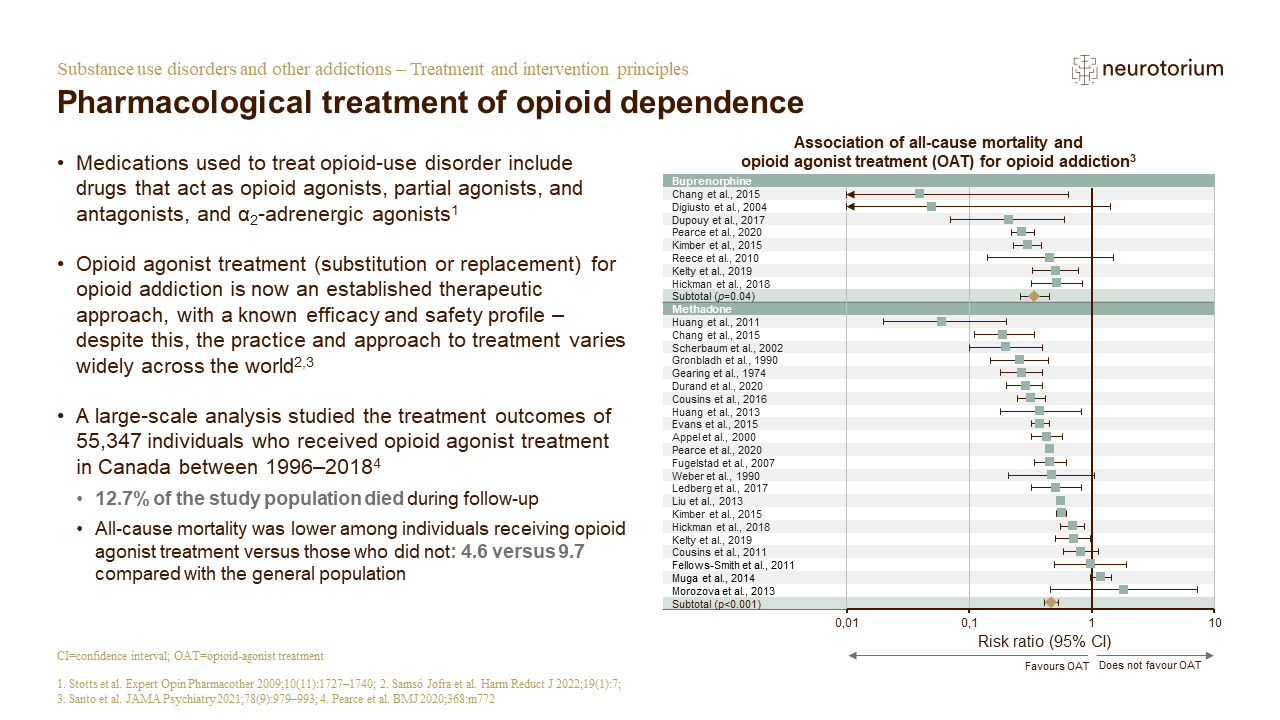
Studies have shown that the risk of death in individuals with opioid-use disorder is substantially reduced by the use of opioid agonist treatment.3,4 The Canadian study outlined on the slide was a retrospective cohort study using several databases across British Columbia, Canada, including patients seen between 1st January 1996 and 30th September 2018.4 Individuals receiving opioid agonist treatment were identified based on the presence of ≥1 prescription for an opioid agonist.4 The authors recognise that the landscape of opioid abuse changed within the 22-year timeframe of the study, including the proliferation of fentanyl.4 Indeed, the presence of illicitly distributed fentanyl and other potent synthetic opioids increased the risk of mortality among individuals with opioid dependence who were not receiving opioid-agonist therapy.4
Pharmacological treatment of opioid dependence