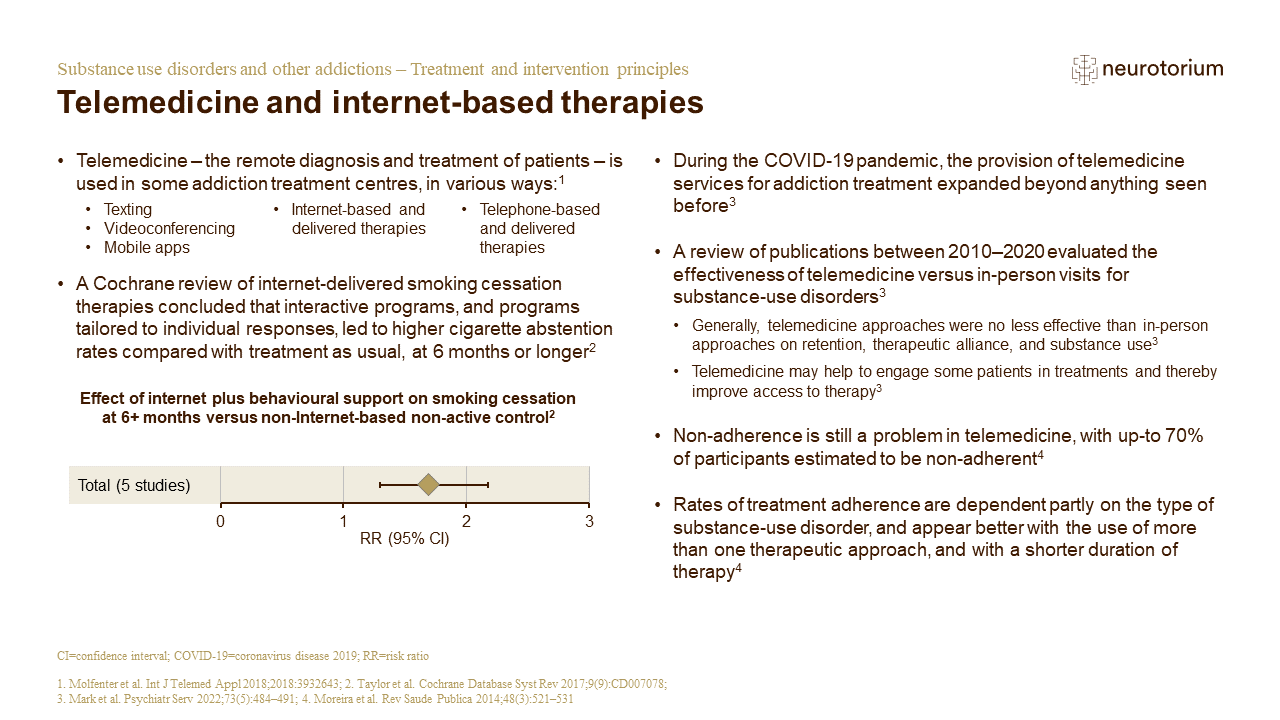
The COVID-19 pandemic altered the world in many ways; in some parts of the world some therapies that were commonly provided in person before the pandemic were adapted for remote delivery. Addiction treatments are an example of one such therapy.3 A survey of addiction treatment providers in California revealed that more than half of individuals in therapy were receiving therapy remotely.3 Many providers were confident that individual counselling sessions were no less effective than in-person therapy when delivered remotely, but results regarding group therapy and medication management when done at a distance were less favourable for telemedicine.3 Often the benefits of telemedicine relate to the individual; treatment seeking individuals who do not have access to private spaces, or who are not technologically literate are less likely to benefit from telemedicine whereas busy individuals who have difficultly scheduling the time needed for appointments and travel may benefit more.3 This speaks to the benefit of a hybrid approach, tailored to individual needs.3
Telemedicine and internet-based therapies