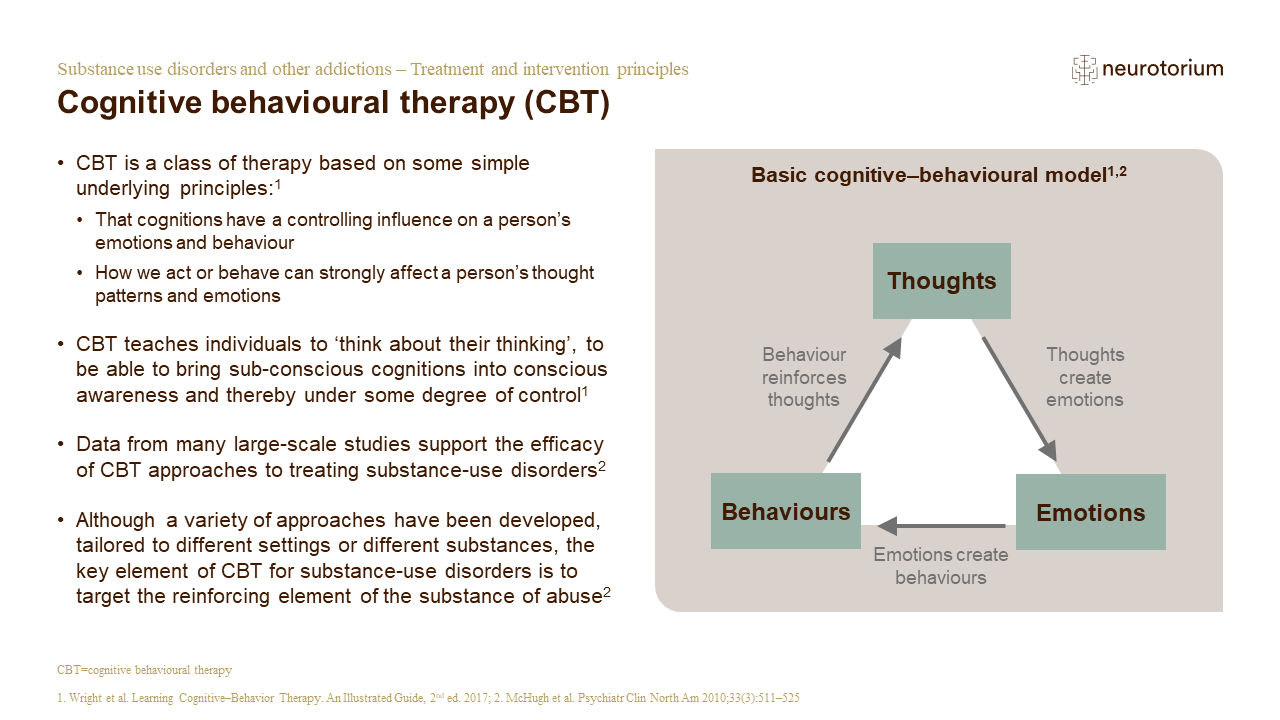
A brief outline of the theoretical underpinning of cognitive behavioural therapy (CBT) is given on the slide.1 Practitioners of CBT recognise that, behind the substance-use and dependence phenotypes, lie a complex set of biological, genetic, environmental, and interpersonal influences; the CBT model assumes that cognitions and behaviours are modulated through these biological processes.1 Whatever the theoretical grounding, CBT approaches have been shown to be effective in the treatment of substance-use disorders.2
Cognitive behavioural therapy (CBT)