

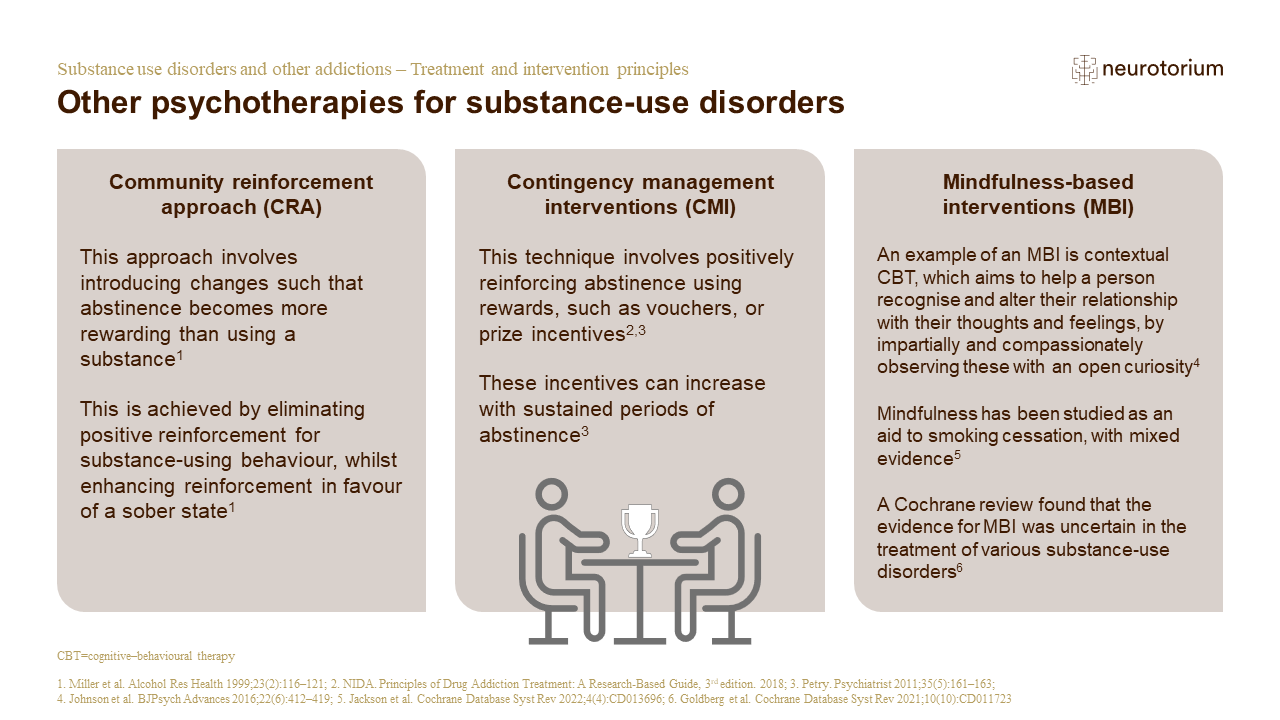
Many different therapies have been studied in the treatment of substance-use disorders, with varying degrees of supporting evidence. 7 A wide-ranging network meta-analysis compared various psychosocial interventions for individuals with cocaine and amphetamine addiction and found that a combination of contingency management and the community reinforcement approach was the most effective – when considered in an acute context, or for long-term durable treatment effect.7
Reference:
[1] Miller WR, Meyers RJ, Hiller-Sturmhöfel S. The community-reinforcement approach. Alcohol Res Health 1999; 23 (2): 116–121.
[2] NIDA. Principles of Drug Addiction Treatment: A Research-Based Guide, 3rd edition. https://archives.nida.nih.gov/publications/principles-drug-addiction-treatment-research-based-guide-third-edition. Revised January 2018. Accessed February 2023.