

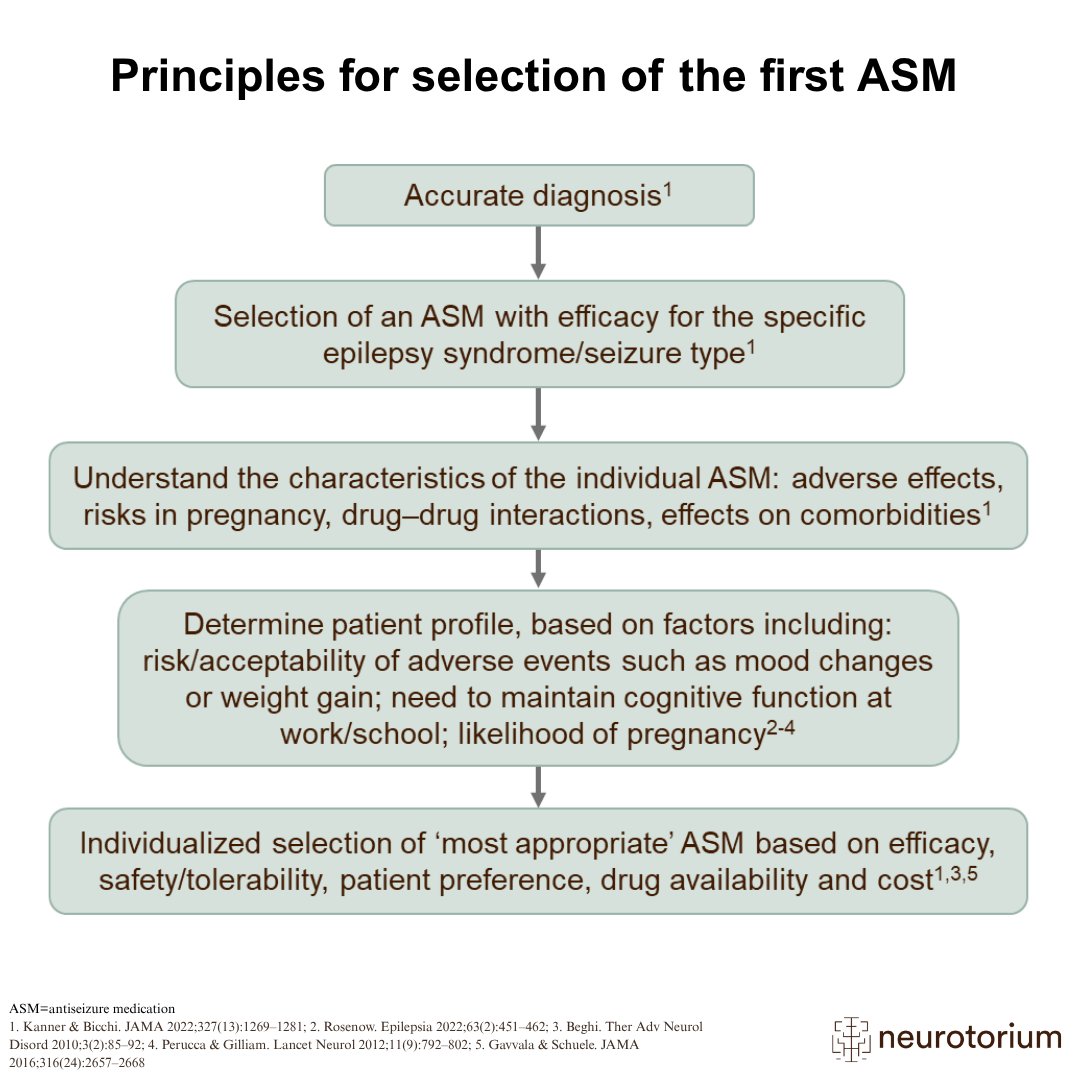
This image illustrates a stepwise approach to the selection of antiseizure medication (ASM) for epilepsy management.
It begins with making an accurate diagnosis, followed by the selection of an ASM with proven efficacy for the specific epilepsy syndrome or seizure type1. The next steps involve understanding the characteristics of each ASM, while patient-specific factors are also considered, such as the adverse events, cognitive function requirements at work or school, and pregnancy likelihood2-4.
After selecting the ASM, treatment proceeds with titration to the target dose, starting with a moderate dose and increasing gradually until seizures are controlled, the maximal dose is reached, or side effects occur. If persistent seizures occur at the optimal dose of an ASM, or if there are persistent adverse effects, an alternative ASM should be added until an adequate dose is reached, at which point the dose of the initial ASM can be tapered and discontinued.1,3,5
Related content
In this video, Professor Dr. Nathalie Jetté reviews depression as a common yet often under-recognized comorbidity in epilepsy.

In this video, Professor Dr. Gretchen Birbeck examines epilepsy-associated stigma as a global public-health challenge

In this video, Professor Dr. Jacqueline French reviews practical, first-line decision-making for anti-seizure medication selection