


Index for
slide deck
Introduction
Introduction
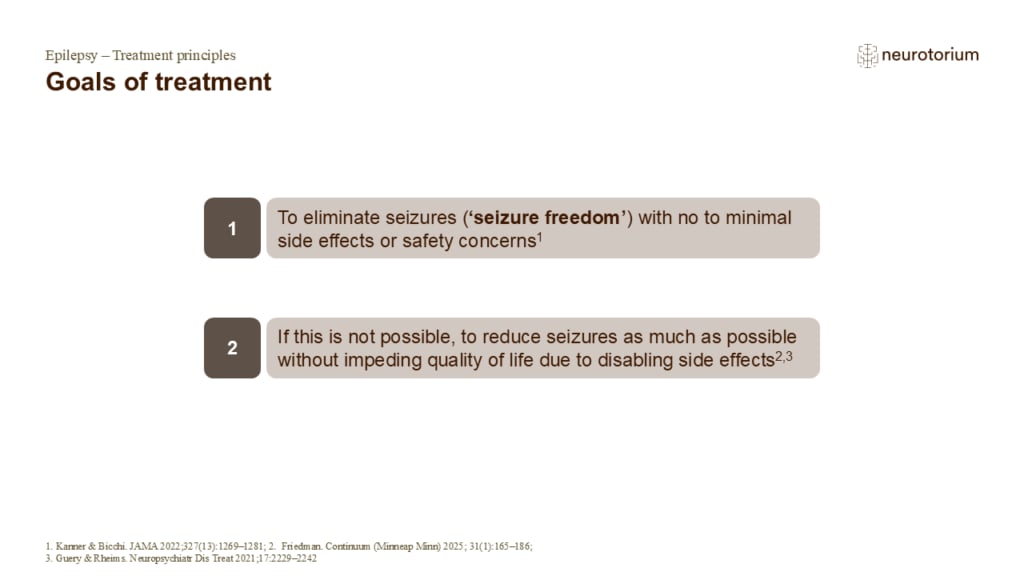
Goals of treatment
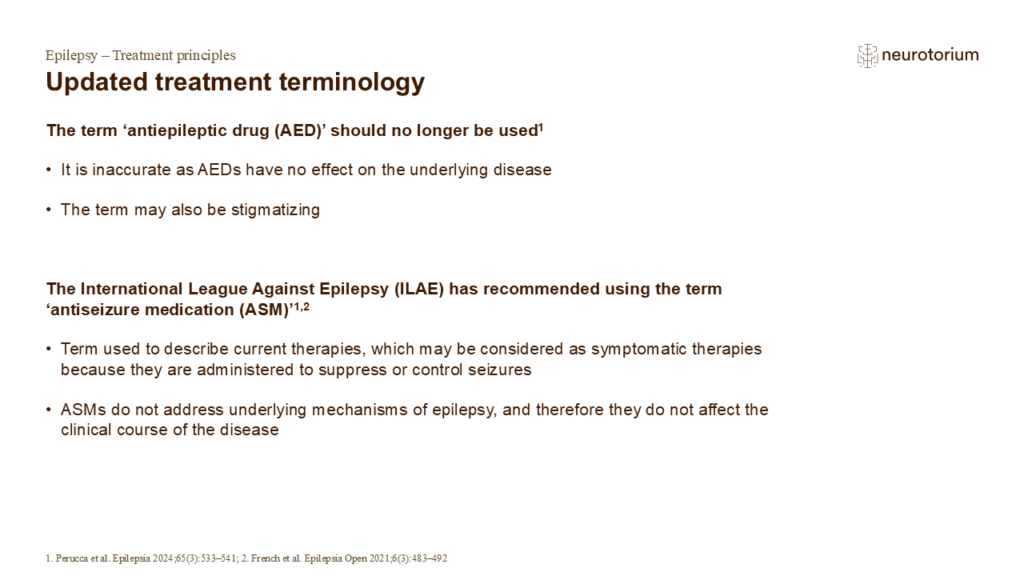
Updated treatment terminology
It is possible that currently available ASMs have disease-modifying effects.2 However, the design of conventional clinical trials (typically randomized controlled trials, followed by open-label extensions) would not have the capacity to demonstrate disease modification.2
…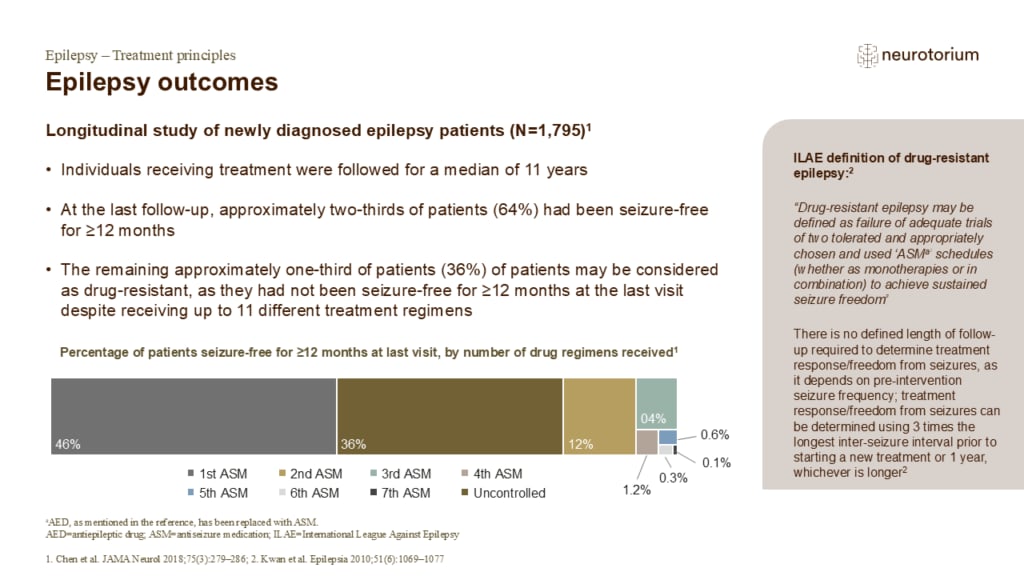
Epilepsy outcomes
Seizure freedom is defined as freedom from seizures for a minimum of three times the longest pre-intervention interval between seizures (determined from seizures occurring within the past 12 months) or 12 months, whichever is longer.2 Treatment failure is defined as recur…
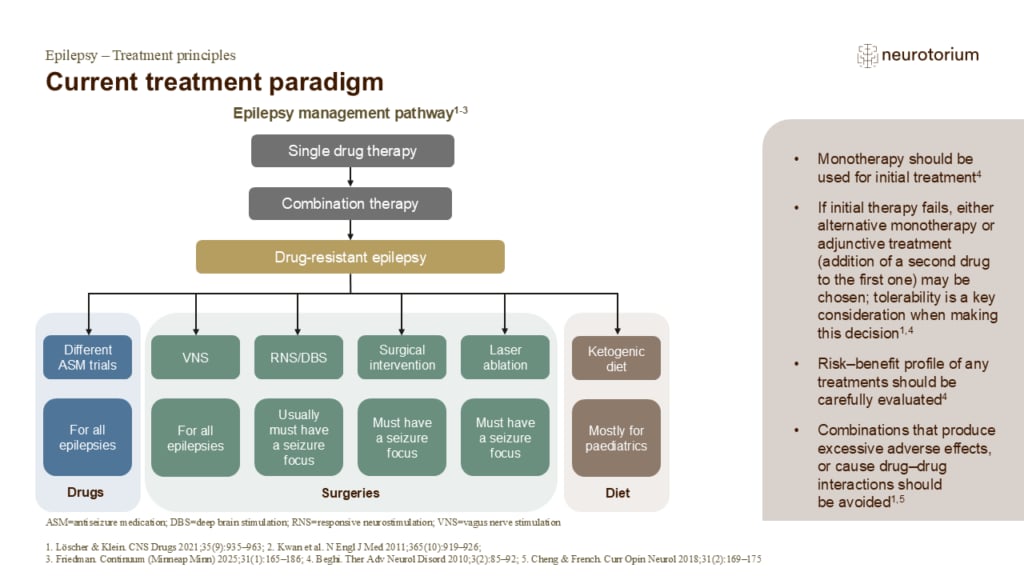
Current treatment paradigm
Seizure classification and initial management
Seizure classification and initial management
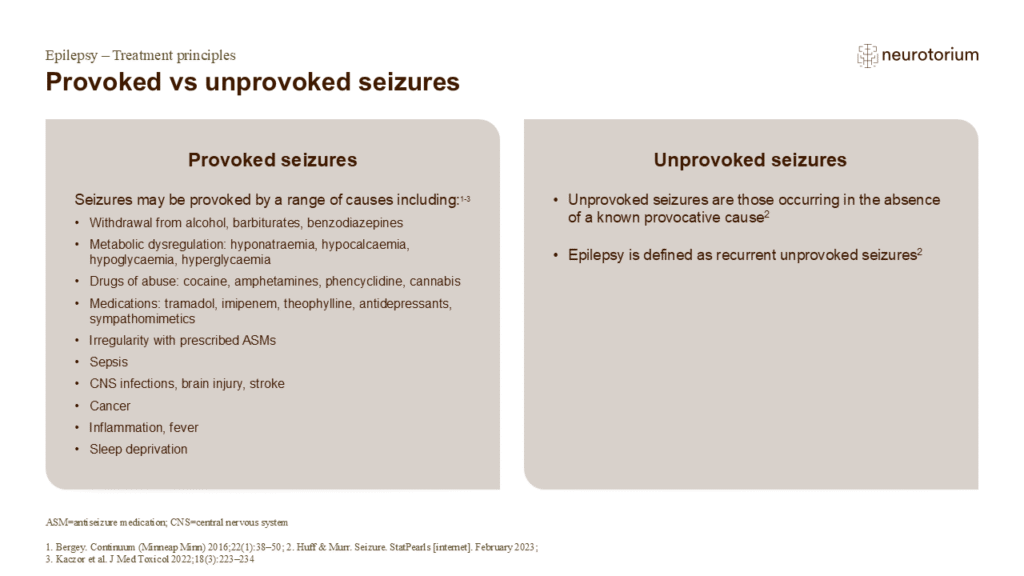
Provoked vs unprovoked seizures
Provoked seizures are typically generalized convulsive seizures rather than focal seizures.1 With respect to alcohol, it is known that intoxication may lower the seizure threshold in patients with focal brain injuries.1 It is therefore suggested that patients presenting w…
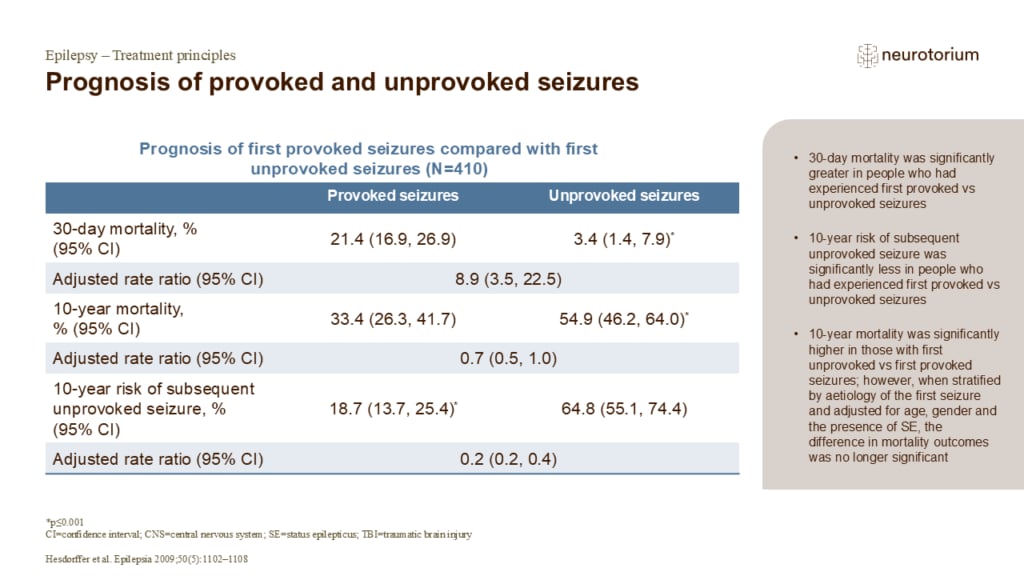
Prognosis of provoked and unprovoked seizures
In this population-based study, residents of Rochester, Minnesota were included if they had experienced a first acute symptomatic seizure or a first unprovoked seizure between 1955 and 1984.1 An acute symptomatic seizure was defined as a seizure occurring recently after a…
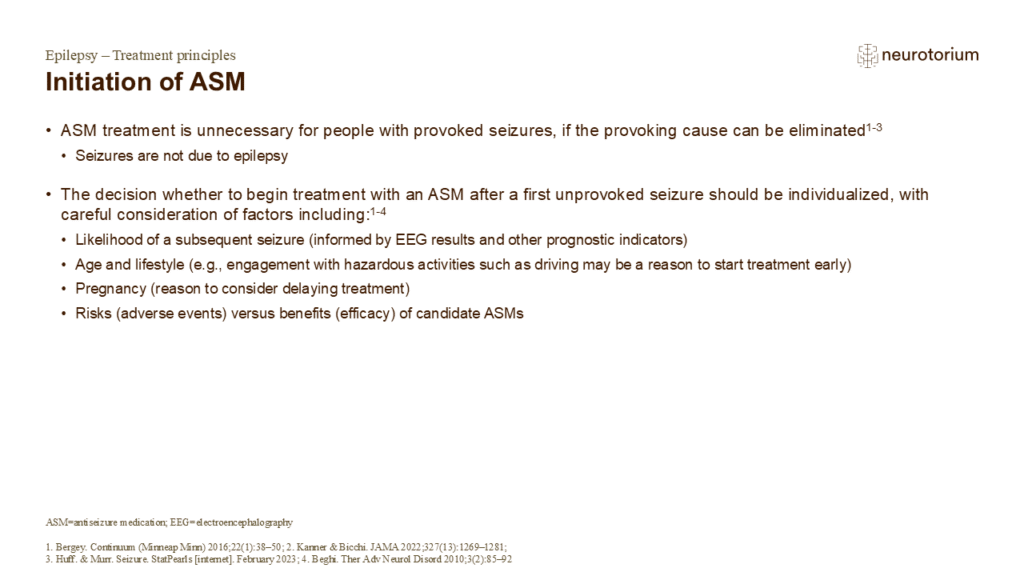
Initiation of ASM
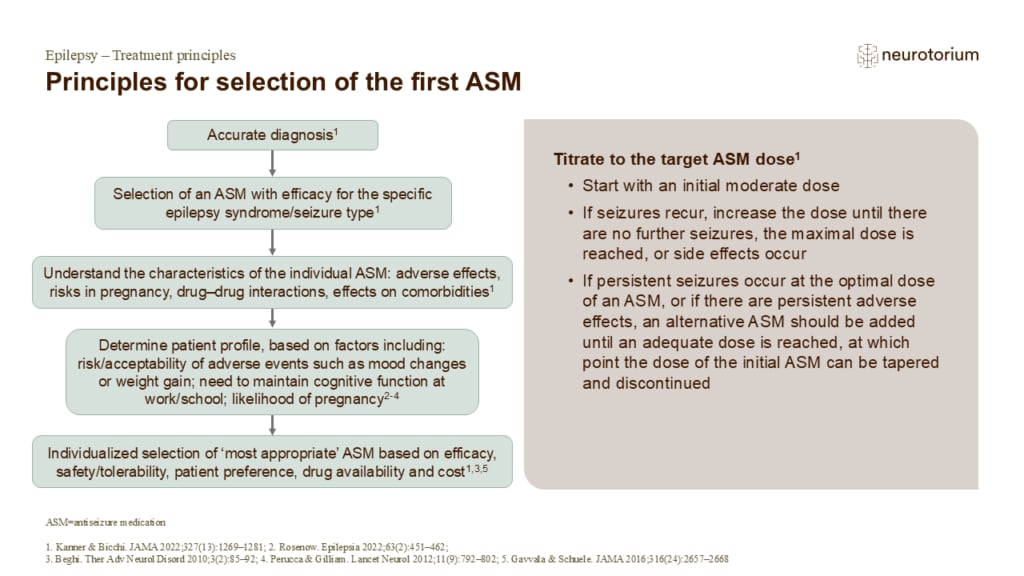
Principles for selection of the first ASM
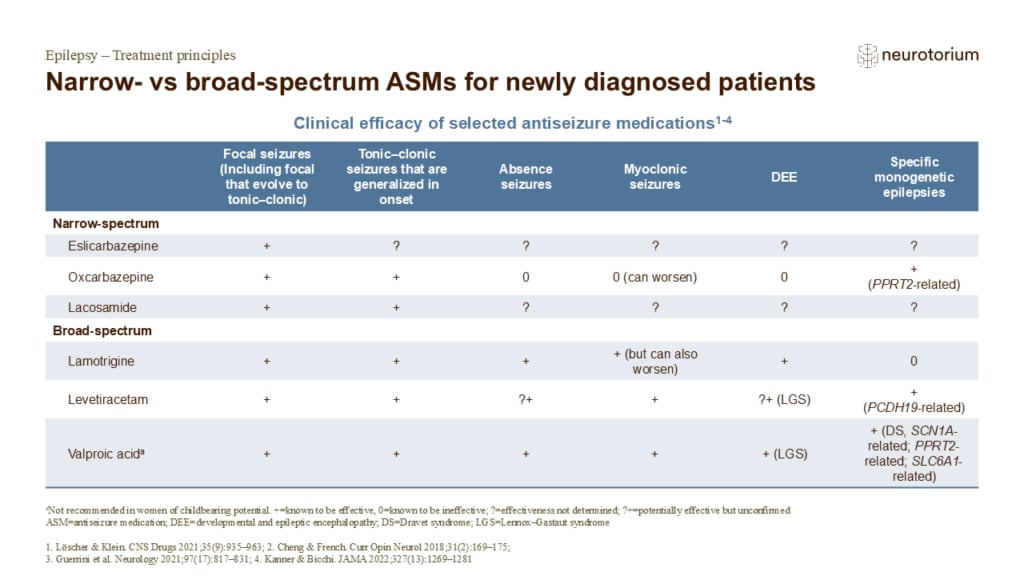
Narrow- vs broad-spectrum ASMs for newly diagnosed patients
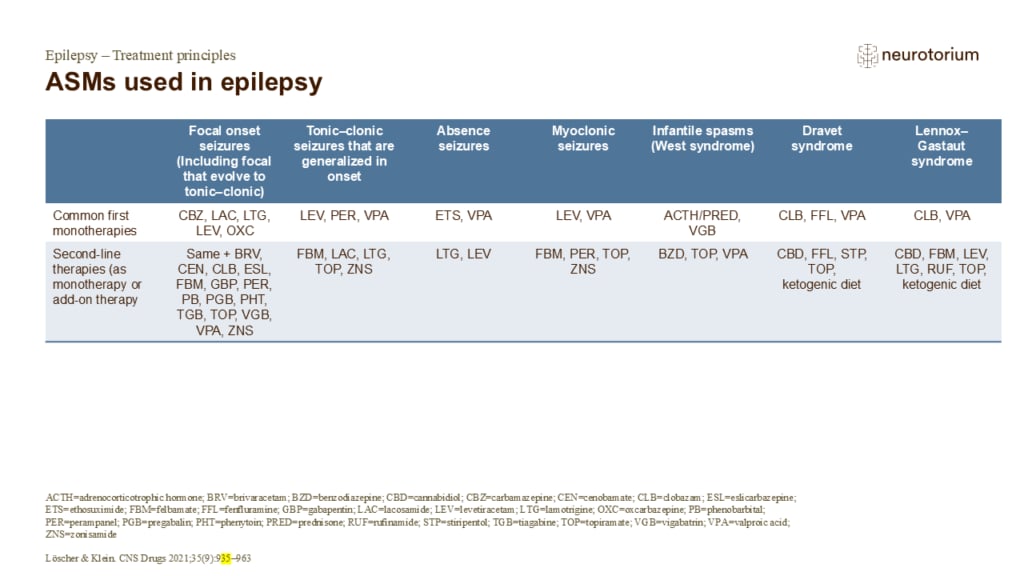
Lamotrigine and oxcarbazepine are known to occasionally aggravate myoclonic seizures and are therefore not recommended.1,4
References:
Commonly used antiseizure medications: mechanisms of action
Commonly used antiseizure medications: mechanisms of action
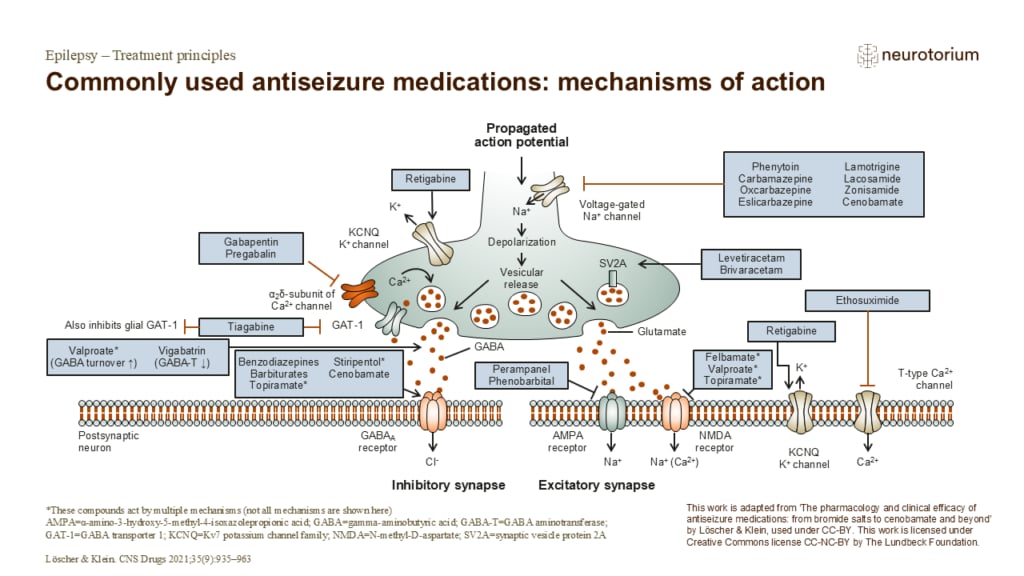
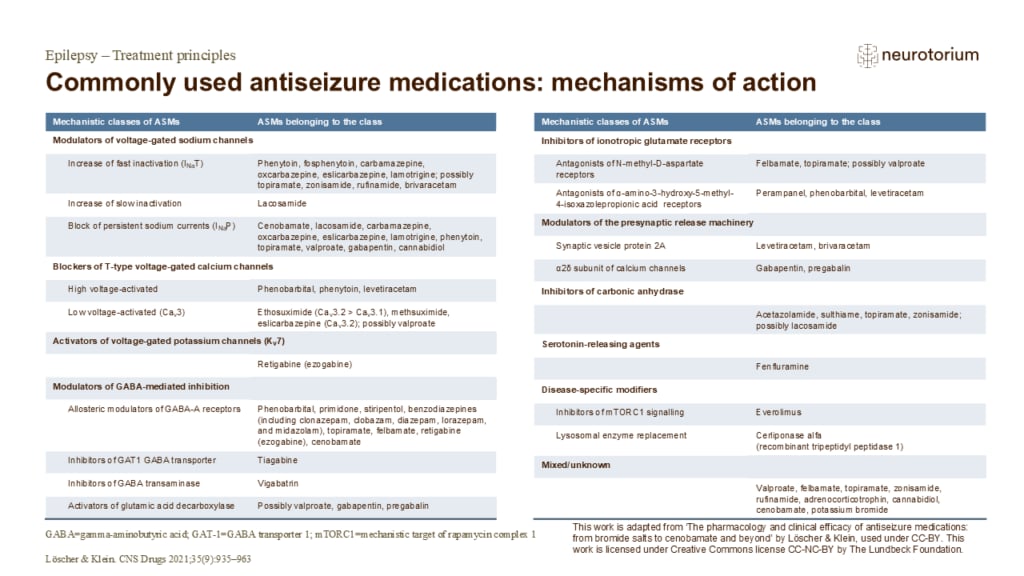
Many commonly used ASMs have multiple mechanisms of action, with the majority influencing the function of voltage-gated sodium channels, and many acting as allosteric modulators of GABA-A receptors.1
Cannabidiol does not bind to the orthostatic binding site of CB1 and CB2…
The importance of rapid management of status epilepticus
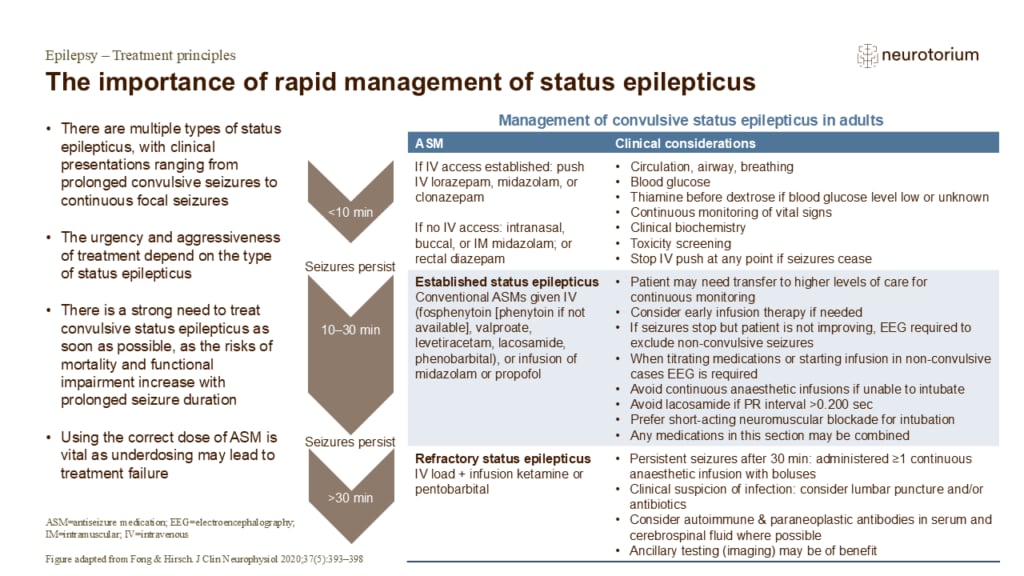
It is suggested that with respect to benzodiazepine treatment, any agent within this drug class may be used as long as it is administered promptly and in adequate doses.1 One study has shown that under-dosing of benzodiazepines was associated with a longer duration of sta…
Related content
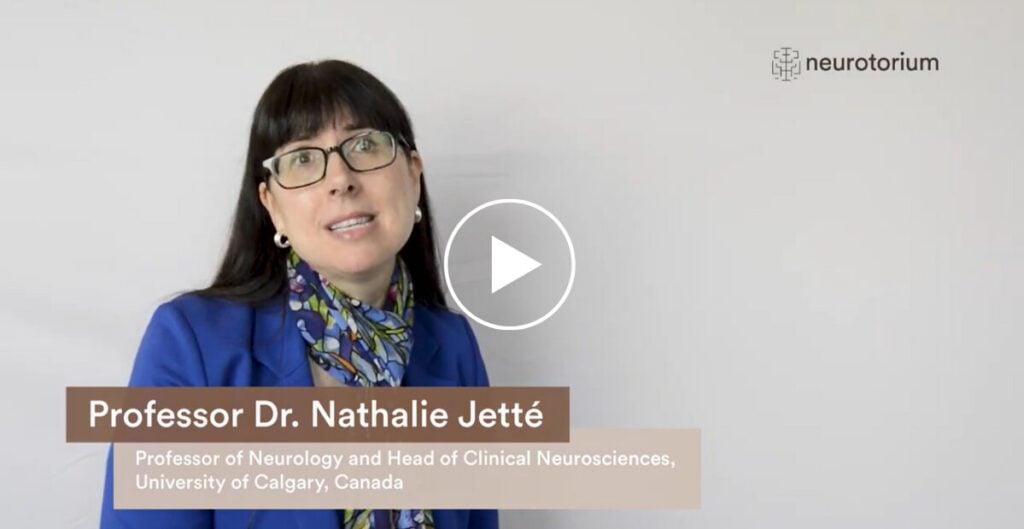
In this video, Professor Dr. Nathalie Jetté reviews depression as a common yet often under-recognized comorbidity in epilepsy.

In this video, Professor Dr. Gretchen Birbeck examines epilepsy-associated stigma as a global public-health challenge

In this video, Professor Dr. Jacqueline French reviews practical, first-line decision-making for anti-seizure medication selection