

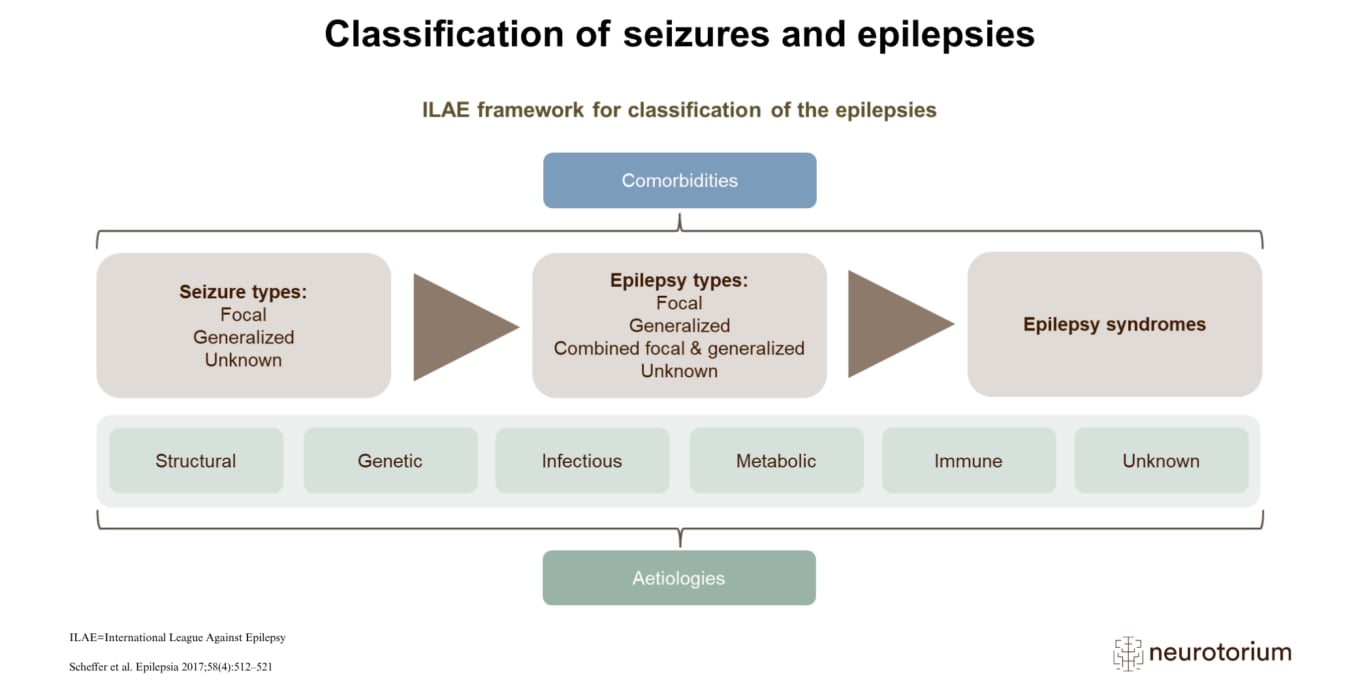
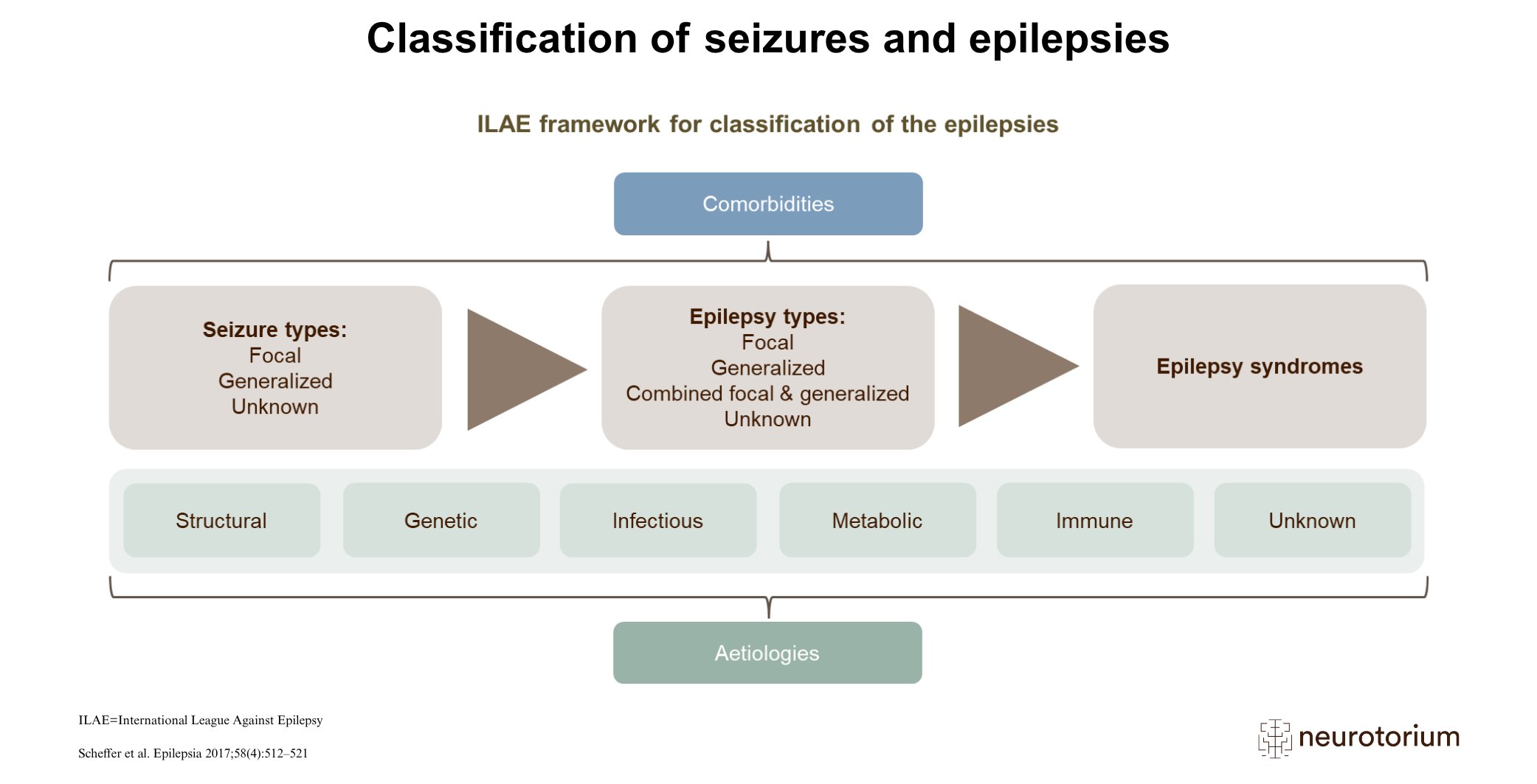
The figure illustrates the ILAE framework for classification of the epilepsies and to determine different levels of the condition.
Clinicians use different types of diagnostic tools to determine different levels of the condition: (1) the type of seizures, (2) the type of epilepsy, and (3) the epilepsy syndrome.1
The aetiology of seizures/epilepsy should also be considered from the first presentation, and at each step along the diagnostic pathway, bearing in mind that multiple aetiologies may be present.1 Exploration of comorbidities takes place at the same time.1
Related content

In this video, Professor Dr. Nathalie Jetté reviews depression as a common yet often under-recognized comorbidity in epilepsy.

In this video, Professor Dr. Gretchen Birbeck examines epilepsy-associated stigma as a global public-health challenge

In this video, Professor Dr. Jacqueline French reviews practical, first-line decision-making for anti-seizure medication selection