







Index for
slide deck
History, definitions, and diagnosis
History, definitions, and diagnosis
History of epilepsy
History of epilepsy
Epilepsy is a long-recognized disorder
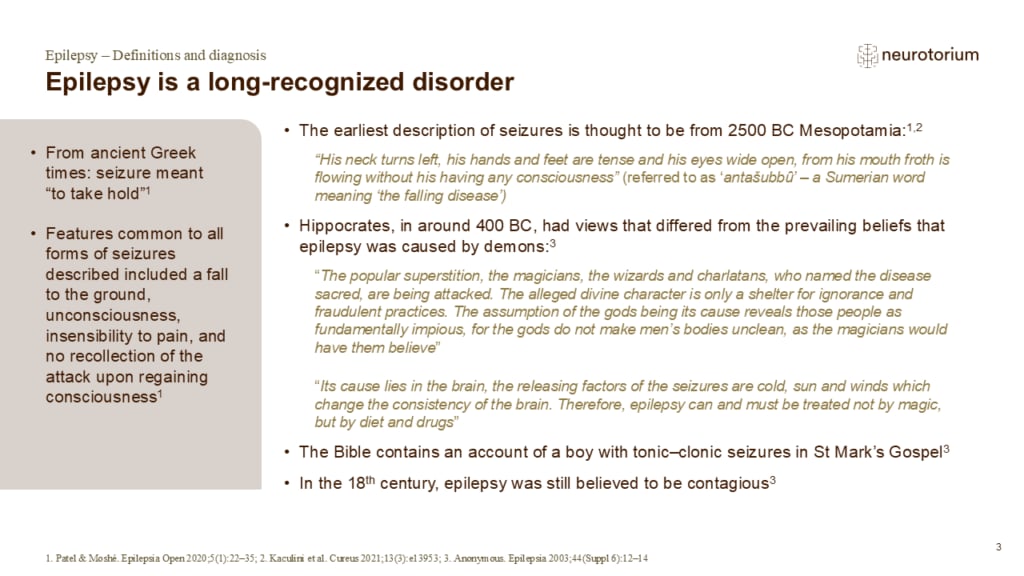
In the second century AD, the physician Galen was able to categorize epilepsy has originating from the brain (termed idiopathic) or other body parts (termed sympathetic) with subsequent involvement of the brain, based on the behavioural manifestations of a seizure.1 He al…
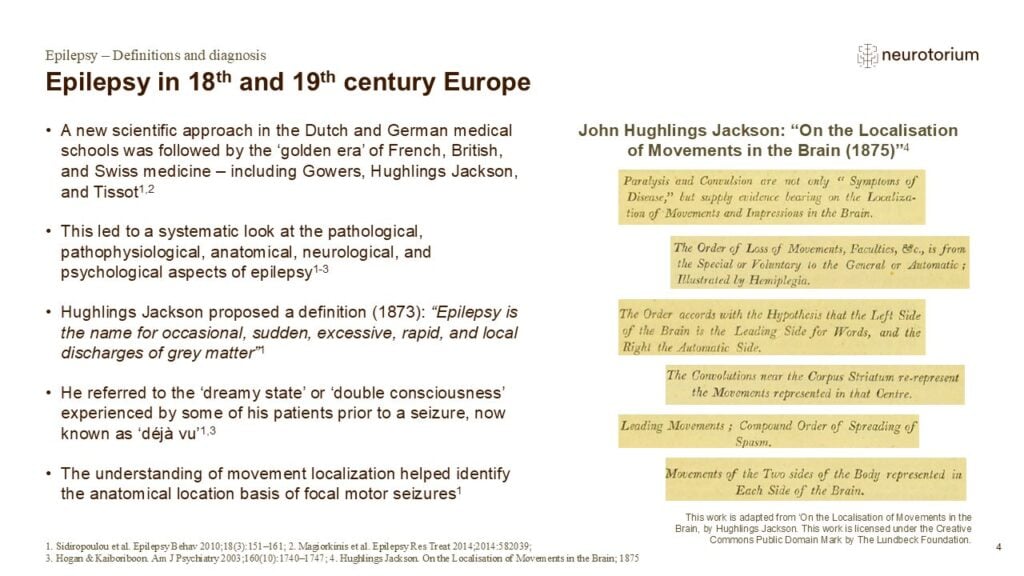
Epilepsy in 18th and 19th century Europe
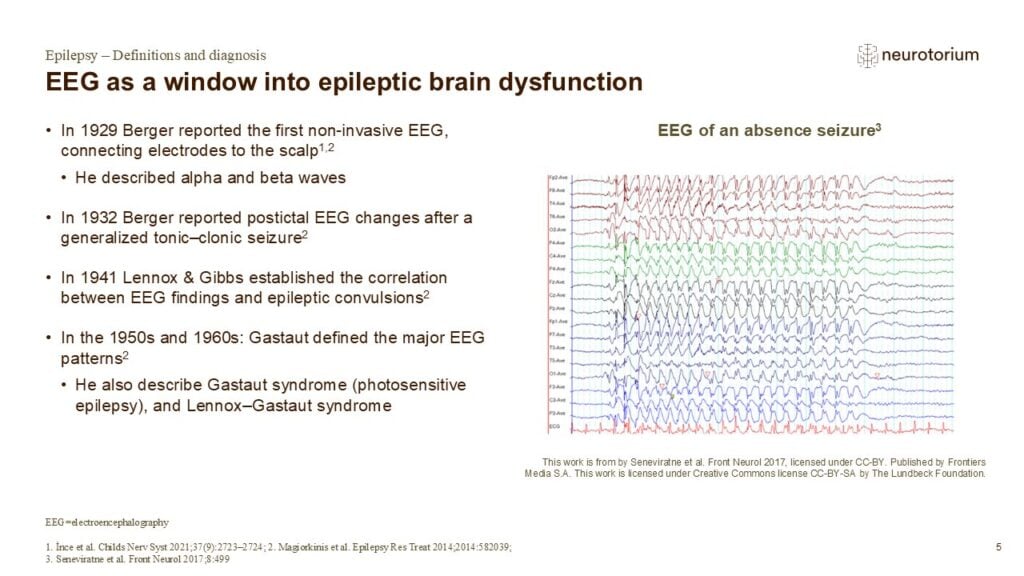
EEG as a window into epileptic brain dysfunction
Hans Berger has been credited with the invention of the EEG. His first EEG was recorded in July 1924, during neurosurgery on a 17-year-old boy. Following development of non-invasive EEG recording and its use in males and females of different ages he concluded that brainwa…
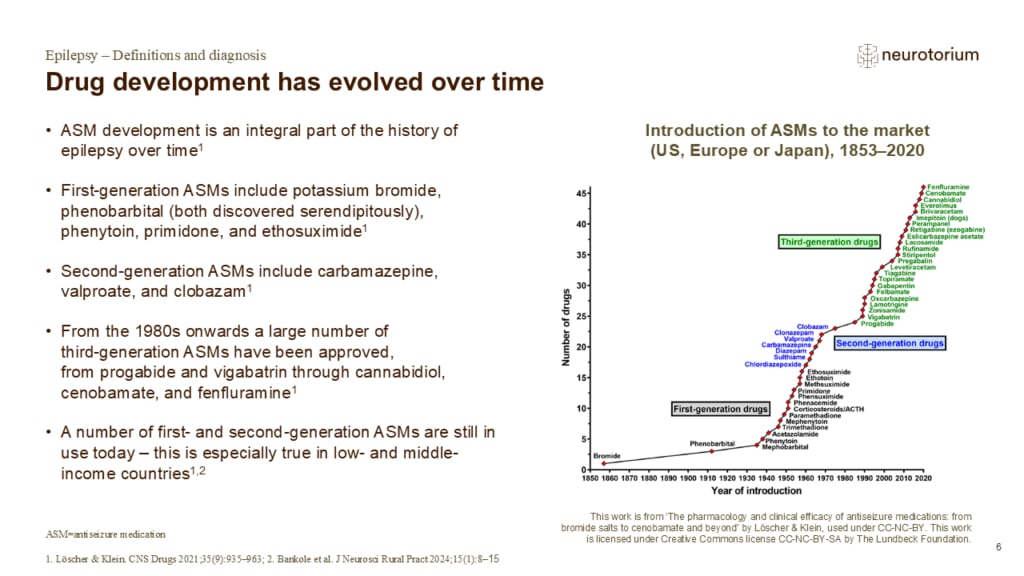
Drug development has evolved over time
Whereas the effects of phenobarbital and potassium bromide in epilepsy were identified by chance, the discovery and development of phenytoin in the 1930s initiated a systematic search for chemically related and unrelated compounds with efficacy against seizures.1 The firs…
Epileptic seizures: definitions and classifications
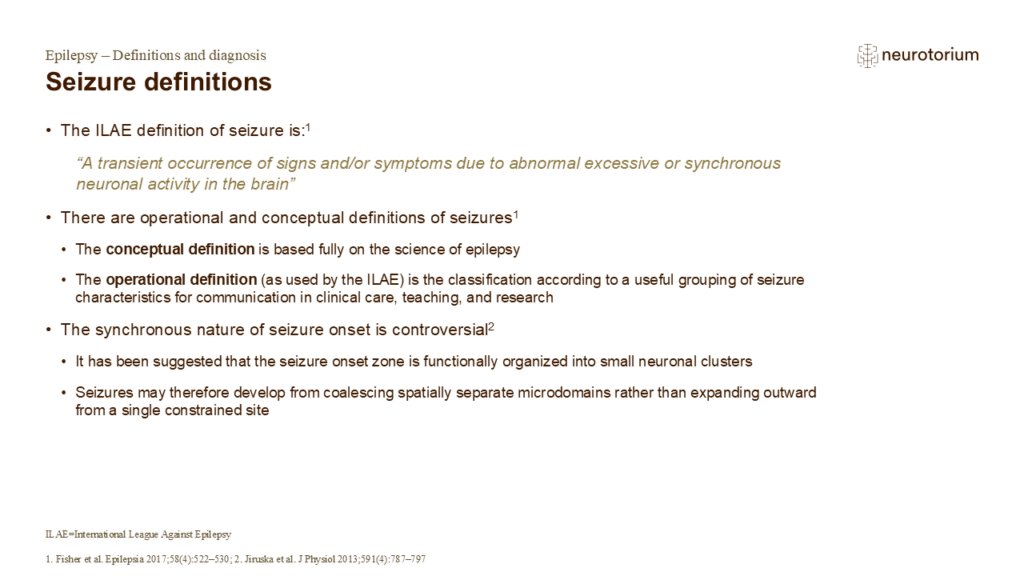
Seizure definitions
Synchronization in epilepsy and seizures may increase or decrease, i.e., desynchronization.2 Synchronization is determined according to how it changes over time – an increasing trend in coupling between microdomains indicates synchronization, whereas a decrease in couplin…
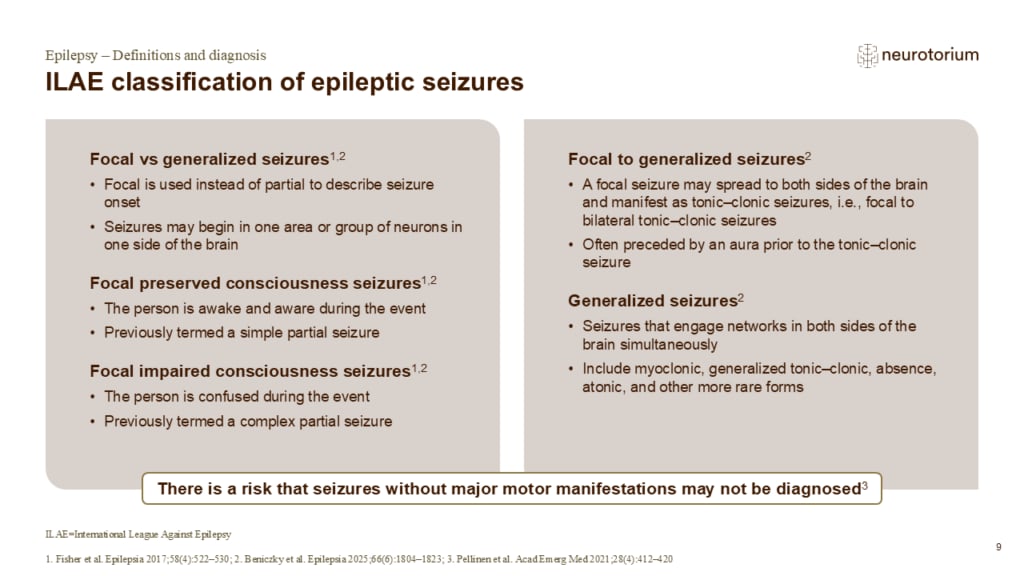
ILAE classification of epileptic seizures
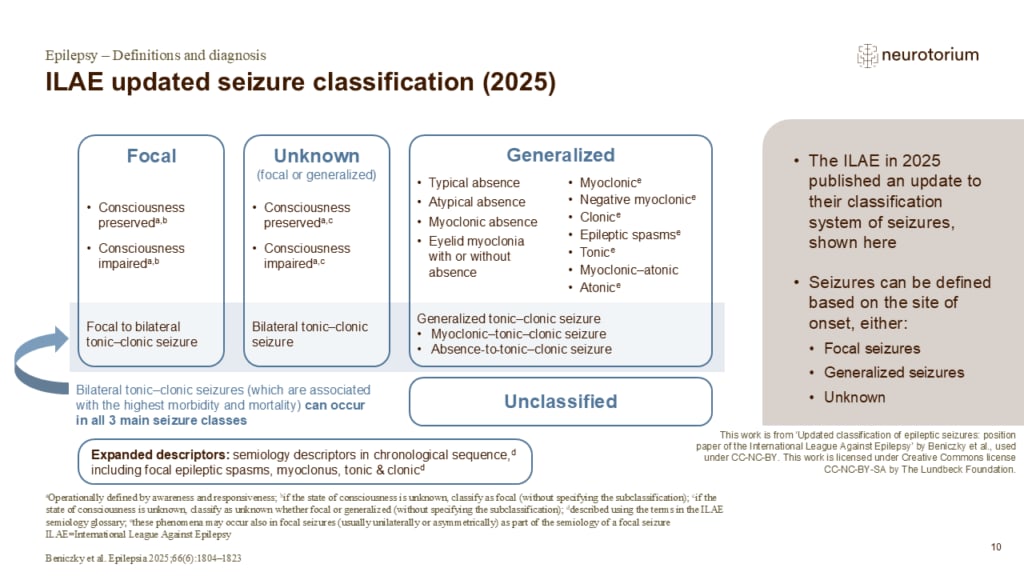
ILAE updated seizure classification (2025)
The slide shows the classification of seizures according to the International League Against Epilepsy classification.1 There are three main classes of seizure – focal, unknown, and generalized – within which there are many different types.1 The state of consciousness shou…
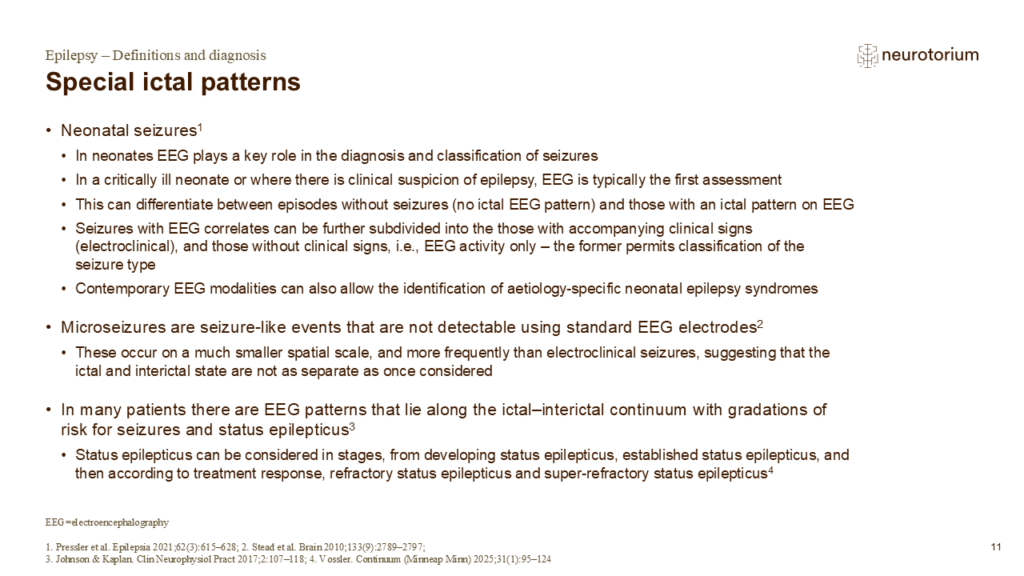
Special ictal patterns
One-third of patients with epilepsy who undergo continuous EEG monitoring exhibit periodic discharges or rhythmic activity that lie on a spectrum known as the ictal‒interictal continuum.3 Depending on the type of these discharges there is a certain risk of seizures and al…
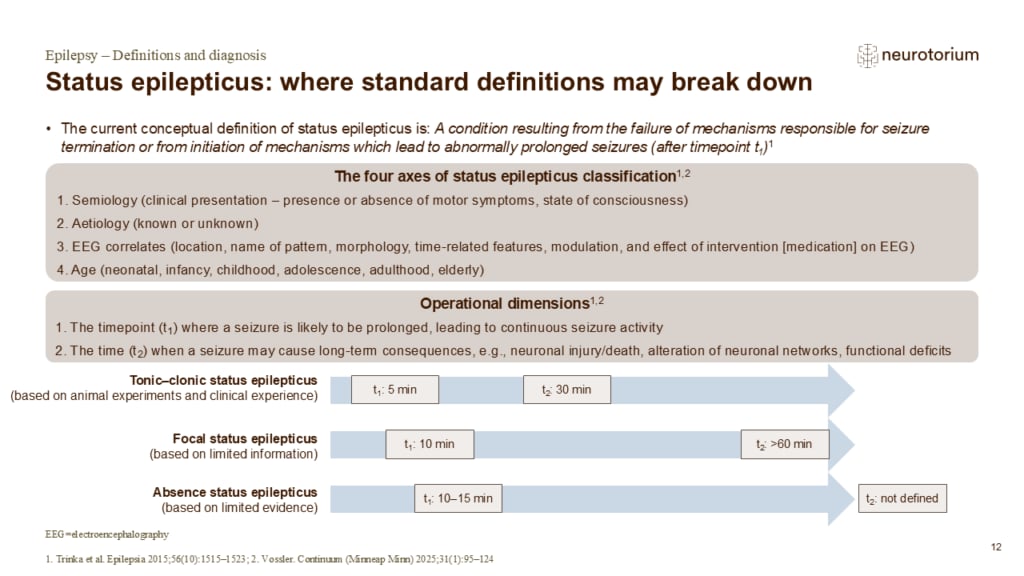
Status epilepticus: where standard definitions may break down
Under ideal circumstances every patient should be categorized for each of the four axes, although this may not always be possible.1 At the initial presentation, age and semiology will typically be apparent, whereas the aetiology may take time to determine.1 EEG will likel…
Related content
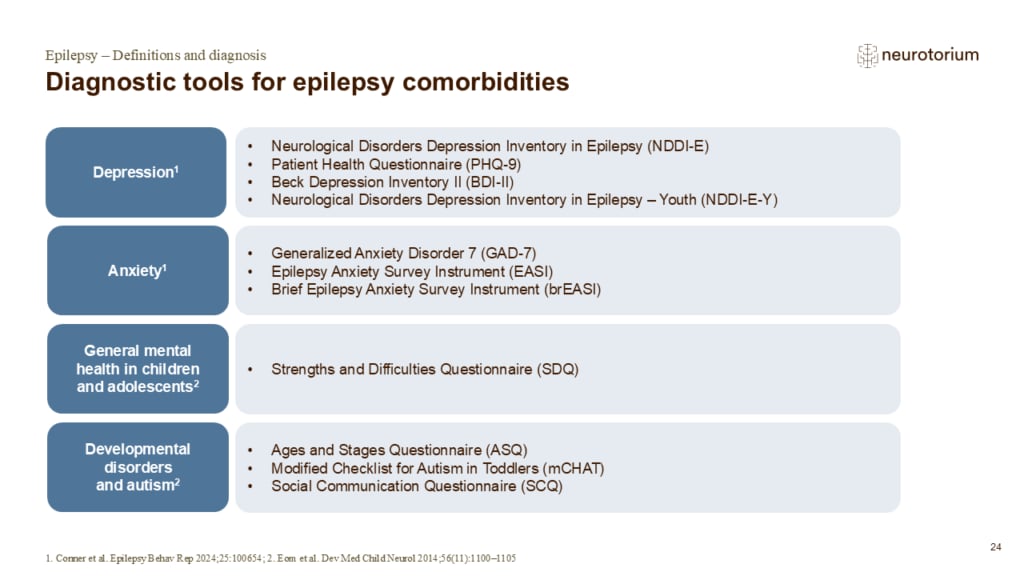
In this video, Professor Dr. Nathalie Jetté reviews depression as a common yet often under-recognized comorbidity in epilepsy.

In this video, Professor Dr. Gretchen Birbeck examines epilepsy-associated stigma as a global public-health challenge

In this video, Professor Dr. Jacqueline French reviews practical, first-line decision-making for anti-seizure medication selection