

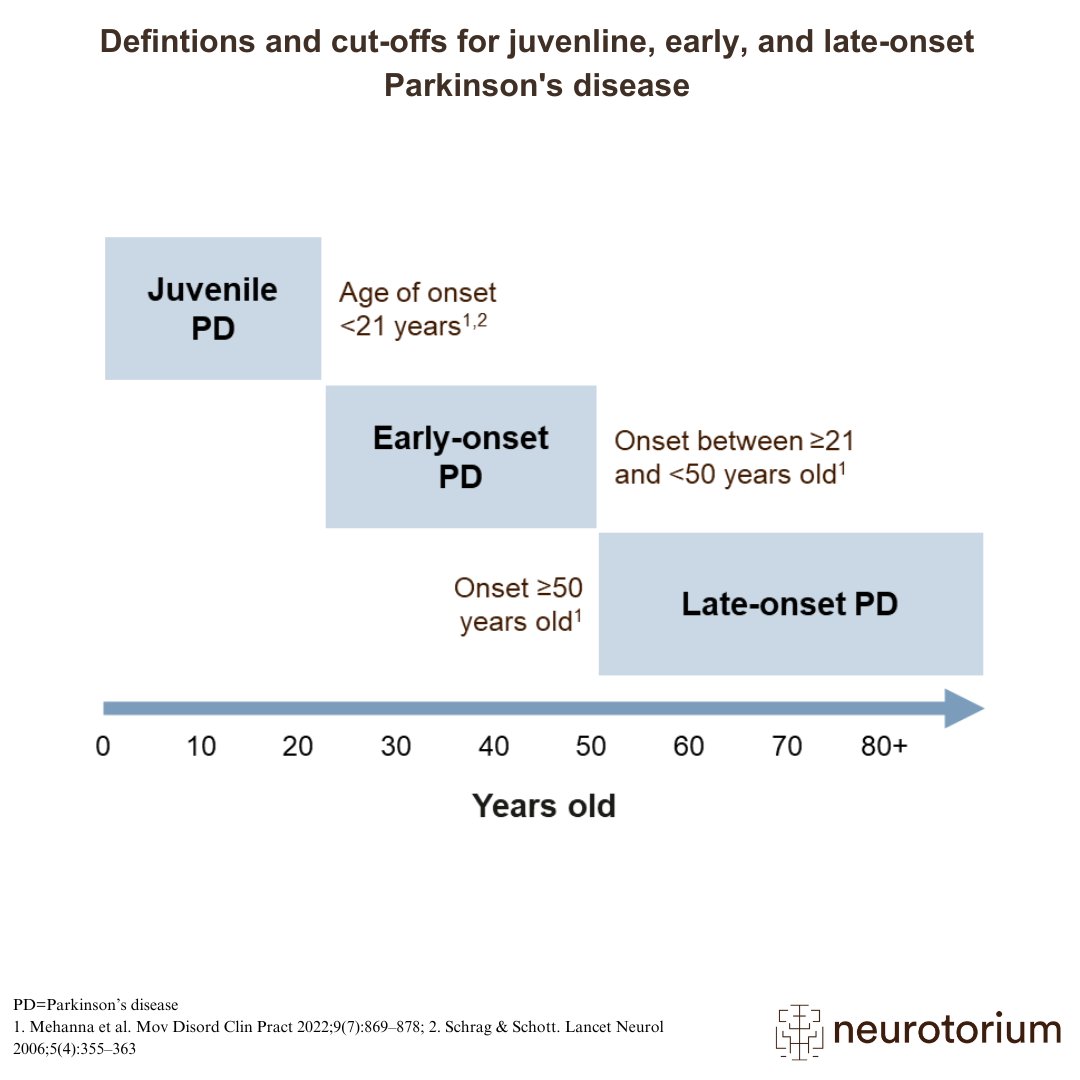
Historically, the terms young-onset and early-onset Parkinson’s disease have been used for research of Parkinson’s disease that presents before the typical age (after the age of 50).1 The International Parkinson and Movement Disorder Society Task Force on Early Onset Parkinson’s Disease have recommended that the term ‘early-onset Parkinson’s disease’ be used, and that it refers to people with Parkinson’s disease symptom onset from 21 to under 50 years of age. Juvenile PD refers to the onset of PD prior to the age of 21 years.1
Studies suggest that, in general, people with early-onset PD tend to experience slower progression of symptoms than patients with later onset1
Related content
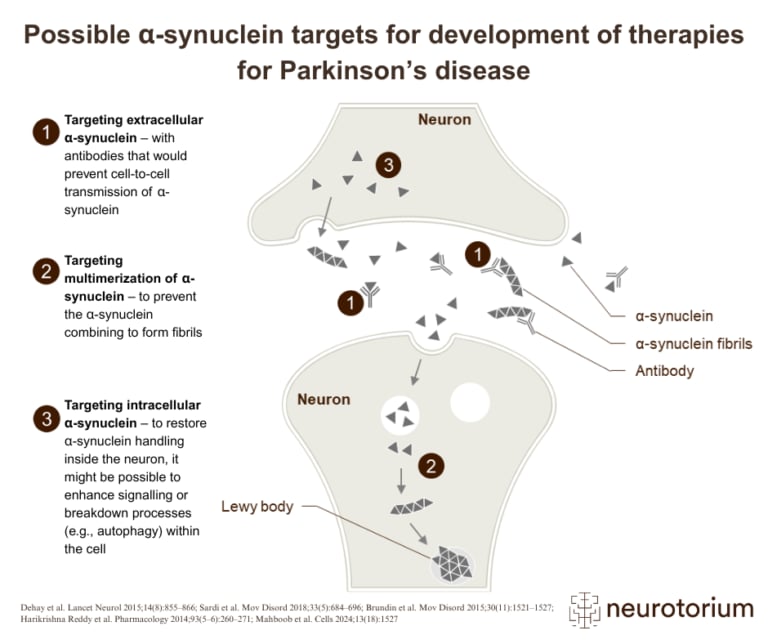
Overview of three therapeutic strategies targeting alpha-synuclein in the development of disease-modifying treatments for Parkinson’s disease
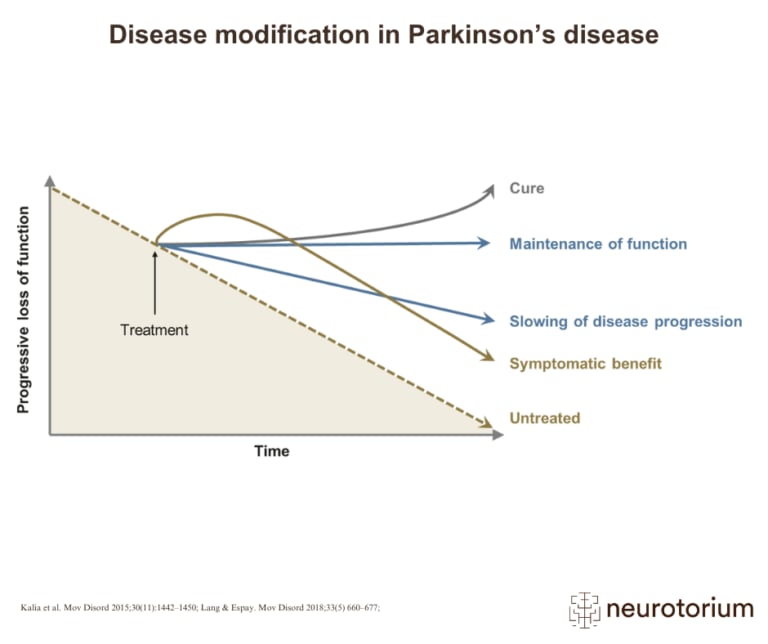
Graphical representation of how various treatment strategies can impact disease progression in Parkinson’s disease, from symptom relief to potential cure
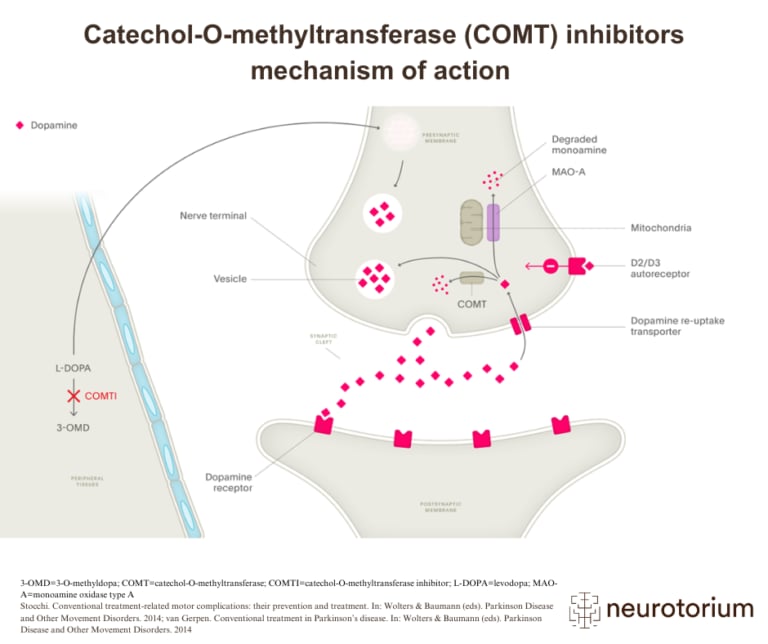
Illustration of how COMT inhibitors increase dopamine availability in Parkinson’s disease by preventing the breakdown of L-DOPA