

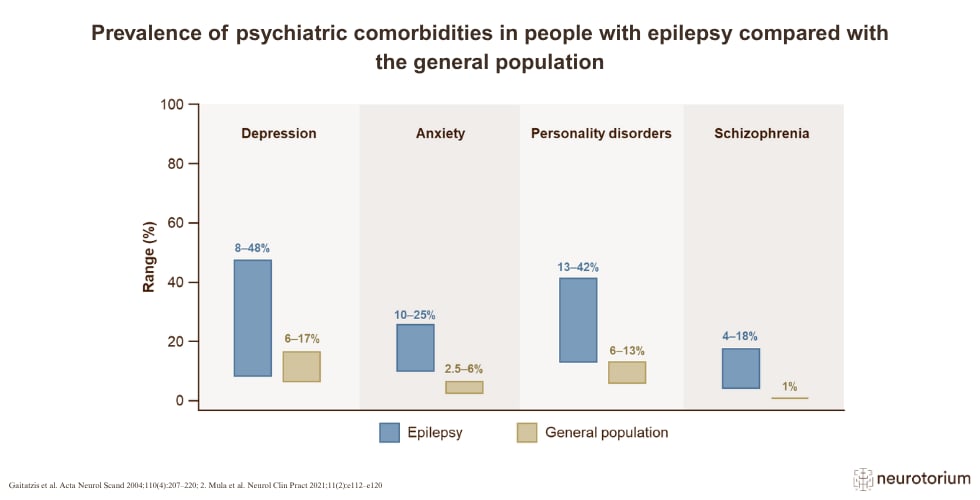
Psychiatric disorders affect approximately one in three people with epilepsy and can be caused by biological as well as psychosocial factors.1 The latter include stigmatization of people with epilepsy, which may result in discrimination or social withdrawal, as well as the major social limitations associated with epilepsy (e.g., the loss of a driving licence).1 Together with the unpredictability of seizures, all these factors can result in reduced self-esteem and impact the mental health and the quality of life of people with epilepsy.1
Related content
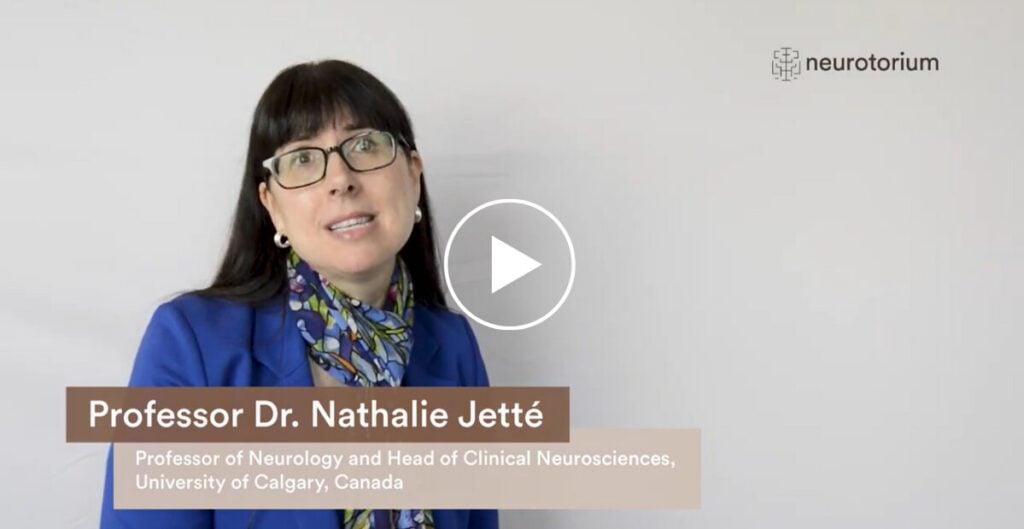
In this video, Professor Dr. Nathalie Jetté reviews depression as a common yet often under-recognized comorbidity in epilepsy.

In this video, Professor Dr. Gretchen Birbeck examines epilepsy-associated stigma as a global public-health challenge

In this video, Professor Dr. Jacqueline French reviews practical, first-line decision-making for anti-seizure medication selection