

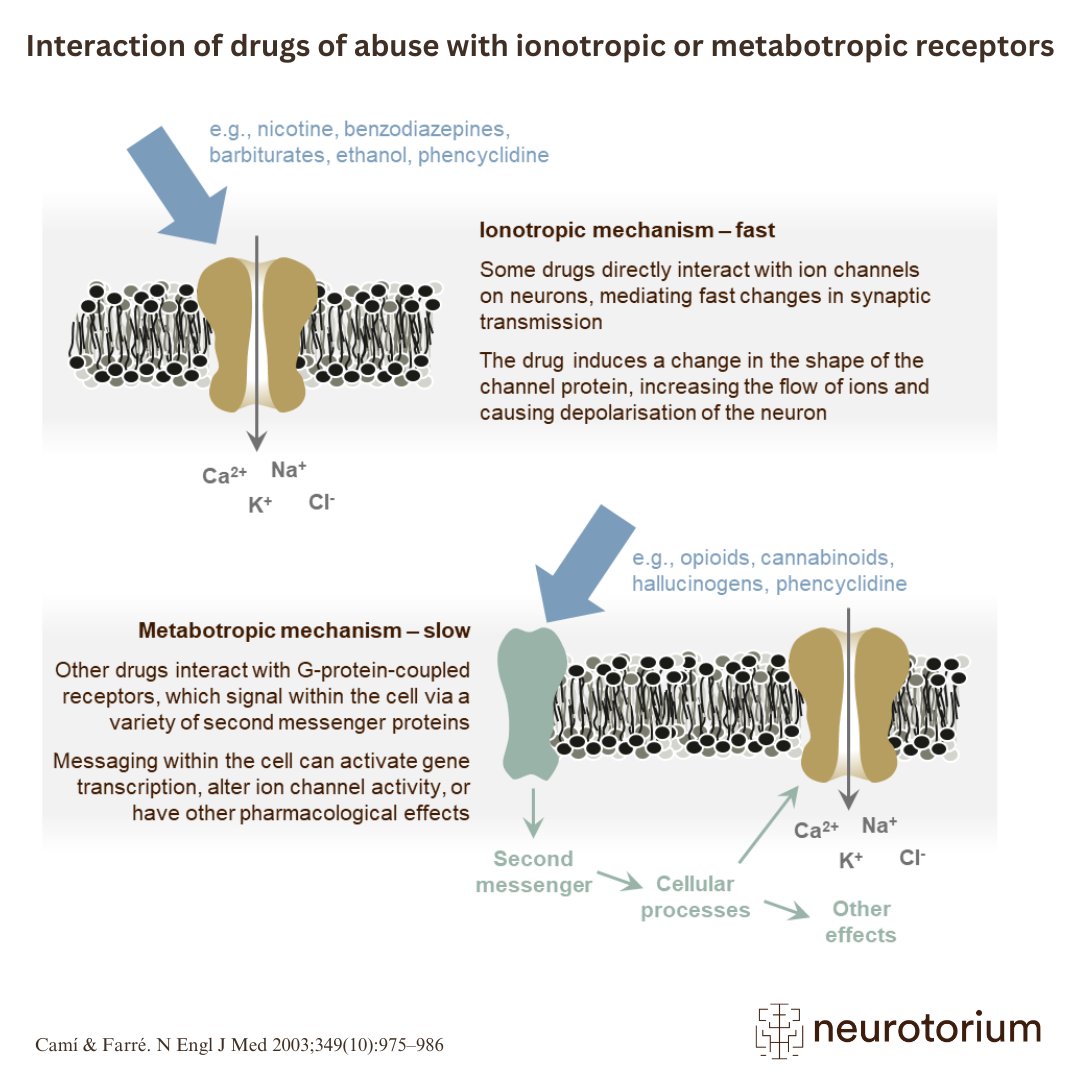
Substance use is driven by the pharmacological effects of a drug, which are experienced as reinforcing/rewarding.1 Drugs mainly interact with neurotransmitters in the brain in one of two ways.
1. Interaction with ionotropic or metabotropic receptors (see image).1,2
2. Interaction with transporter proteins to increase the availability of neurotransmitters in the synapse.1,2
Related content
Current evidence on the neurobiology of addictive behaviour highlights the transition from reward-driven to habitual drug use through alterations in mesolimbic dopamine, glutamatergic signalling, frontostriatal circuitry, and stress-related systems.
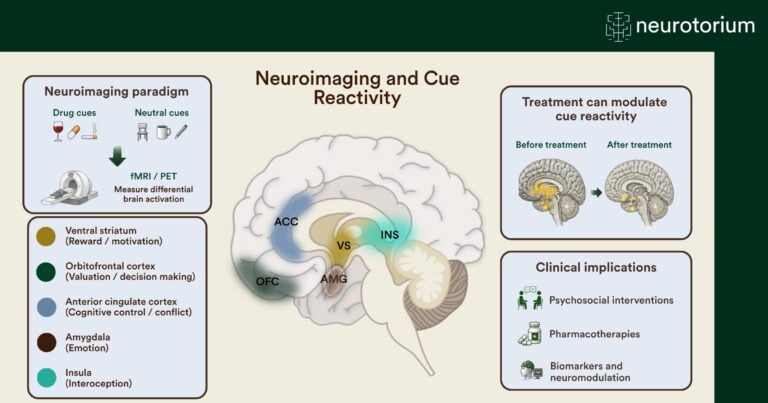
Functional neuroimaging studies commonly compare brain responses to substance-related cues versus neutral cues during fMRI or PET scanning and measure differential brain activation.
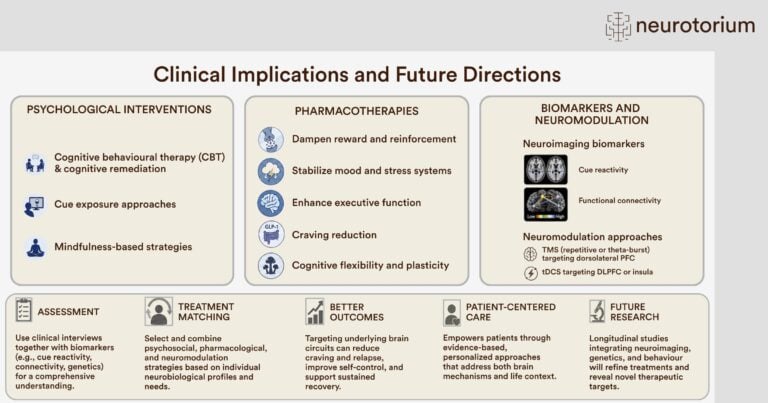
Recognition of addiction as a disorder of distributed brain circuits provides a framework for personalized assessment and treatment of addiction.