


In this video, Professor Gabriele Fischer highlights the need to understand relapses as part of the course of the disorder and the importance of educating patients and families and focusing on the long-term reduction of relapse frequency and intensity.
The conversation emphasizes the role of diagnosing and treating comorbidities such as depression, anxiety, and ADHD, which are often underlying contributors to addiction. A multidisciplinary team approach is highlighted as essential to improving outcomes for those with substance use disorders.
Related content
Current evidence on the neurobiology of addictive behaviour highlights the transition from reward-driven to habitual drug use through alterations in mesolimbic dopamine, glutamatergic signalling, frontostriatal circuitry, and stress-related systems.
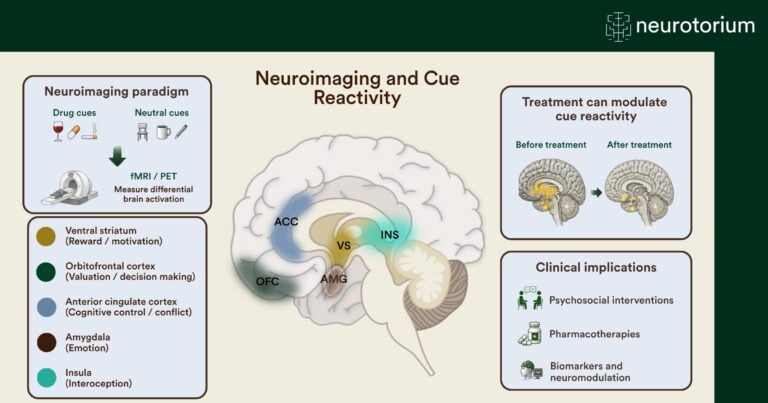
Functional neuroimaging studies commonly compare brain responses to substance-related cues versus neutral cues during fMRI or PET scanning and measure differential brain activation.
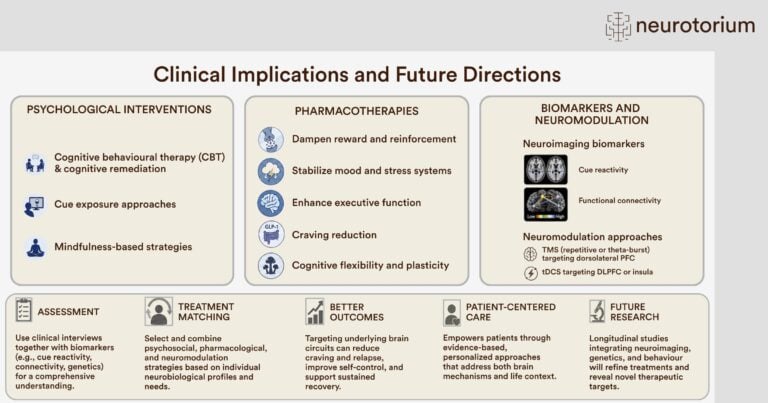
Recognition of addiction as a disorder of distributed brain circuits provides a framework for personalized assessment and treatment of addiction.