



Introduction: addiction as a brain disorder
Addictive disorders are generally understood as chronic, relapsing brain diseases characterized by compulsive substance use or engagement in behaviours despite awareness of their harmful consequences.1 This perspective reflects robust evidence that repeated exposure to addictive substances and behaviours produces enduring neuroadaptations in reward, stress, and executive control circuits.2 These changes help explain core clinical phenomena such as craving, loss of control, and propensity to relapse long after detoxification or abstinence. Importantly, the brain changes observed in substance use disorders (SUDs) show considerable overlap with those found in behavioural addictions, such as gambling/gaming disorder, suggesting shared underlying mechanisms; this is also reflected in current WHO diagnostic classification system ICD 11: Disorders due to Substance Use (6C40-6C4Z) & Disorders due to addictive behaviours (6C50-6C5Z).3 In this article, the term substance use disorder (SUD) is used in accordance with the terminology of the DSM-5, while disorders due to addictive behaviours follow the terminology used in the ICD-11.
At the same time, individual vulnerabilities shaped by genetics, early development experiences, and psychiatric comorbidities (e.g. trauma, ADHD etc.) influence who transitions from recreational use to addiction.2 Understanding the neurobiology of addiction can therefore improve prevention, foster treatment personalization, and reduce stigma by framing addiction within a biopsychosocial model. Beyond their clinical impact, SUDs and behavioural addictions also carry substantial socioeconomic costs, with non-mental-health hospital care linked to alcohol use disorder alone estimated at billions of euros annually across Europe.4
Individual vulnerabilities shaped by genetics, early development experiences, and psychiatric comorbidities (e.g. trauma, ADHD etc.) influence who transitions from recreational use to addiction.2
The addiction cycle and core neurocircuitry
A widely used framework by Koob & Volkow conceptualizes addiction as a cycle with three partially overlapping stages: binge/intoxication, withdrawal/negative affect, and preoccupation/anticipation (craving). Each stage is associated with specific, but interacting, brain circuits and neurochemical systems that shift as the disorder progresses (Fig. 1).1,2
- During the binge/intoxication stage, drugs acutely increase dopamine in the mesolimbic pathway, particularly from the ventral tegmental area (VTA) to the ventral striatum and nucleus accumbens, producing reward and positive reinforcement and thereby attributing incentive salience to drug-related cues.
- In the withdrawal/negative affect stage, neuroadaptations in the extended amygdala and stress systems contribute to dysphoria, anxiety, and irritability, promoting negative reinforcement via relief‑oriented drug taking.
- In the preoccupation/anticipation stage, dysregulated prefrontal cortex (PFC), anterior cingulate cortex (ACC), and orbitofrontal cortex (OFC) impair top‑down inhibitory control, while cues and internal states powerfully trigger conditioned responses and craving.
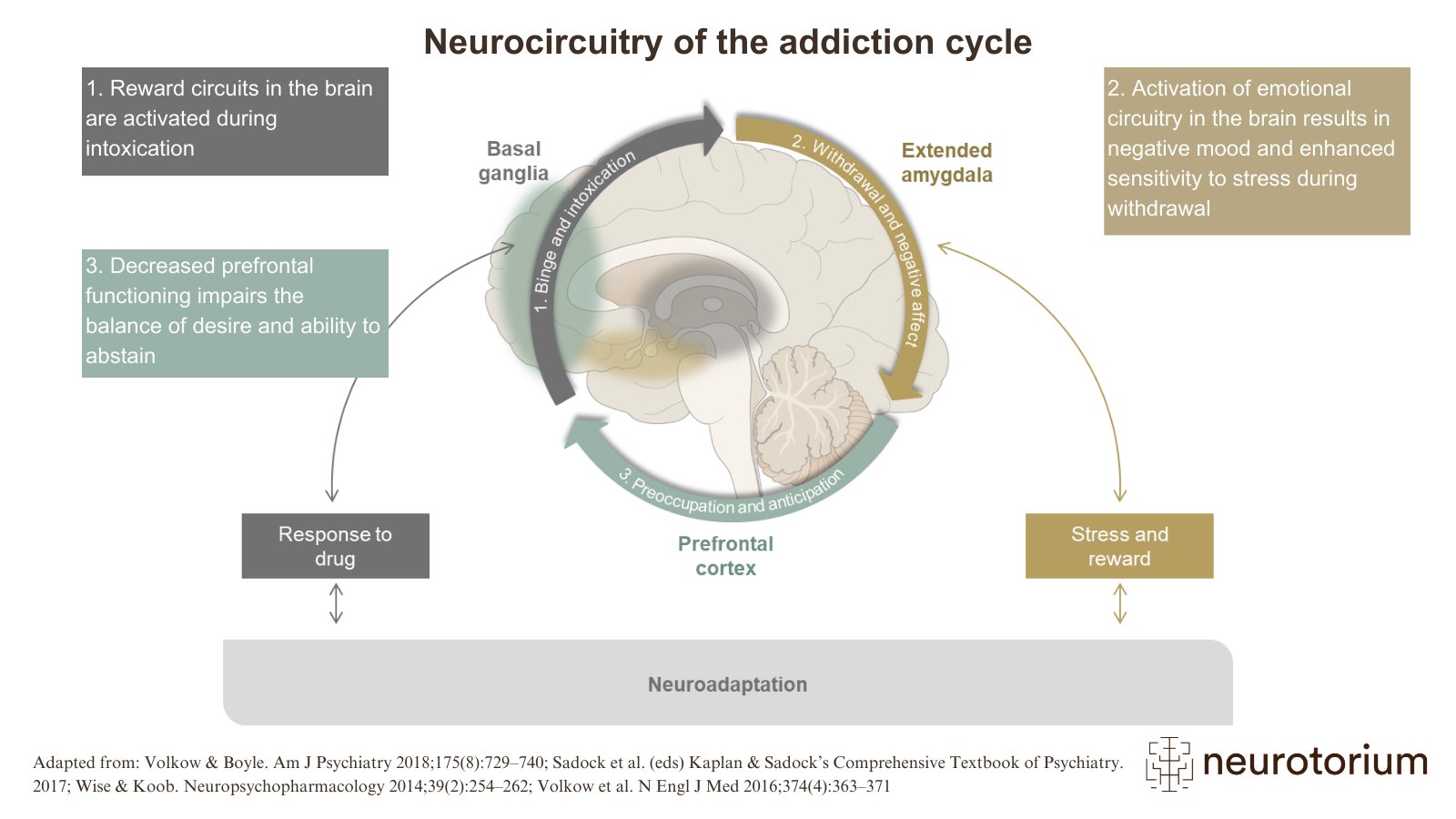
Figure 1. Neurocircuitry of the addiction cycle.
The addiction cycle comprises three interconnected stages: binge/intoxication, characterized by activation of mesolimbic reward circuits within the basal ganglia; withdrawal/negative affect, involving recruitment of stress systems in the extended amygdala; and preoccupation/anticipation (craving), associated with impaired executive control in the prefrontal cortex. Repeated cycling through these stages induces neuroadaptations that progressively shift behaviour from voluntary, reward-driven drug use to compulsive substance seeking and increased vulnerability to relapse.
Over time, there is a shift from ventral to dorsal striatal control of drug seeking, consistent with a transition from goal‑directed to habitual and ultimately compulsive behaviour. This cascade from mesolimbic dopamine to dorsal striatum and prefrontal dysregulation captures how initially voluntary and hedonic use can evolve into persistent, hard‑to‑control behavioural patterns.5
Neurotransmitter systems in addictive behaviour
Although dopamine has historically been central to models of addiction, multiple neurotransmitter systems contribute to the development and maintenance of addictive behaviour.
- Dopamine: Rather than simply signalling pleasure, phasic dopamine release in the mesolimbic pathway encodes reward prediction errors and incentive salience, thereby strengthening learning about drug‑related cues and actions that predict drug availability.5 Chronic drug exposure alters dopamine receptor expression and tonic dopamine levels, contributing to anhedonia, tolerance, incentive salience to environmental stimuli and compulsive seeking.5-7
- Glutamate: Glutamatergic projections from PFC, hippocampus, and amygdala to the nucleus accumbens and dorsal striatum mediate learning, context, and cue‑induced reinstatement of drug seeking.1 Drug‑induced changes in glutamate homeostasis and synaptic plasticity (e.g., long‑term potentiation and depression) underlie weakened prefrontal control over cravings and persistent vulnerability to relapse.1,8
- Gamma aminobutyric acid (GABA) and opioid systems: GABAergic interneurons regulate firing in the ventral tegmental area and other nodes of the reward circuitry,9 while endogenous opioid peptides modulate hedonic impact and stress responses.10 Many drugs (e.g., alcohol, benzodiazepines, opioids) exert their primary effects through GABA and opioid receptors, but they also act on common dopaminergic and glutamatergic pathways.1,9
- Stress‑related neuropeptides: Corticotropin‑releasing factor (CRF), dynorphin, and related systems in the extended amygdala contribute to the negative emotional states in withdrawal, promote escalation of use as individuals attempt to alleviate distress and hence drive relapse through negative reinforcement.2,11,12
Together, these neurotransmitter systems orchestrate distinct but interacting components of addiction. Dopamine reinforces learning by assigning incentive salience to drug-related cues (the disproportionate attention, motivational pull, and priority a drug or reward comes to command over a person’s thoughts and behaviour, often outweighing other previously important goals).13 Glutamate stabilizes learned cue–action associations through synaptic plasticity. GABA regulates the excitability of reward circuits, and stress-related neuropeptides promote negative reinforcement during withdrawal. Their interaction illustrates that addictive behaviour emerges from distributed neural networks rather than from a single “addiction centre” in the brain.1,5,7
From impulsivity to compulsivity: habit formation and decision‑making
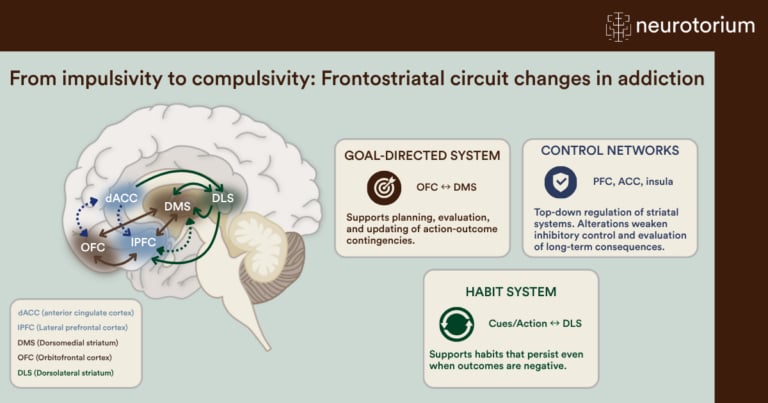
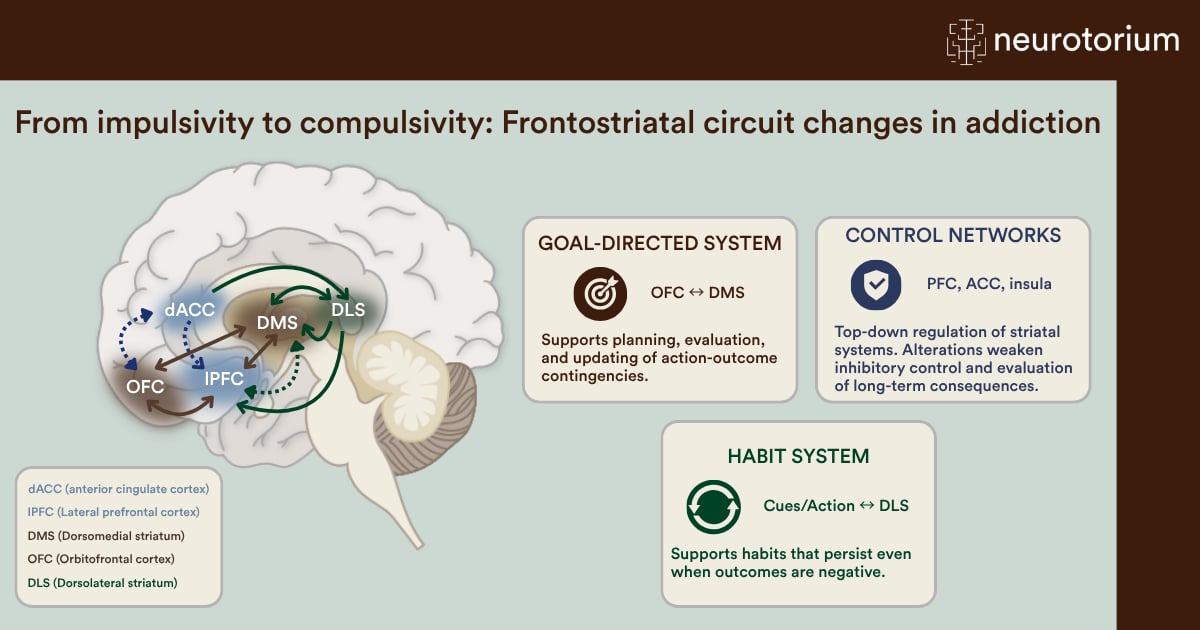
Clinically, many individuals report that initial drug use is driven by reward seeking, positive reinforcement, and the pleasurable (“liking”) effects of the drug. With repeated use, however, incentive salience (“wanting”) increasingly dominates, such that drug-related cues evoke strong motivational urges even when the hedonic (“liking”) effects have diminished.7 Concurrently, drug-taking gradually shifts from goal-directed, impulsive behaviour toward more automatic and compulsive responding, often described by patients as occurring “without thinking” or “against one’s own intentions”. This shift reflects changes in frontostriatal circuits mediating incentive motivation, habit formation and decision‑making (Fig. 2).14
Lesion and optogenetic studies show that connections between the OFC and dorsomedial striatum are crucial for flexible, goal‑directed behaviour, while dorsal lateral striatum supports habits.14 Disruption of OFC or its projections biases behaviour towards inflexible, habitual responding, whereas enhancing OFC–striatal activity can promote goal‑directed control in animal models.15 In addiction, repeated pairing of drug effects with specific cues and actions leads to strengthened dorsal striatal stimulus–response associations, making addictive behaviour more difficult to modify even when the outcomes are negative. 14,16,17
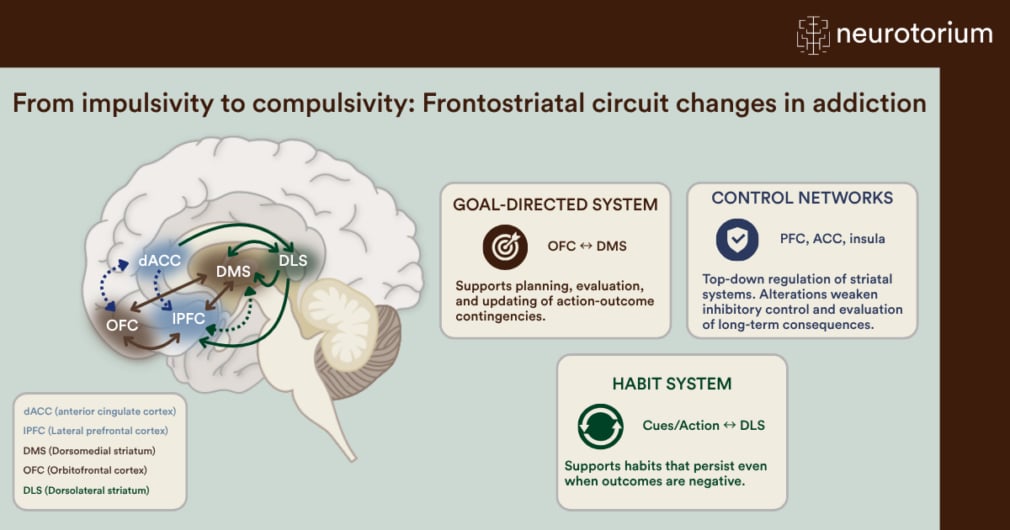
Figure 2. From impulsivity to compulsivity.
Repeated drug exposure shifts behavioural control from goal-directed, reward-driven actions mediated by orbitofrontal cortex (OFC)–dorsomedial striatum (DMS) circuits toward habitual and compulsive responding supported by the dorsolateral striatum (DLS). Concurrent dysfunction of the prefrontal cortex (PFC), anterior cingulate cortex (ACC), and insula weakens inhibitory control, decision making, and interoceptive regulation, promoting persistent drug seeking despite adverse consequences and contributing to the transition from voluntary to compulsive addiction.
In parallel, structural and functional alterations in the PFC, anterior cingulate, and insula impair inhibitory control, decision-making, interoceptive awareness, and evaluation of long‑term consequences. The insula integrates interoceptive signals with conscious urges, translating bodily states into the subjective experience of craving. Consistent with this role, lesion studies have shown that smokers with damage to the insula are more likely to quit smoking abruptly and without relapse, highlighting the importance of this region in maintaining nicotine addiction.18,19 This combination of strengthened habits and weakened executive control networks provides a mechanistic account of the clinical trajectory from impulsive to compulsive use.1
Neuroimaging and cue‑reactivity: insights into craving and relapse
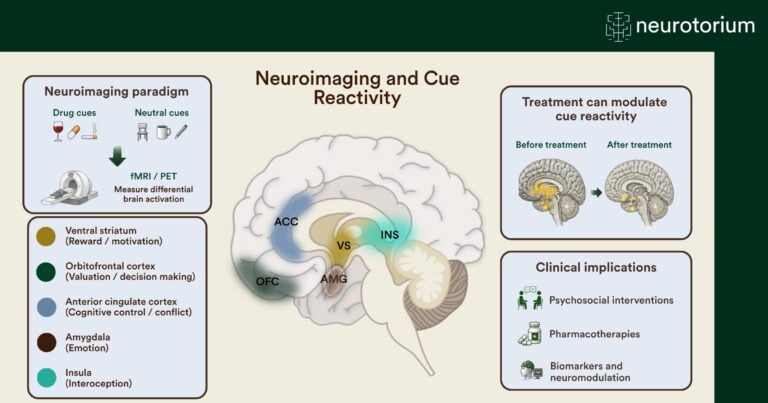
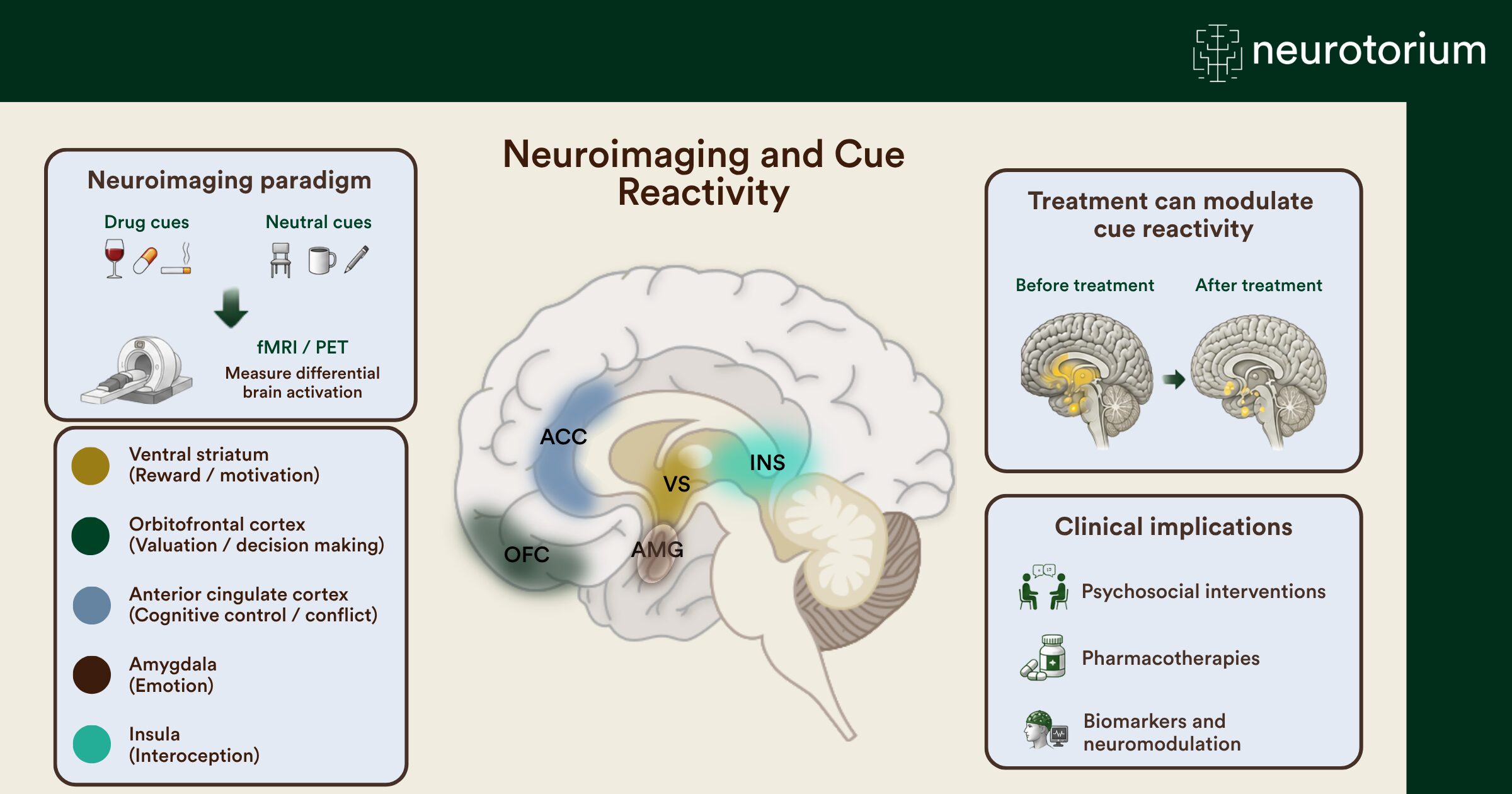
Functional neuroimaging has played a key role in elucidating the neural correlates of craving, cue‑reactivity, and relapse risk. Neural cue reactivity as a correlate of the motivational salience of drugs and automatized use behaviours was widely examined using experimental paradigms typically presenting substance‑related versus neutral cues during fMRI or PET scanning and measure differential activation in reward and control networks.
Across substances, drug‑related cues reliably activate the ventral striatum, OFC, anterior cingulate cortex, amygdala, and insula, reflecting incentive salience, emotional processing, and interoceptive states associated with craving.6,20 In alcohol‑dependent patients, stronger cue‑elicited activation in ventral striatum and OFC has been associated with higher levels of craving and with a greater likelihood of early relapse after detoxification (Fig. 3).21,22
Neuroimaging studies also indicate that cognitive‑behavioural and pharmacological treatments can modulate cue‑reactivity, with reductions in limbic and striatal responses often paralleling clinical improvement.16,23,24 This supports the use of cue‑based paradigms as potential biomarkers for treatment response and for the development of individualized interventions targeting specific neural circuits.25 Connectivity analyses and network‑level approaches have started to reveal how large‑scale brain networks (e.g., salience, default mode, executive control) are reorganized in addiction and during recovery.26,27
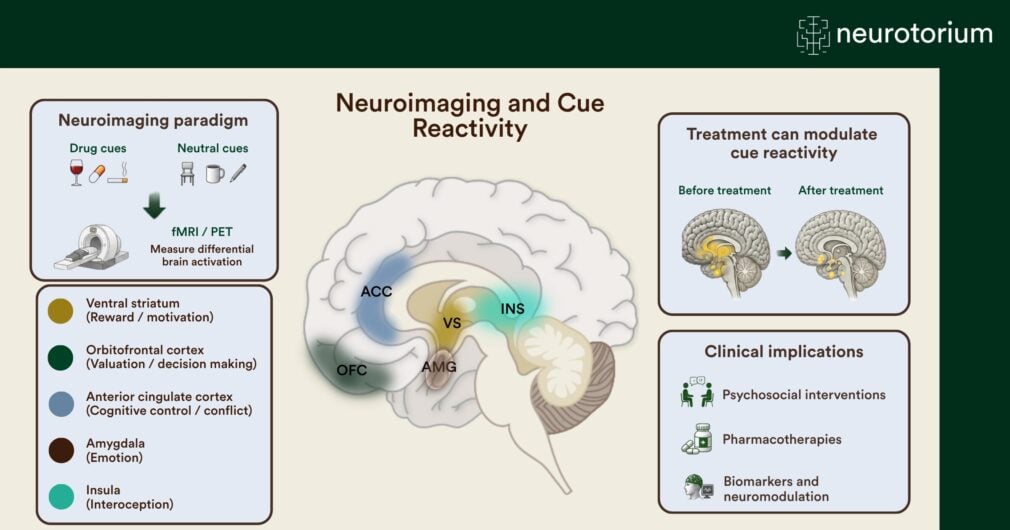
Figure 3. Neuroimaging and cue reactivity
Functional neuroimaging studies commonly compare brain responses to substance-related cues versus neutral cues during fMRI or PET scanning and measure differential brain activation. Drug cues reliably activate a set of regions involved in reward, emotion and interoception, including the ventral striatum (nucleus accumbens), the orbitofrontal cortex (OFC), the anterior cingulate cortex (ACC), the amygdala and the insula. Greater cue-elicited activation in the ventral striatum and OFC is associated with higher craving and with an increased likelihood of early relapse after detoxification. Effective psychosocial or pharmacological treatments reduce cue-evoked activation in limbic and striatal regions, and such reductions often parallel clinical improvements and lower relapse risk. Cue-based paradigms and connectivity analyses provide biomarkers that can inform treatment response monitoring and support the development of craving and relapse vulnerability, whereas recovery is associated with more balanced connectivity.
Genetic, developmental, and environmental influences
Not all individuals exposed to addictive substances or behaviours develop an addiction, underlining the importance of vulnerability factors. Twin and family studies estimate that approximately half of the variance in risk for SUDs is attributable to genetic influences, with numerous common variants of small effect implicated.28,29 Genes affecting dopamine, glutamate, GABA, and opioid systems, such as Dopamine Receptor D2, can modulate baseline reward sensitivity, subjective drug effects, and progression to compulsive behaviour.30,31
Developmental stage is another key determinant, as adolescent brain maturation is characterized by heightened reward sensitivity and still developing prefrontal control, creating a window of increased vulnerability to addictive behaviours.32,34 Adverse childhood experiences, post-traumatic stress disorder (PTSD), chronic stress or Attention Deficit/Hyperactivity Disorder (ADHD) can further bias neurodevelopment towards heightened stress reactivity, altered inhibitory control and impaired emotion regulation, interacting with genetic factors to increase risk.35-38 These developmental comorbidities are far from marginal in prevalence. ADHD affects an estimated 23% of treatment-seeking individuals with substance use disorders, and 13–77% in adolescent samples depending on setting and assessment method.39,40 Early adversity shows a comparably strong, dose-dependent relationship with later substance dependence: individuals reporting five or more adverse childhood experiences are 7- to 10-fold more likely to develop illicit drug problems and addiction than those reporting none.41 On the other hand, PTSD was diagnosed in up to a remarkable 19.2% in adolescents with SUD, while in the general population a 43% of persons with PTSD have developed a comorbid SUD.42 Taken together, these findings underscore the importance of early identification of developmental psychiatric conditions. This can help reduce the onset and incidence of SUD in younger populations while, in patients already presenting a SUD or disorder due to addictive behaviours, it can guide for more targeted and effective treatment of both disorders.
Adverse childhood experiences, post-traumatic stress disorder (PTSD), chronic stress or Attention Deficit/Hyperactivity Disorder (ADHD) can further bias neurodevelopment towards heightened stress reactivity, altered inhibitory control and impaired emotion regulation, interacting with genetic factors to increase risk.35-38
Environmental context, including availability of substances, social norms, peer influences, gender and socio‑economic factors, shapes exposure and reinforcement patterns, and can either buffer or amplify underlying biological vulnerabilities.43-46 Thus, addiction must be understood within a developmental and environmental framework that emphasizes plasticity and the potential for recovery.5
Clinical implications, ways to recovery and future directions
Although addiction is associated with profound neuroadaptations, many of these changes are at least partially reversible.47 Longitudinal neuroimaging studies demonstrate recovery of prefrontal function, normalization of dopamine signalling,48 and reduced cue-reactivity with prolonged abstinence and effective treatment,16 illustrating the remarkable plasticity of the human brain.
Recognizing addiction as a disorder of brain circuits has important clinical implications for assessment, treatment, and prognosis. First, the prominent role of learning and cue‑reactivity highlights the importance of psychosocial interventions that target conditioned associations and enhance cognitive control and executive functions, such as cognitive‑behavioural therapy and cognitive remediation,49,50 cue‑exposure approaches,51,52 and mindfulness‑based strategies.53,54 These treatments may, in part, work by reshaping frontostriatal and limbic networks, improving top‑down regulation over automatic responses to drug cues. Nonetheless, a clearer understanding of the mechanisms underlying these potential benefits is still needed.
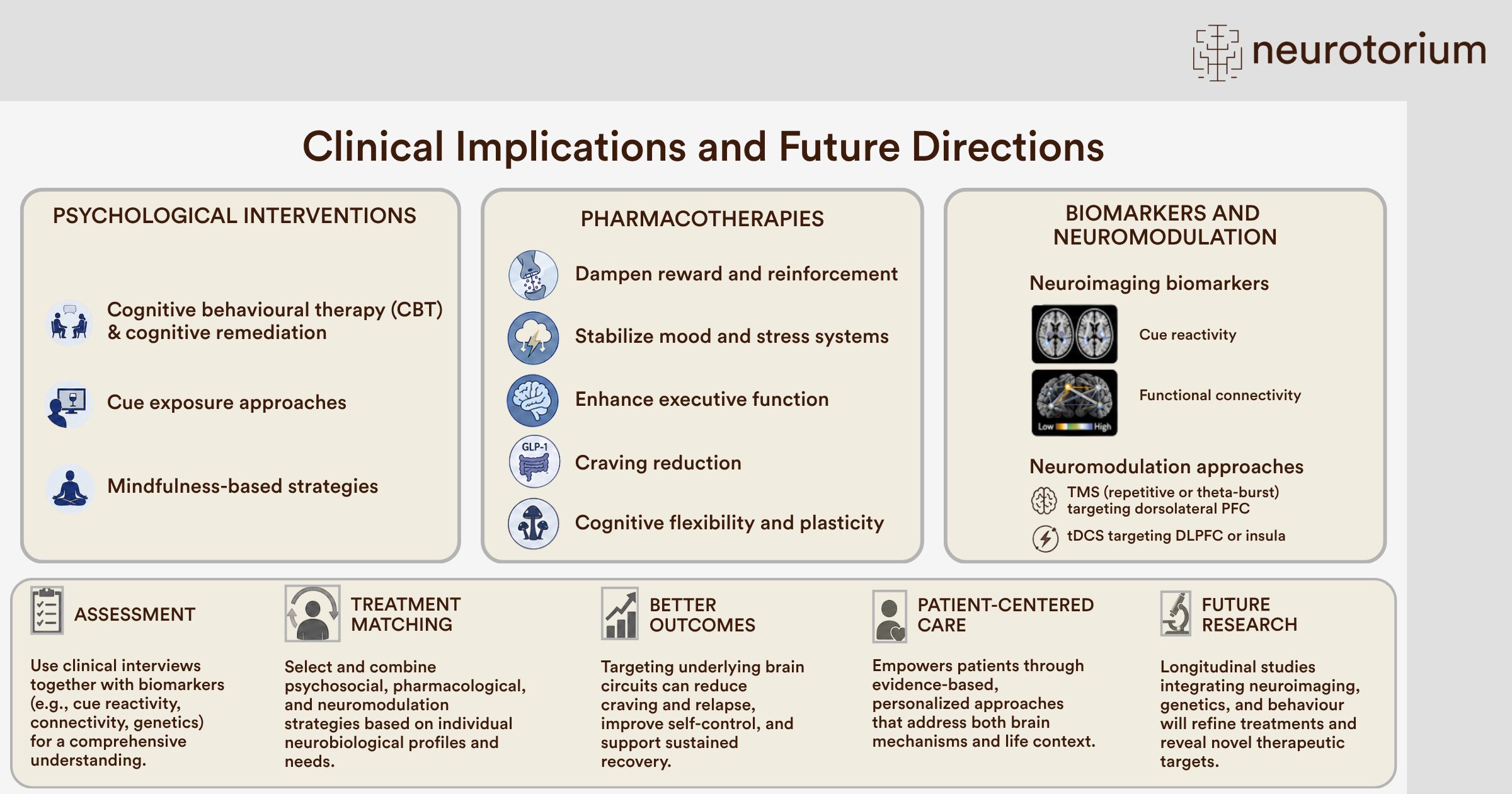
Second, pharmacotherapies can be conceptualized as tools to modulate specific neurobiological processes, such as dampening reward responses, stabilizing mood and stress systems, or enhancing executive function. For example, medications that reduce dopaminergic reinforcement or normalize glutamatergic signalling may help decrease craving and relapse risk in certain SUDs.55,56 Innovative pharmacological approaches in the treatment of addiction include glucagon-like peptide 1 (GLP-1) receptor agonists57,58 and psychedelics, like psilocybin.59-61 Future work should aim to refine such approaches using neuroimaging and genetic markers to match patients to treatments based on their individual neurobiological profiles (Fig. 4). GLP-1 receptor agonists seem to target the GLP-1 receptors in the ventral tegmental area and nucleus accumbens, blunting the phasic dopaminergic release in response to drug-related cues.62-64 Its effect seems to be generalized in a way it could be used to treat different (potentially all) types of addiction, especially in patients addicted to more than one substance/behaviour.65 In case of psilocybin, the mechanism targets a different neurotransmitter system but converges on the dopaminergic reward circuitry. Psychedelics broadly target the serotonin system, and it is suggested that this may promote a durable state of neuroplasticity in the brain.66 It has been described how psychedelics directly modulate the function of the medial prefrontal cortex,67 which is a crucial region implicated in cue-reactivity, craving and top-down inhibitory control over the mesolimbic reward system. While the preliminary findings are encouraging, additional evidence is required to address the substantial comorbidity burden and diagnostic heterogeneity that could affect study outcomes.
For example, medications that reduce dopaminergic reinforcement or normalize glutamatergic signalling may help decrease craving and relapse risk in certain SUDs.55,56
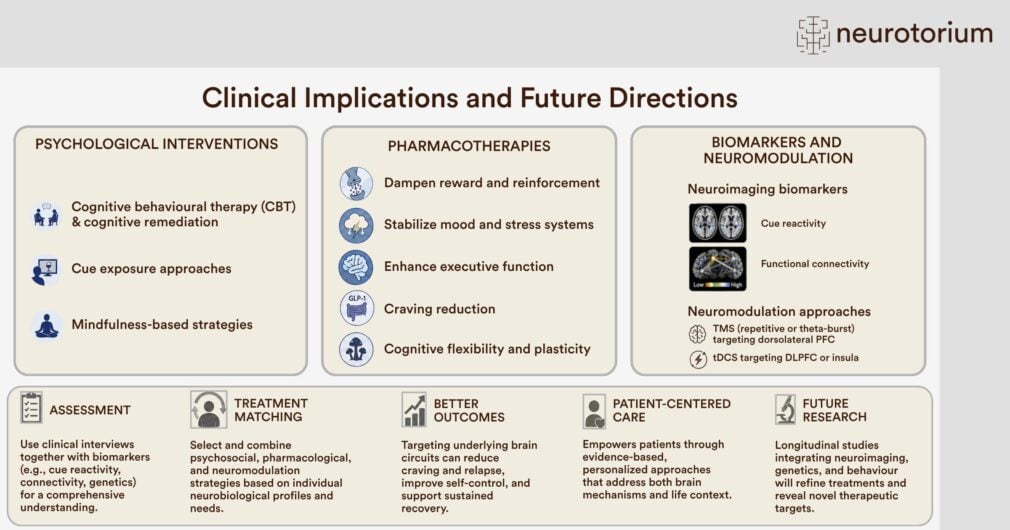
Figure 4. Clinical implications and future directions
Recognition of addiction as a disorder of distributed brain circuits provides a framework for personalized assessment and treatment. Psychosocial interventions aim to weaken conditioned cue–drug associations, improve executive function, and strengthen top-down control through plasticity within frontostriatal and limbic circuits. Established pharmacotherapies target complementary neurobiological mechanisms by reducing reward-related reinforcement, stabilizing stress and affective systems, or enhancing executive control. Emerging approaches include GLP-1 receptor agonists, which may reduce craving and reward-driven behaviour, and psychedelic-assisted therapies, which may promote cognitive flexibility and adaptive neural plasticity. Neuroimaging biomarkers are being investigated to predict treatment response and relapse risk, whereas neuromodulation techniques, including transcranial magnetic stimulation (TMS) and transcranial direct current stimulation (tDCS), seek to enhance cognitive control.
Third, neuroimaging biomarkers—particularly cue‑reactivity and connectivity patterns—are being explored as predictors of treatment outcome and targets for neuromodulation techniques such as transcranial magnetic stimulation (TMS) or transcranial direct current stimulation (tDCS). Modulating activity in key regions such as dorsolateral PFC or insula could support abstinence by strengthening cognitive control or reducing the motivational pull of drug cues.68,69 High-frequency TMS over the dorsolateral PFC, for instance, is thought to act by restoring top-down regulation over mesolimbic reward circuits, thereby improving inhibitory control during moments of high craving or cue exposure.69 Insula-targeted stimulation may work through a complementary route, dampening the interoceptive signals that translate bodily and affective states into conscious urges to use; consistent with this, a randomized controlled trial found that repetitive TMS over the insula reduced heavy drinking in treatment-seeking alcohol-dependent patients.70 Together, these findings suggest that neuromodulation protocols could be tailored to distinct circuit-level deficits (cognitive control versus interoceptive craving) offering mechanism-based, complementary options alongside existing psychosocial and pharmacological treatments.
Conclusions
Across the addiction cycle, dopaminergic, glutamatergic, GABAergic, and stress-related systems converge on a shared set of frontostriatal and limbic circuits, offering a mechanistic bridge between molecular neuroadaptation and the clinical trajectory from voluntary use to compulsive, relapse-prone behaviour. This circuit-based view helps explain why individual outcomes vary so widely: genetic predisposition, developmental stage, and environmental exposure interact to determine who becomes vulnerable and who recovers, and why treatment response differs so much from one patient to the next.
The central challenge now is translational. Neuroimaging biomarkers of cue-reactivity and connectivity are beginning to stratify patients by relapse risk and treatment responsiveness, while an expanding set of interventions is starting to target these circuits directly, although not all with the same strength of evidence. Cognitive-behavioural therapy remains the best-supported psychosocial option, cognitive remediation has shown promising effects on executive function, but this evidence base comes almost exclusively from substance use disorders and has not yet been established in behavioural addictions such as gambling or gaming disorder. Mindfulness-based approaches are increasingly used adjunctively, but their incremental benefit over standard care is not yet consistently demonstrated, and they should still be regarded as emerging rather than an established treatment component. Newer pharmacotherapies, including GLP-1 receptor agonists and psychedelic-assisted therapies, and neuromodulation approaches, such as TMS and tDCS, add mechanistically distinct tools that may eventually allow interventions to be matched to a patient’s individual neurobiological profile.
Given the substantial personal, clinical, and societal burden of substance use disorders and behavioural addictions, continued integration of neurobiological, psychological, and social perspectives will be essential to move from one-size-fits-all care toward genuine precision addiction medicine.
The central challenge now is translational.
Related content
Functional neuroimaging studies commonly compare brain responses to substance-related cues versus neutral cues during fMRI or PET scanning and measure differential brain activation.
Recognition of addiction as a disorder of distributed brain circuits provides a framework for personalized assessment and treatment of addiction.
Repeated drug exposure shifts behavioural control from goal-directed, reward-driven actions mediated by orbitofrontal cortex (OFC)–dorsomedial striatum (DMS) circuits toward habitual and compulsive responding supported by the dorsolateral striatum (DLS).