

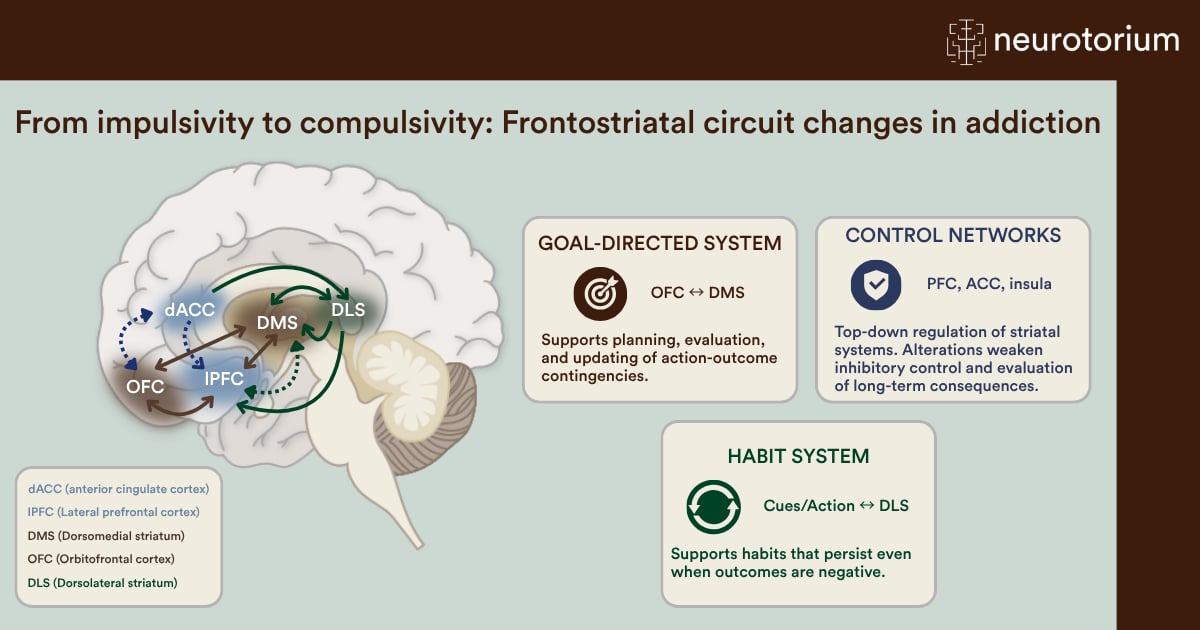
Repeated drug exposure shifts behavioural control from goal-directed, reward-driven actions mediated by orbitofrontal cortex (OFC)–dorsomedial striatum (DMS) circuits toward habitual and compulsive responding supported by the dorsolateral striatum (DLS).
Concurrent dysfunction of the prefrontal cortex (PFC), anterior cingulate cortex (ACC), and insula weakens inhibitory control, decision-making, and interoceptive regulation, promoting persistent drug seeking despite adverse consequences and contributing to the transition from voluntary to compulsive addiction.
Related content
Current evidence on the neurobiology of addictive behaviour highlights the transition from reward-driven to habitual drug use through alterations in mesolimbic dopamine, glutamatergic signalling, frontostriatal circuitry, and stress-related systems.
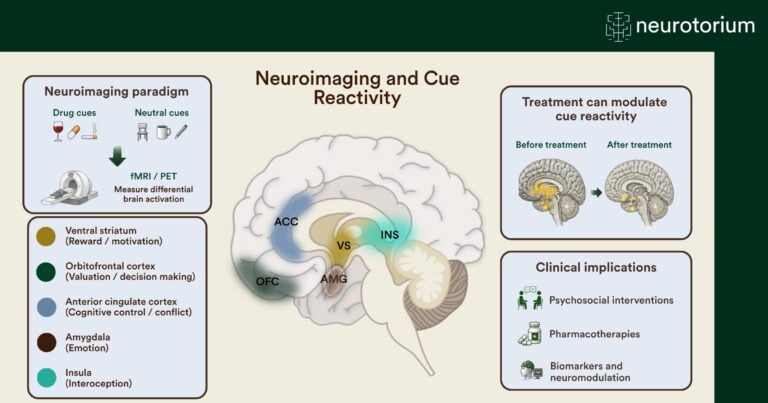
Functional neuroimaging studies commonly compare brain responses to substance-related cues versus neutral cues during fMRI or PET scanning and measure differential brain activation.
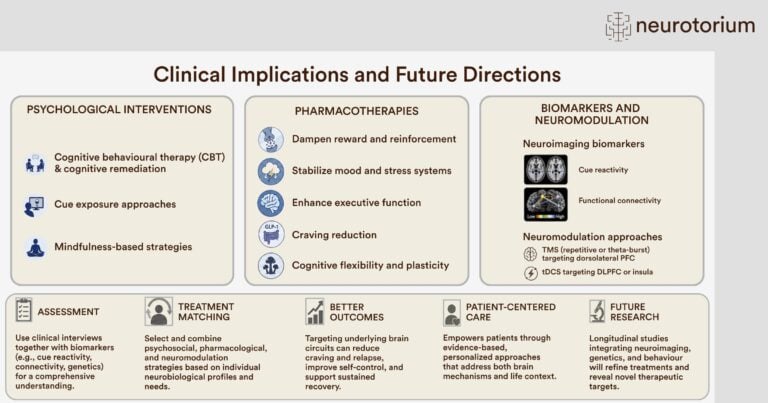
Recognition of addiction as a disorder of distributed brain circuits provides a framework for personalized assessment and treatment of addiction.