

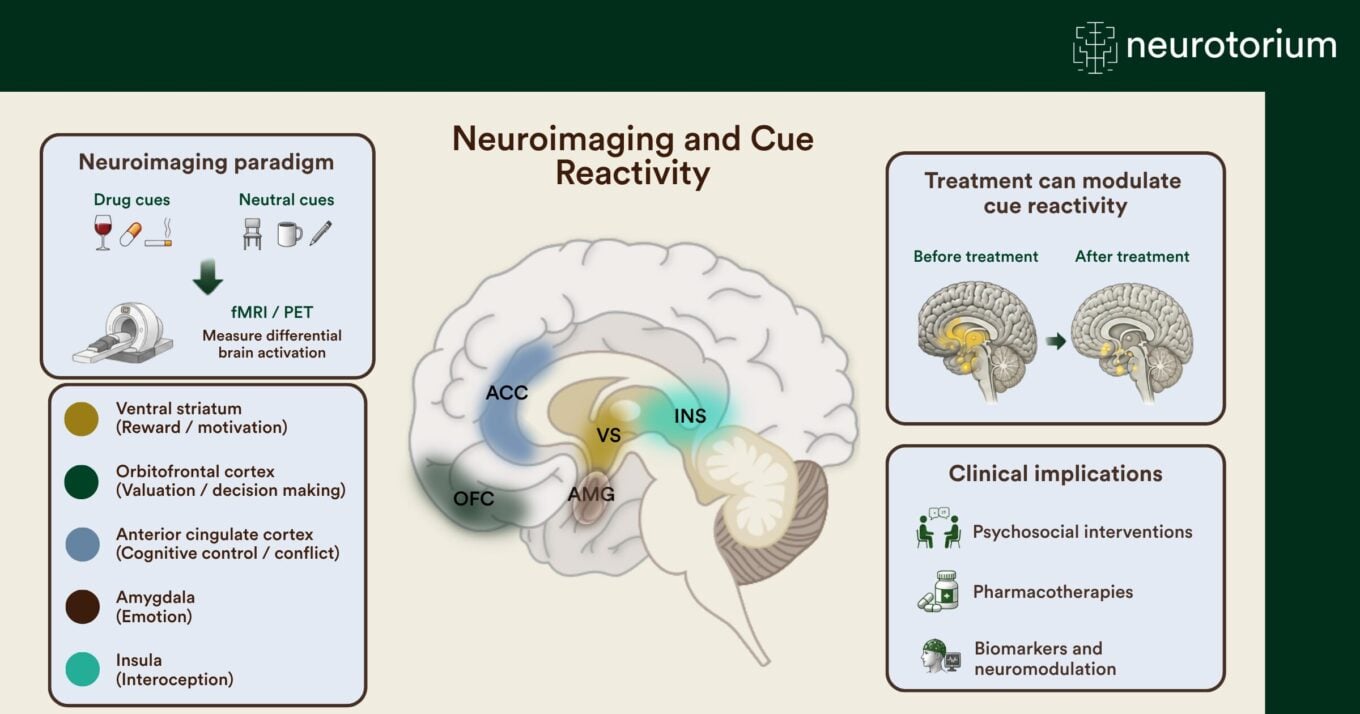
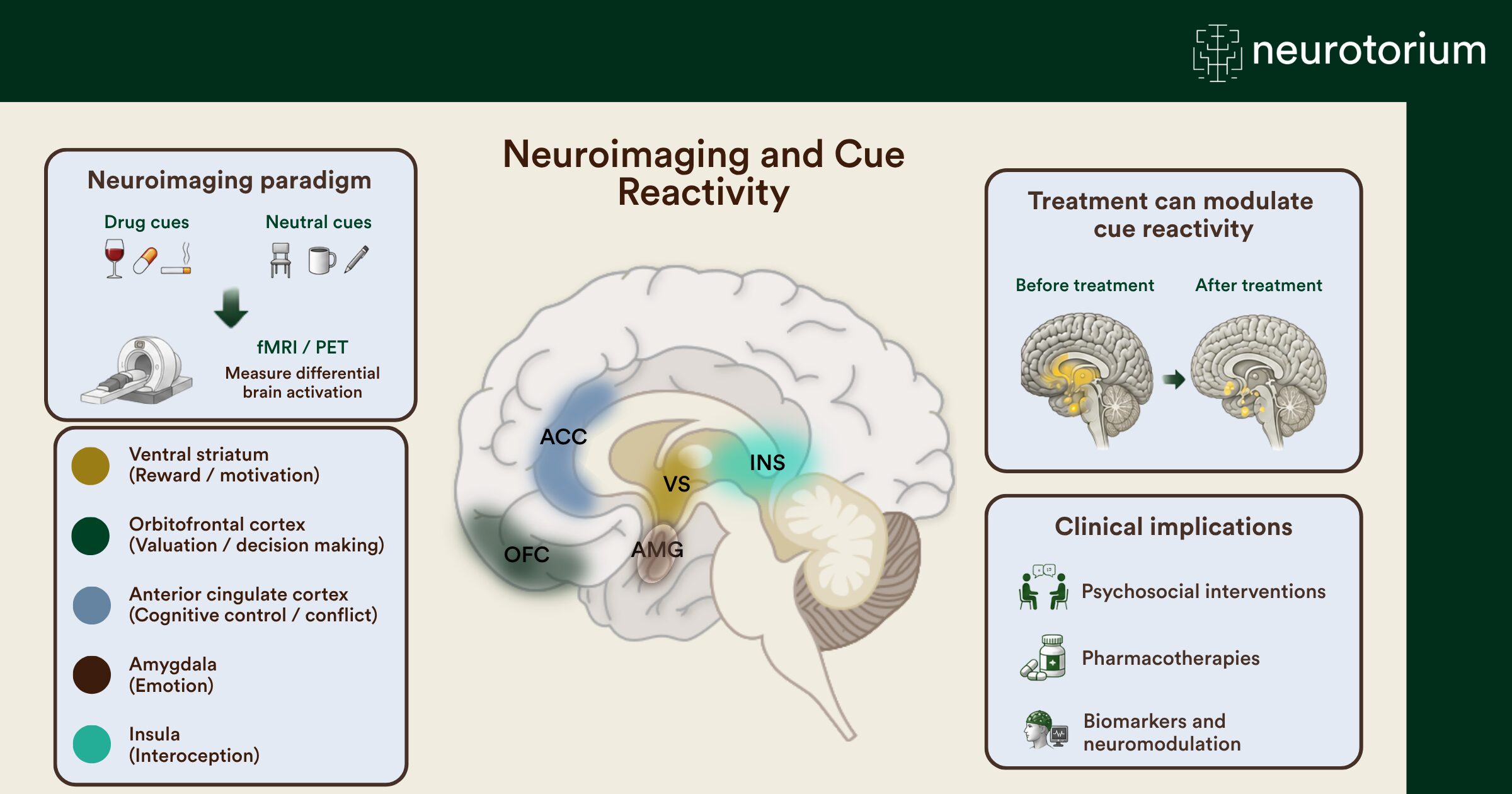
Functional neuroimaging studies commonly compare brain responses to substance-related cues versus neutral cues during fMRI or PET scanning and measure differential brain activation.
Drug cues reliably activate a set of regions involved in reward, emotion and interoception, including the ventral striatum (nucleus accumbens), the orbitofrontal cortex (OFC), the anterior cingulate cortex (ACC), the amygdala and the insula. Greater cue-elicited activation in the ventral striatum and OFC is associated with higher craving and with an increased likelihood of early relapse after detoxification.
Effective psychosocial or pharmacological treatments for addiction reduce cue-evoked activation in limbic and striatal regions, and such reductions often parallel clinical improvements and lower relapse risk. Cue-based paradigms and connectivity analyses provide biomarkers that can inform treatment response monitoring and support the development of craving and relapse vulnerability, whereas recovery is associated with more balanced connectivity.
Related content
Current evidence on the neurobiology of addictive behaviour highlights the transition from reward-driven to habitual drug use through alterations in mesolimbic dopamine, glutamatergic signalling, frontostriatal circuitry, and stress-related systems.
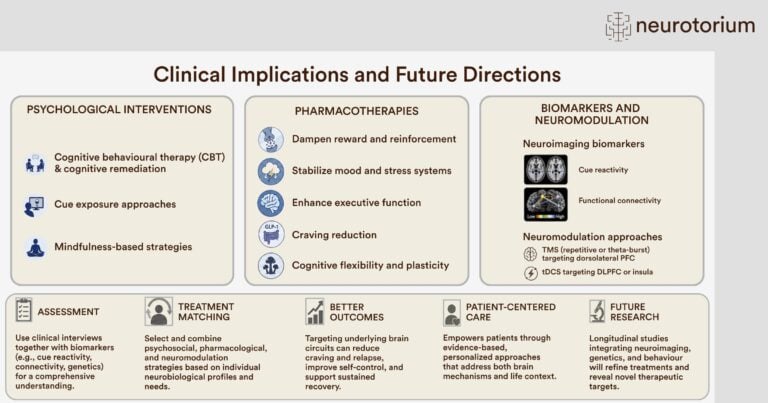
Recognition of addiction as a disorder of distributed brain circuits provides a framework for personalized assessment and treatment of addiction.
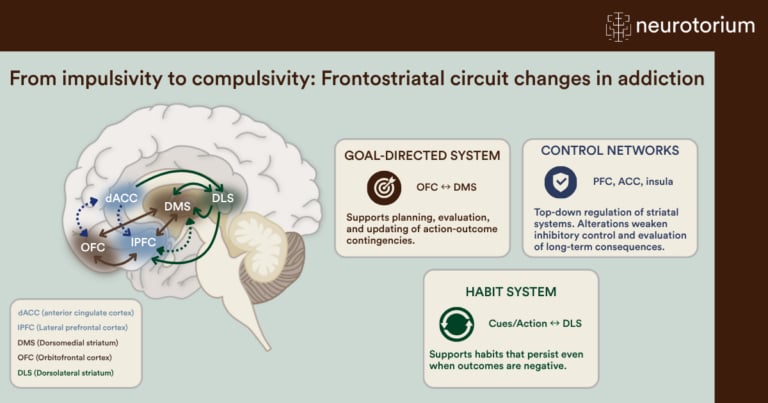
Repeated drug exposure shifts behavioural control from goal-directed, reward-driven actions mediated by orbitofrontal cortex (OFC)–dorsomedial striatum (DMS) circuits toward habitual and compulsive responding supported by the dorsolateral striatum (DLS).