

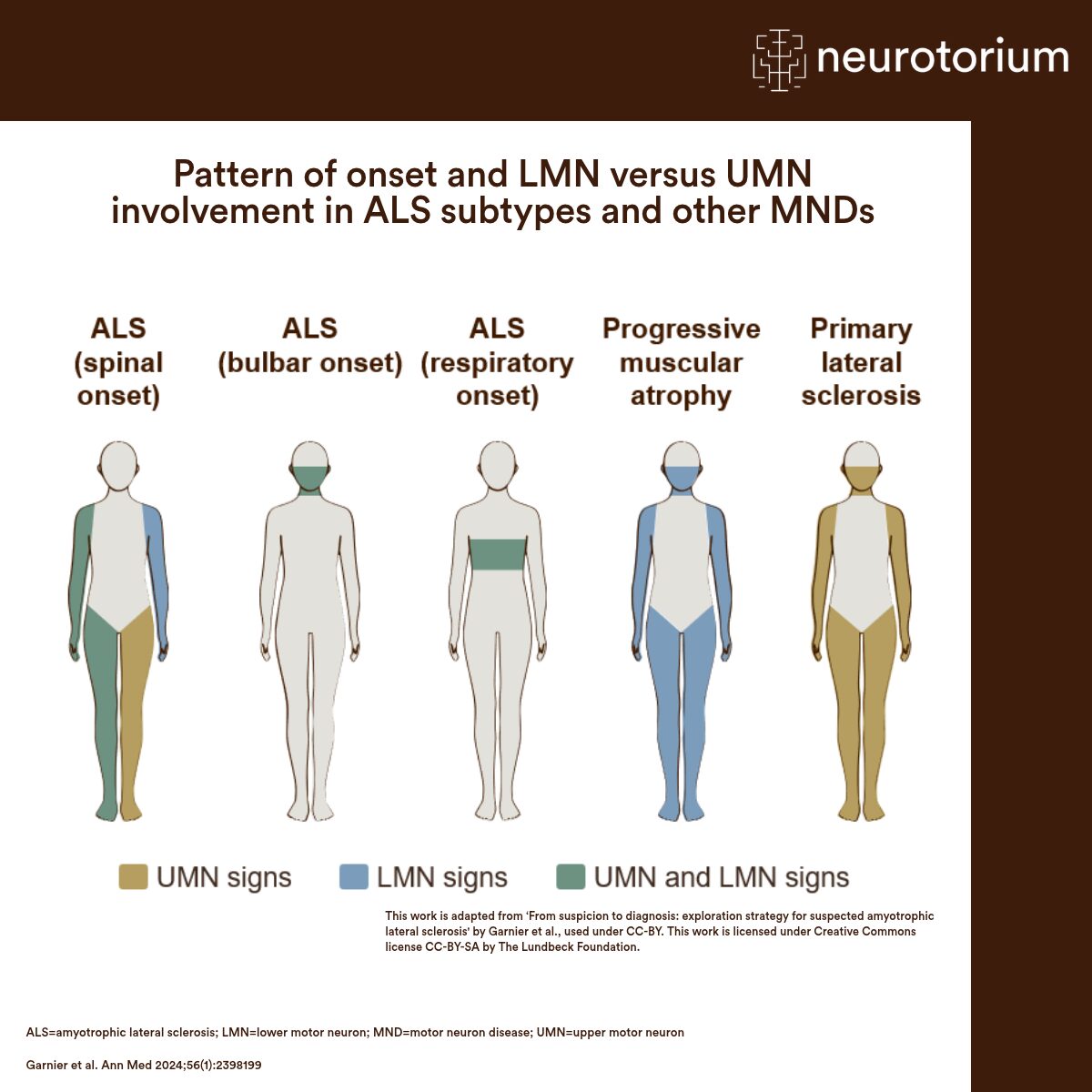
Despite having a characteristic clinical phenotype within the MND spectrum, ALS is a heterogeneous disorder, with variability in patterns and age of onset, relative LMN versus UMN involvement, extent of nonmotor symptoms, and prognosis.1,2
Subtypes of ALS are primarily classified by pattern of onset1,2:
- Spinal/classic onset: large proportion of cases, beginning with asymmetric, painless limb weakness, resulting in functional limitations
- Bulbar onset: ~20–30% of cases, beginning with weakness in bulbar muscles, resulting in dysarthria, dysphagia, and tongue fasciculations
- Respiratory onset: ~3–5% of cases, beginning with weakness in respiratory muscles, resulting in orthopnoea and dyspnoea
Cases of ALS may also be classified as familial (~10%) or sporadic depending on family history, with multiple disease-causing genetic mutations identified (most commonly in SOD1, TARDBP, FUS, or C9orf72).1,2
Related content
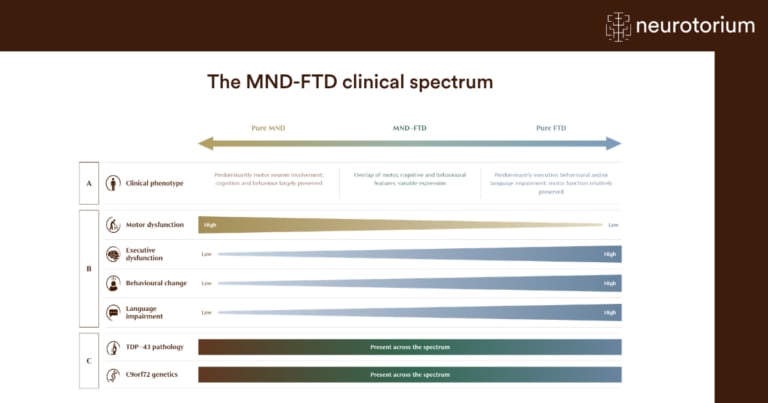
Motor neuron disease (MND) and frontotemporal dementia (FTD) were once seen as separate conditions, one affecting movement and the other cognition and behaviour. Growing evidence now places them on the same disease spectrum, linked by shared clinical features, genetic causes, and underlying pathology.
ALS and FTD were historically regarded as distinct diseases but are now recognised as overlapping disorders within a broader neurodegenerative spectrum. This slide deck introduces their defining clinical features, the development of the ALS–FTD concept, and the approaches used to diagnose ALS, FTD and mixed presentations.
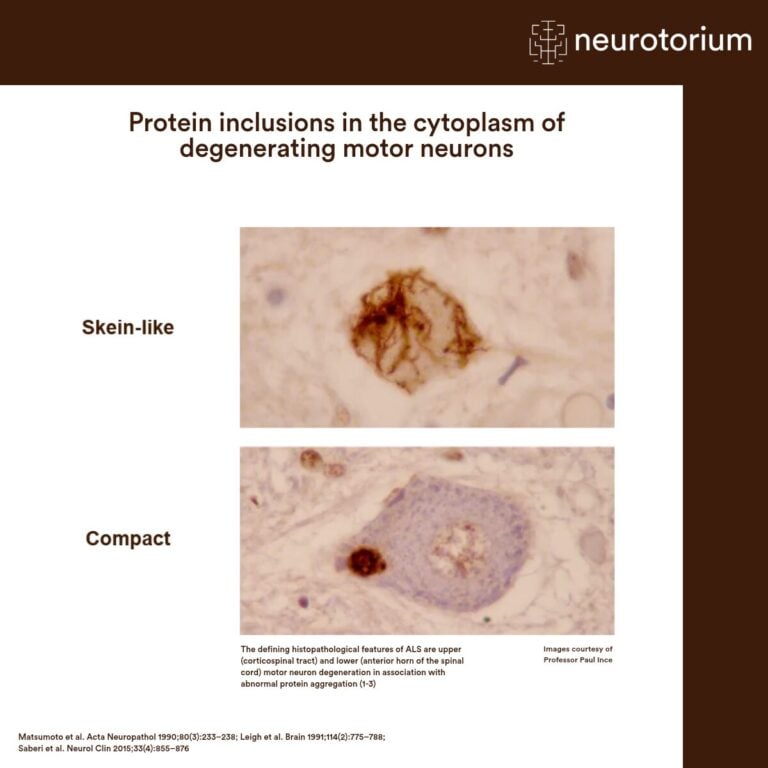
Motor neuron degeneration in ALS is associated with abnormal protein aggregation, including characteristic skein-like and compact cytoplasmic inclusions.