


Index for
slide deck
History, definitions, and diagnosis
History, definitions, and diagnosis
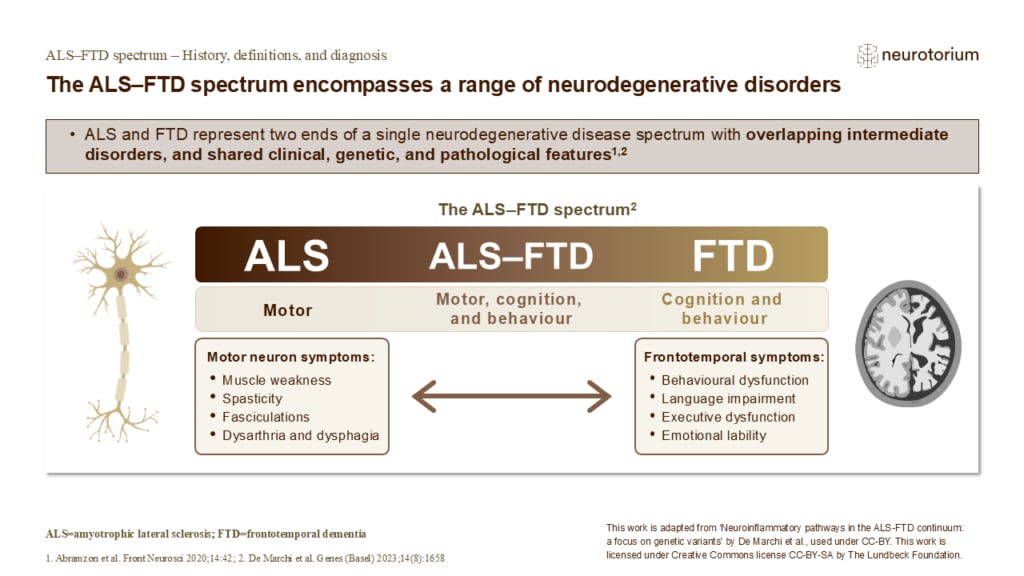
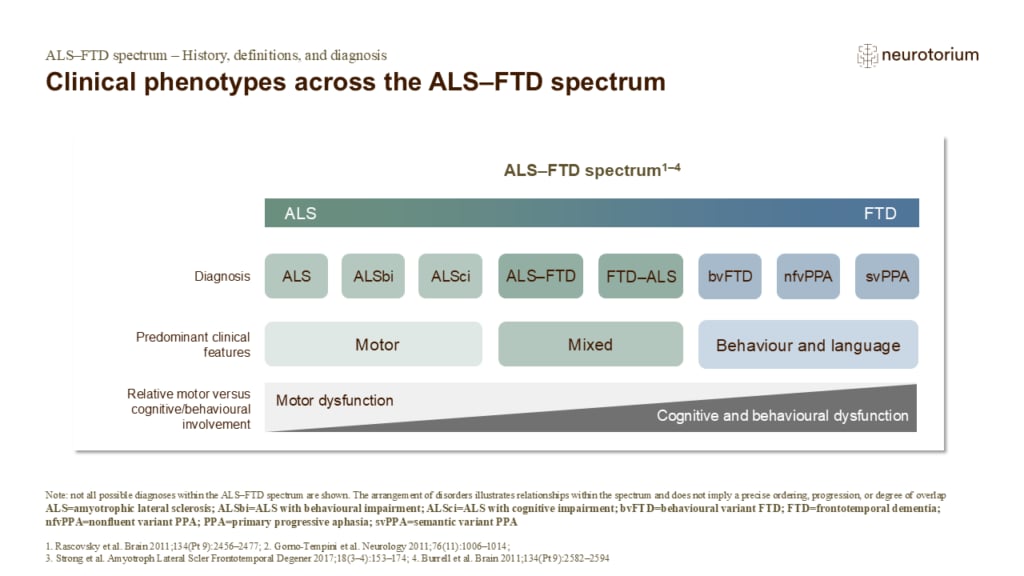
The ALS–FTD spectrum encompasses a range of neurodegenerative disorders
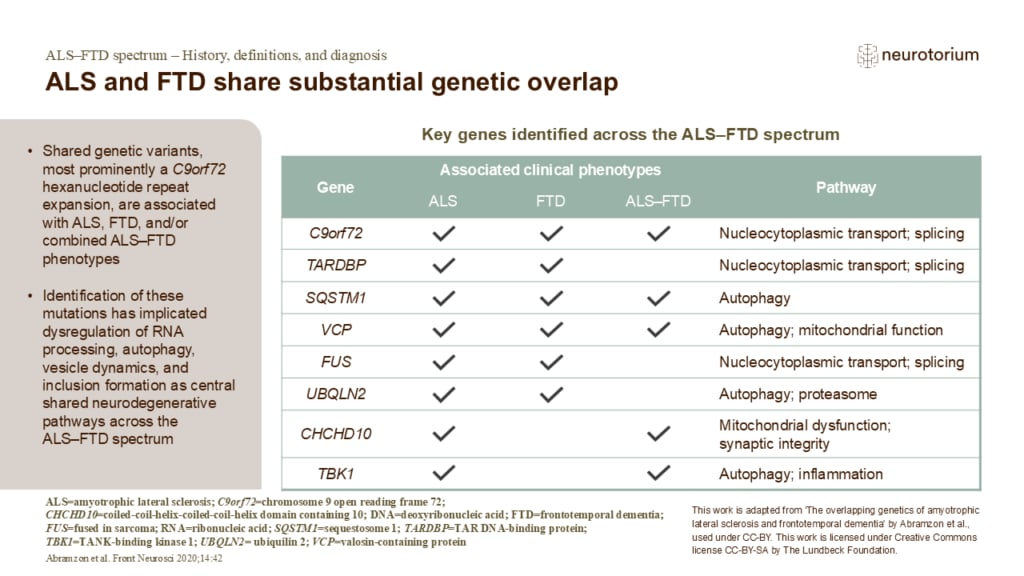
While amyotrophic lateral sclerosis (ALS) and frontotemporal dementia (FTD) have historically been considered distinct conditions, substantial overlap in genetic and pathological profiles indicates that they in fact represent two ends of a shared neurodegenerative disorde…
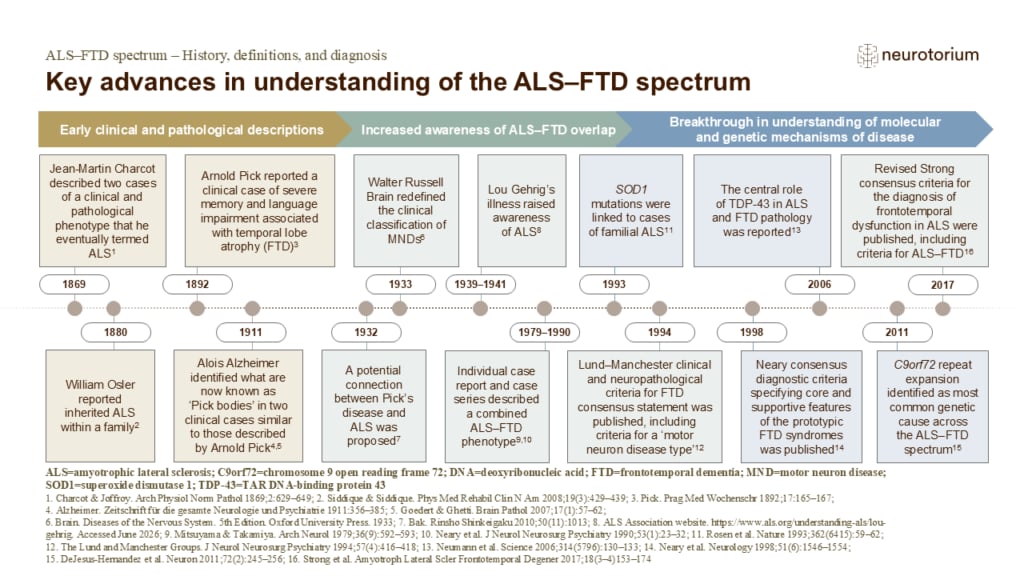
Key advances in understanding of the ALS–FTD spectrum
ALS: definitions and clinical features
ALS: definitions and clinical features
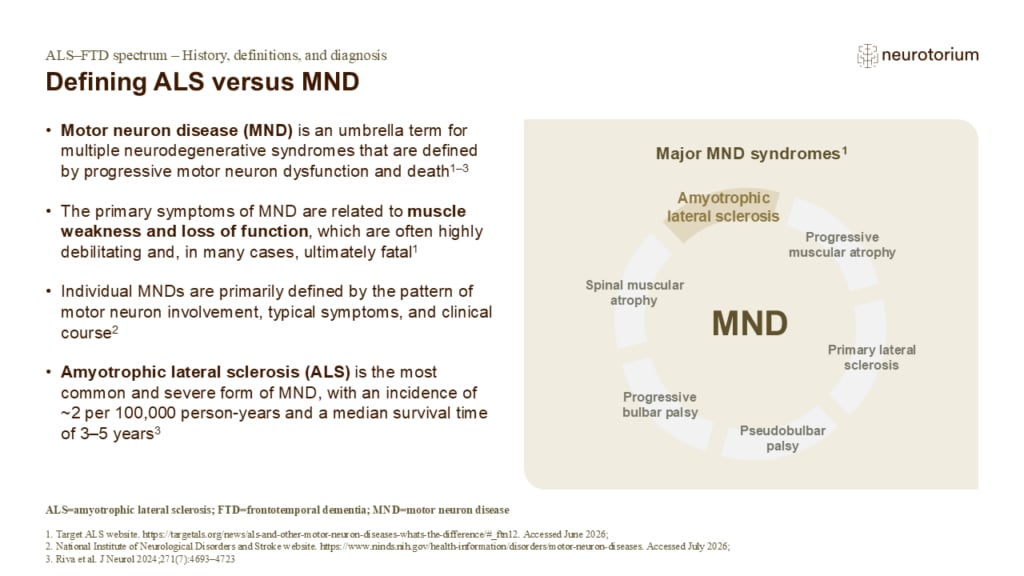
Defining ALS versus MND
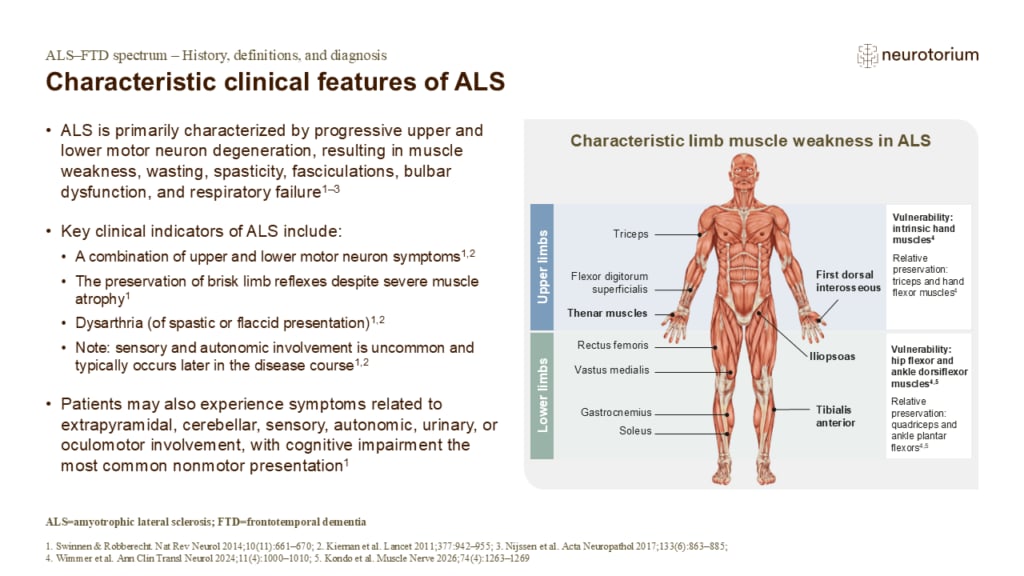
Characteristic clinical features of ALS
Amyotrophic lateral sclerosis (ALS) may be associated with patterns of relative muscle involvement, rather than uniform weakness across muscle groups.4,5 Intrinsic hand muscles, hip flexors, and ankle dorsiflexors may show greater vulnerability, while the triceps, hand fl…
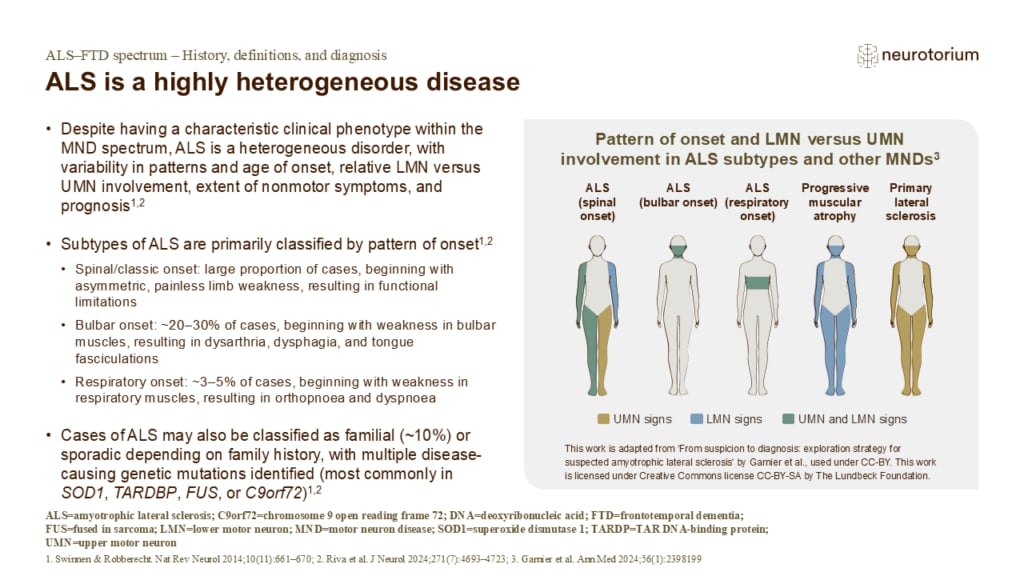
ALS is a highly heterogeneous disease
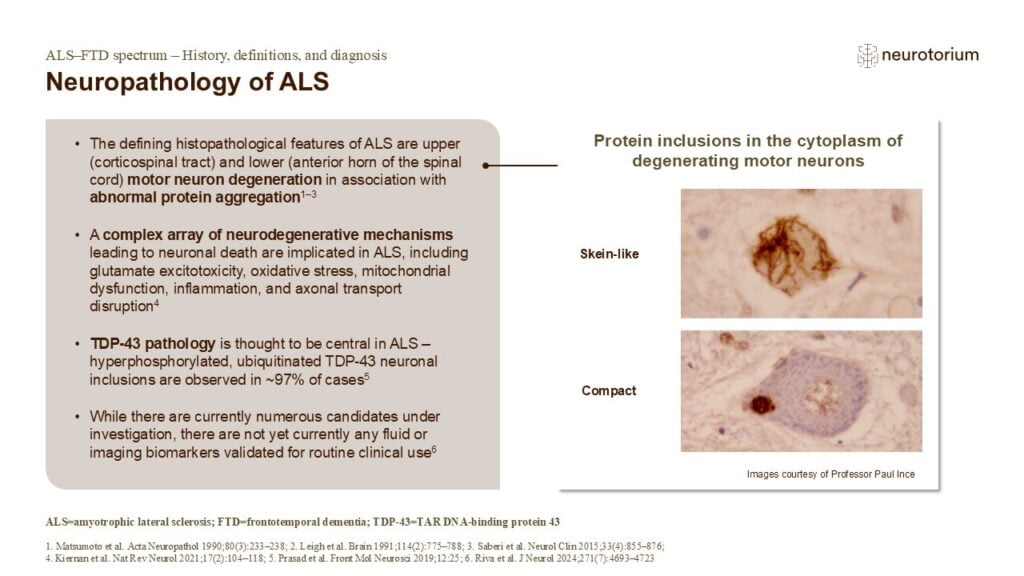
Neuropathology of ALS
FTD: definitions and clinical features
FTD: definitions and clinical features
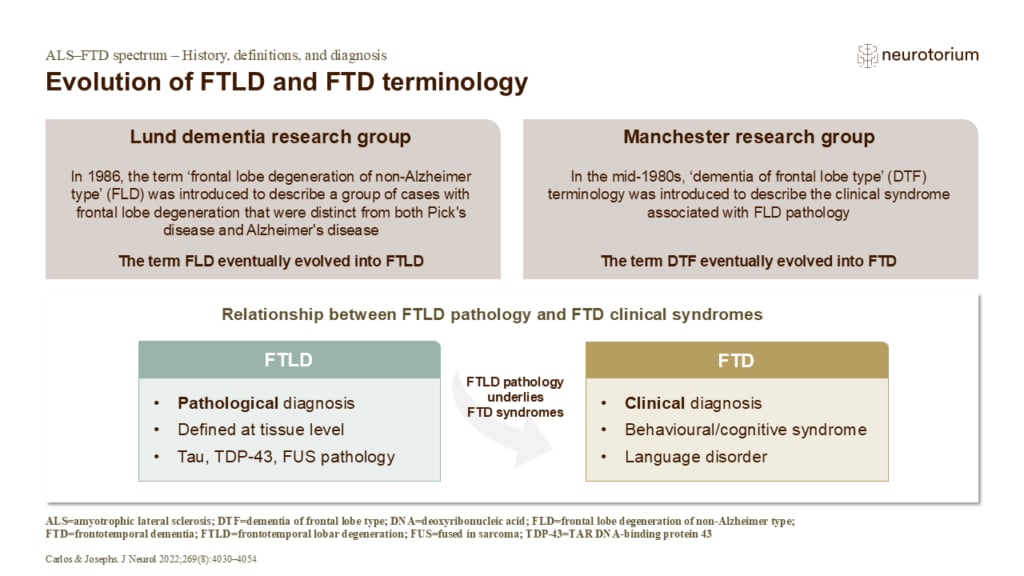
Evolution of FTLD and FTD terminology
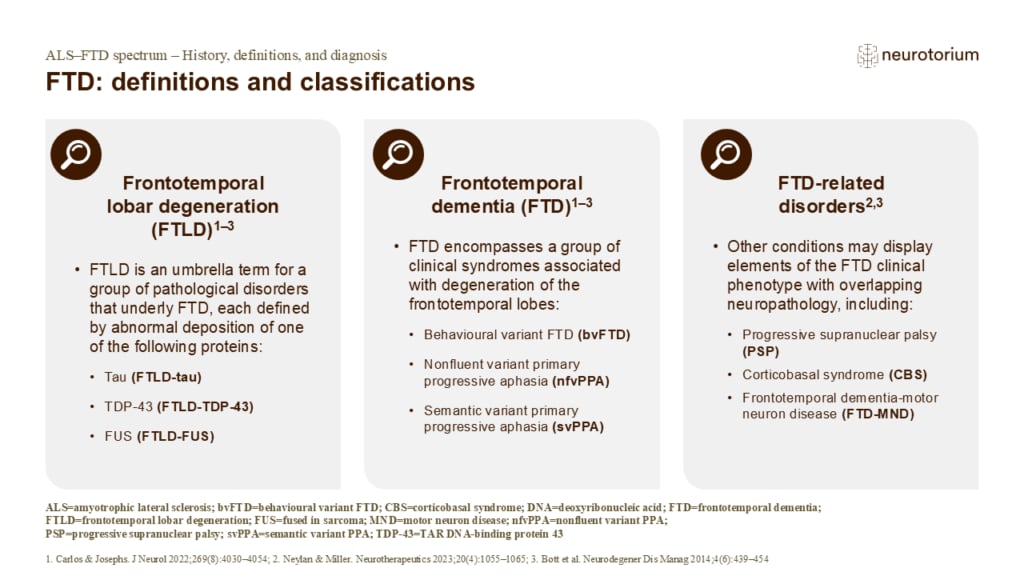
FTD: definitions and classifications
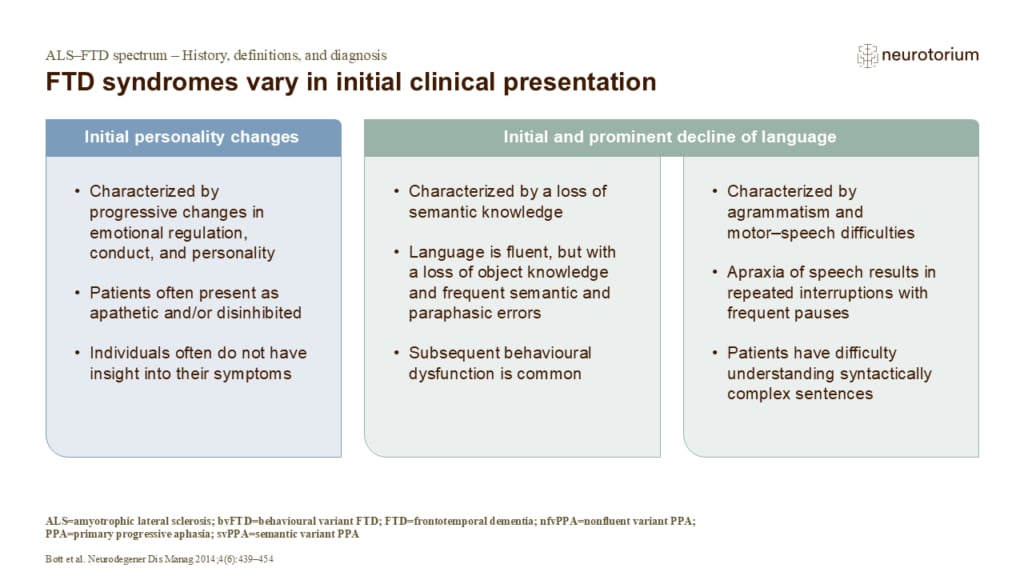
FTD syndromes vary in initial clinical presentation
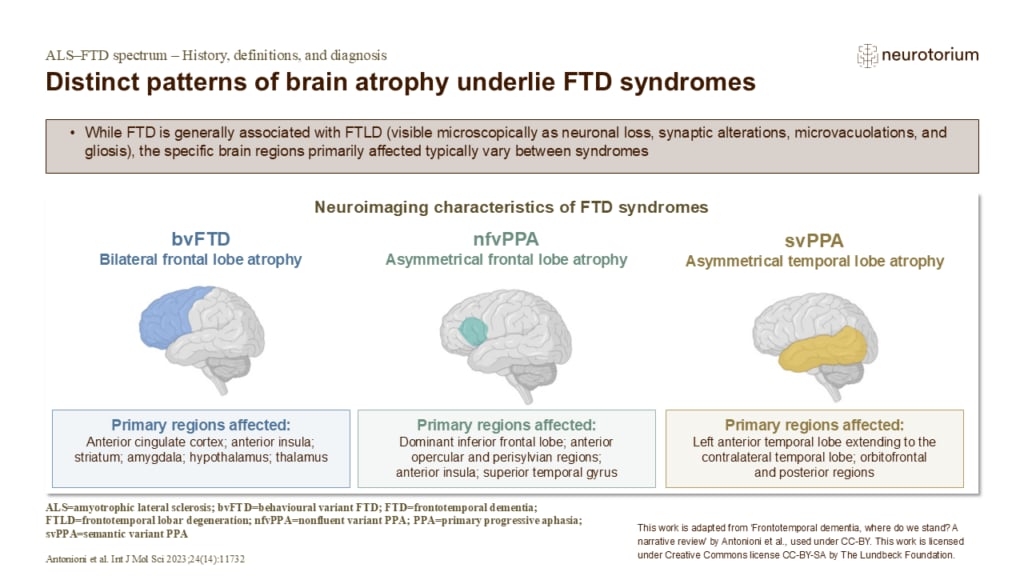
Distinct patterns of brain atrophy underlie FTD syndromes
Related content
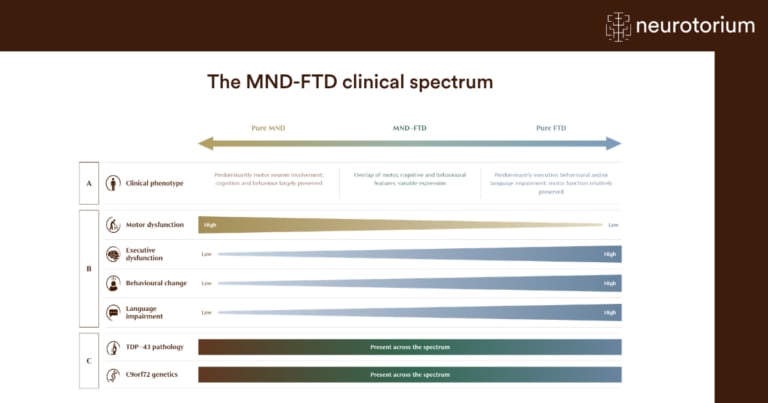
Motor neuron disease (MND) and frontotemporal dementia (FTD) were once seen as separate conditions, one affecting movement and the other cognition and behaviour. Growing evidence now places them on the same disease spectrum, linked by shared clinical features, genetic causes, and underlying pathology.
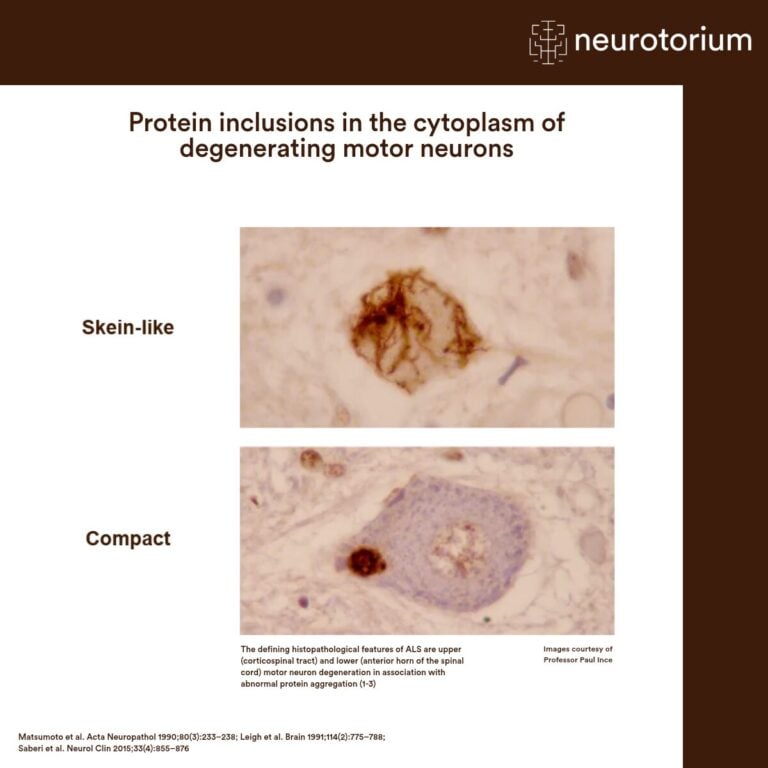
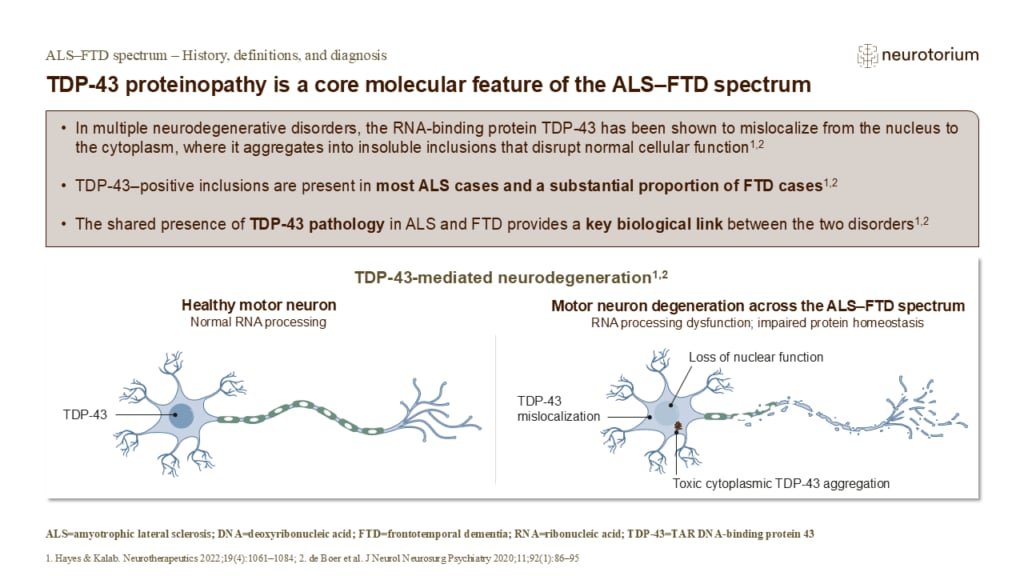
Motor neuron degeneration in ALS is associated with abnormal protein aggregation, including characteristic skein-like and compact cytoplasmic inclusions.
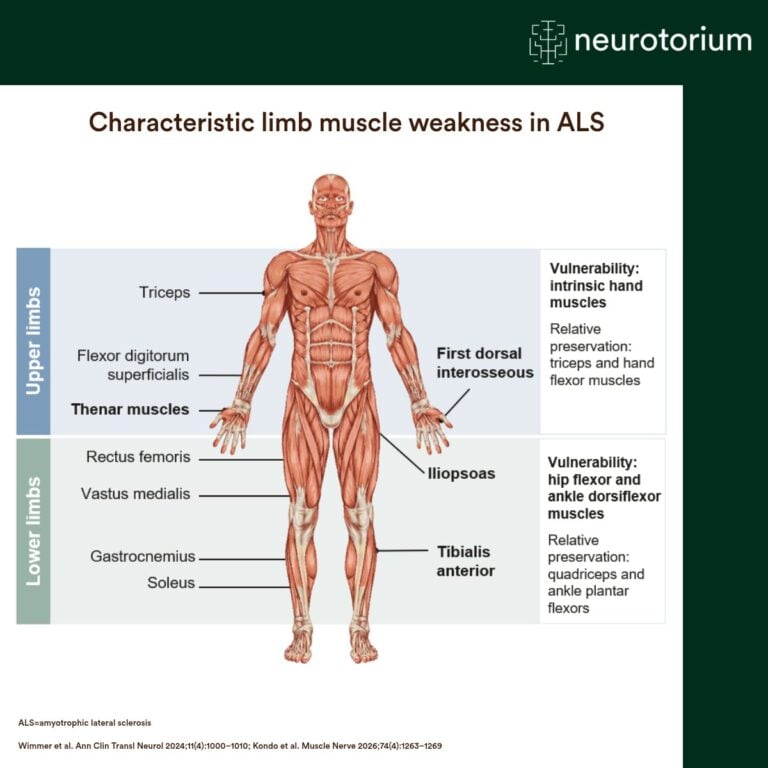
ALS is associated with characteristic patterns of muscle weakness, with selective vulnerability and relative preservation of specific upper- and lower-limb muscles.