

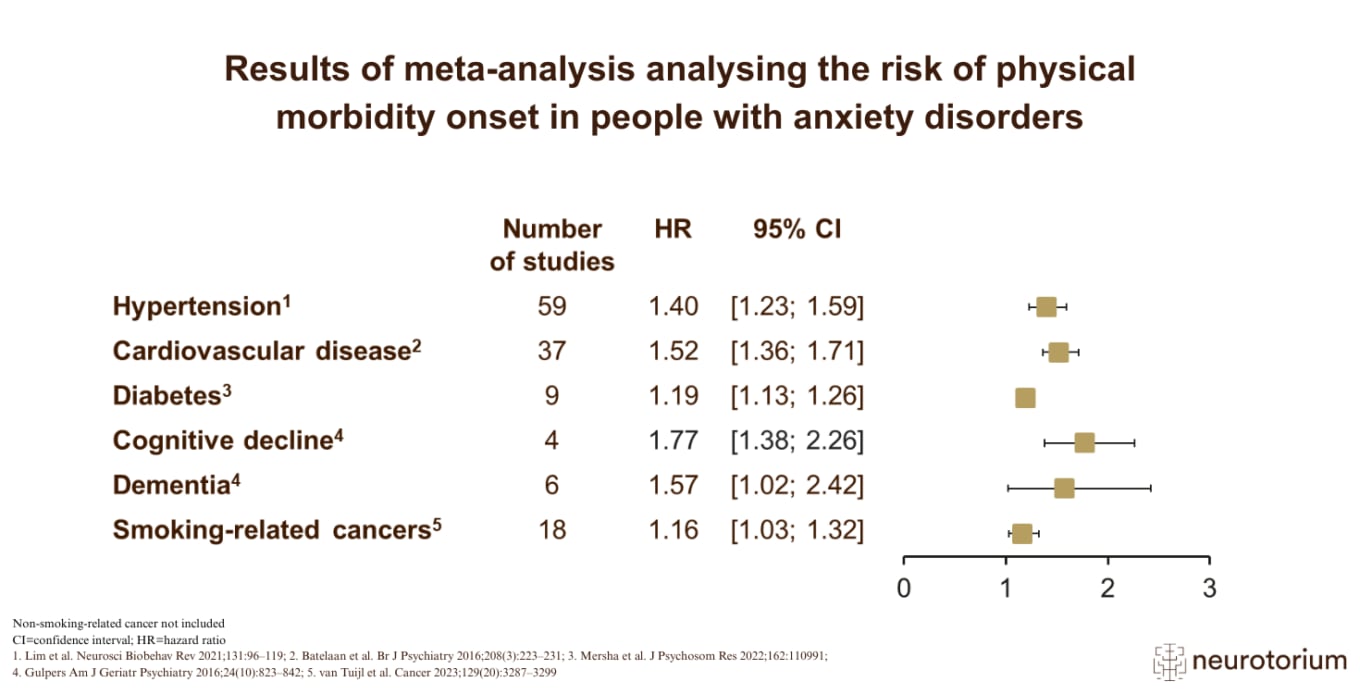
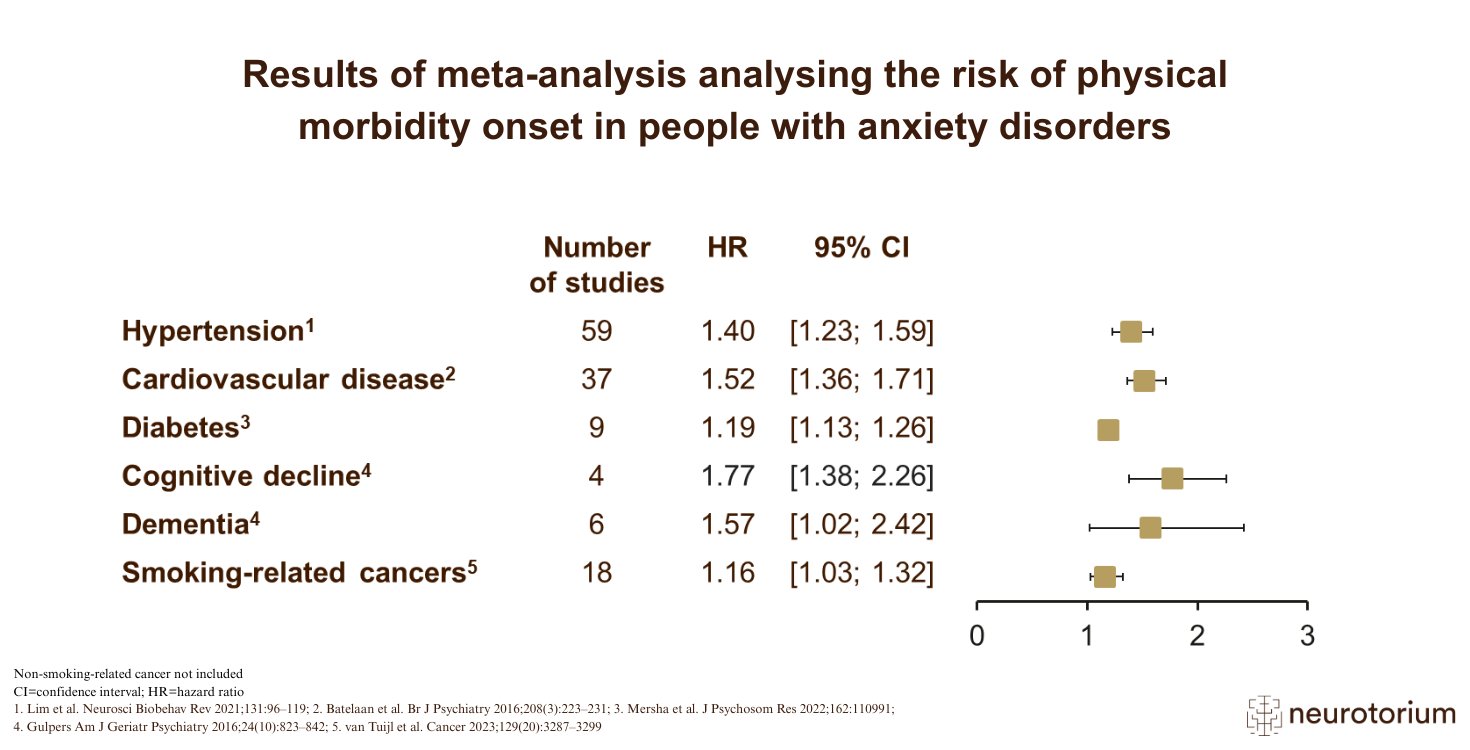
The risk of the development of subsequent somatic conditions in people with anxiety disorders may be increased indirectly by poor lifestyle and behavioural choices associated with anxiety.2 The risk of the development of subsequent somatic conditions in people with anxiety disorders may be increased directly by physiological processes related to anxiety, and by the frequent comorbidity of anxiety disorders with depressive disorders, which are also considered a risk factor for the development of various somatic conditions.2
CI=confidence interval; HR=hazard ratio
Related content
Decades of twin and family research have established that anxiety disorders run in families and are meaningfully influenced by genetic factors. Family and twin studies suggest an increased recurrence risk for first degree relatives of patients with anxiety to develop any anxiety disorders.
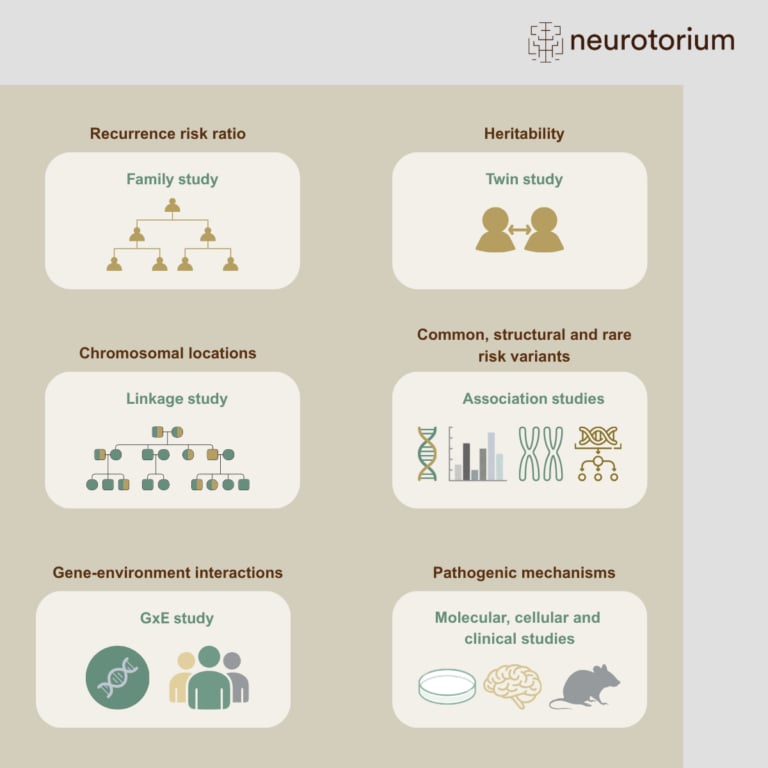
Family and twin studies estimate recurrence risk and heritability, showing that anxiety disorders aggregate in families and have a moderate genetic component.
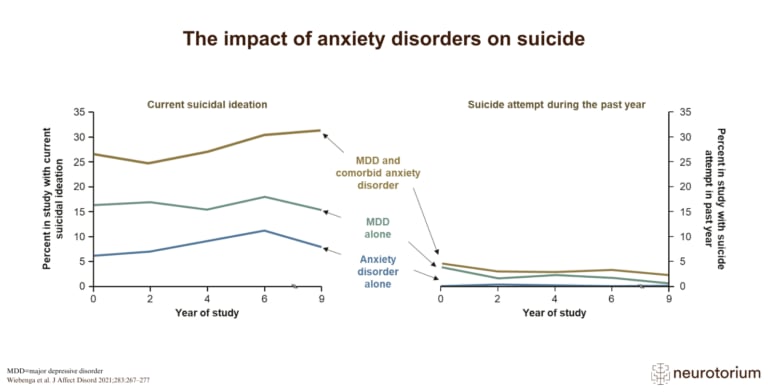
Suicidal ideation is far more common than attempts in people with anxiety or depression, especially with comorbid disorders and severe depression.