

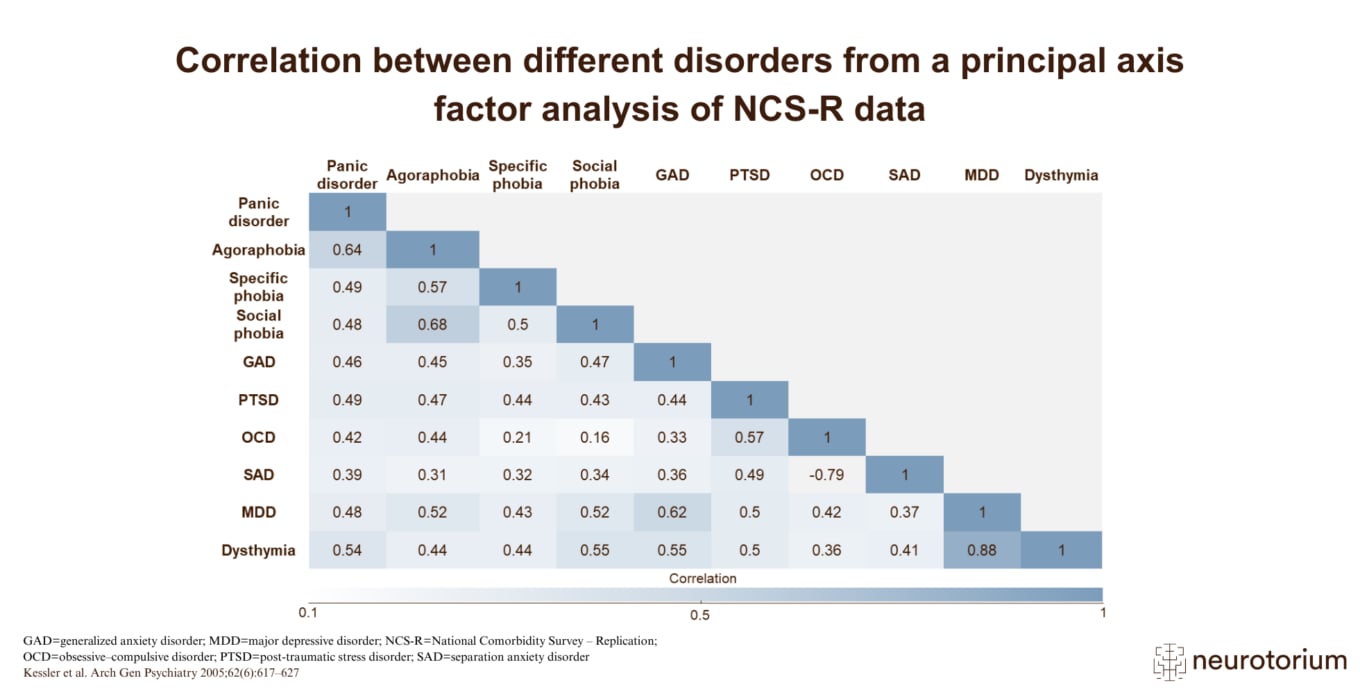
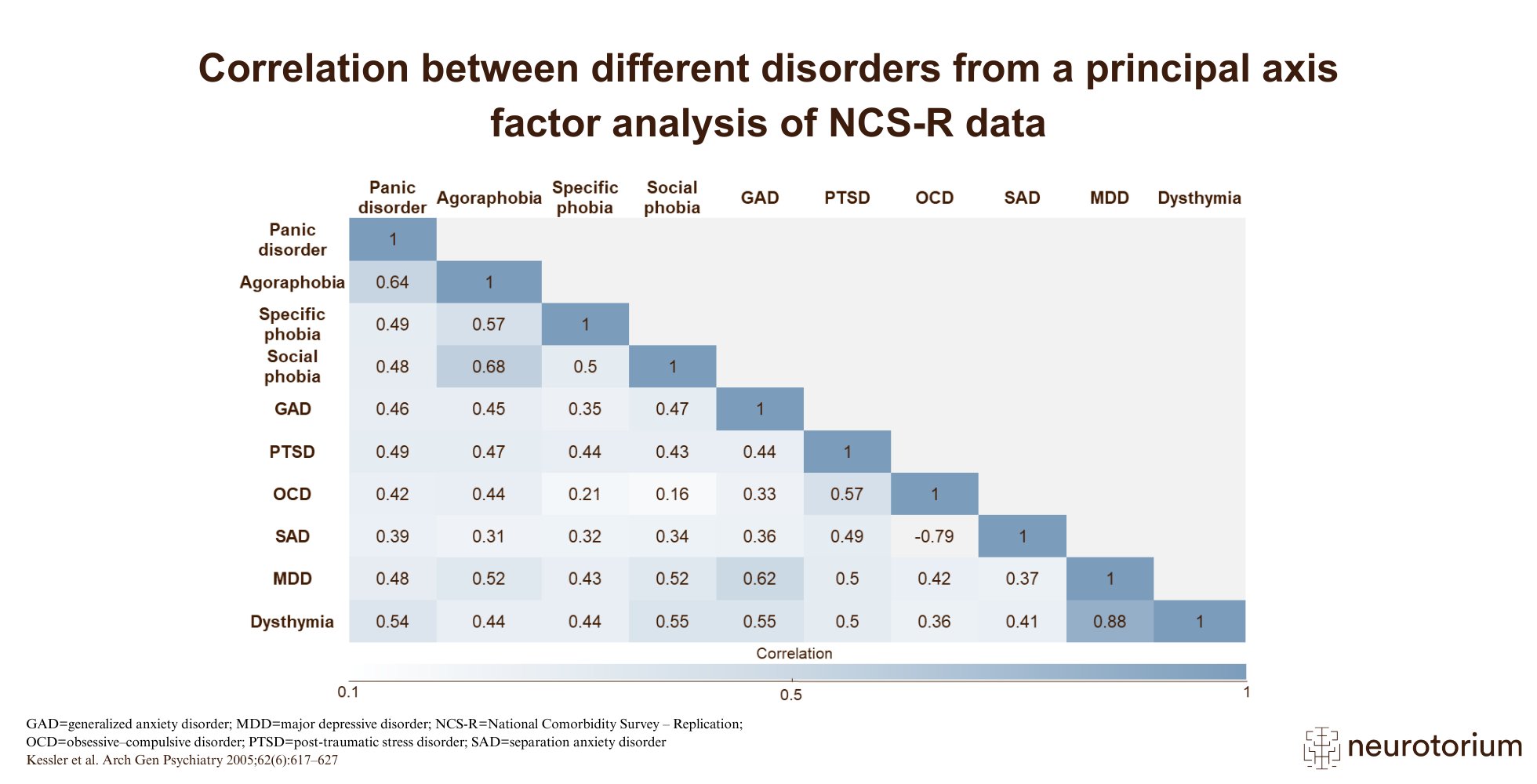
The National Comorbidity Survey – Replication data were used to estimate 12-month prevalence, severity, and comorbidity of DSM-IV anxiety, mood, impulse control, and substance disorders.1 The survey was an in-person structured diagnostic interview of 9,282 people, conducted between 2001–2003 across the USA.1 The correlation analysis shown on the slide found almost all correlations between mental disorders were positive, and many were statistically significant.1
GAD=generalized anxiety disorder; MDD=major depressive disorder; NCS-R=National Comorbidity Survey – Replication; OCD=obsessive–compulsive disorder; PTSD=post-traumatic stress disorder; SAD=separation anxiety disorder
Related content

Decades of twin and family research have established that anxiety disorders run in families and are meaningfully influenced by genetic factors. Family and twin studies suggest an increased recurrence risk for first degree relatives of patients with anxiety to develop any anxiety disorders.
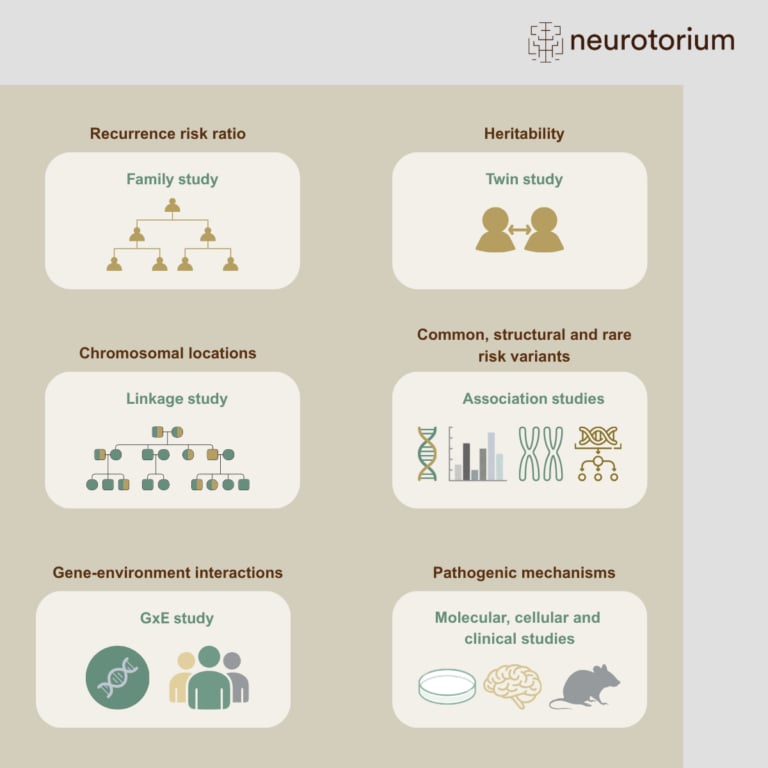
Family and twin studies estimate recurrence risk and heritability, showing that anxiety disorders aggregate in families and have a moderate genetic component.
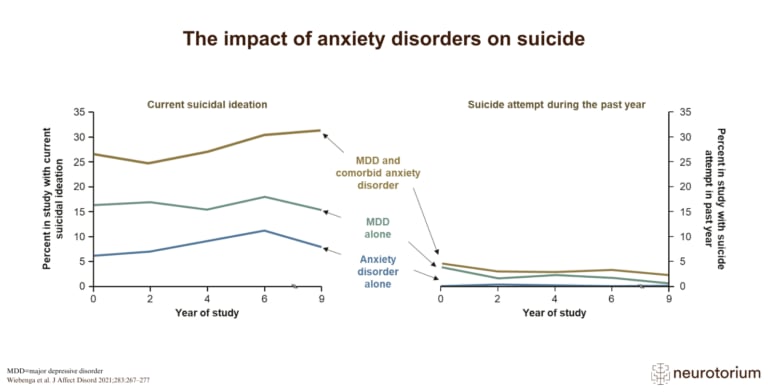
Suicidal ideation is far more common than attempts in people with anxiety or depression, especially with comorbid disorders and severe depression.