

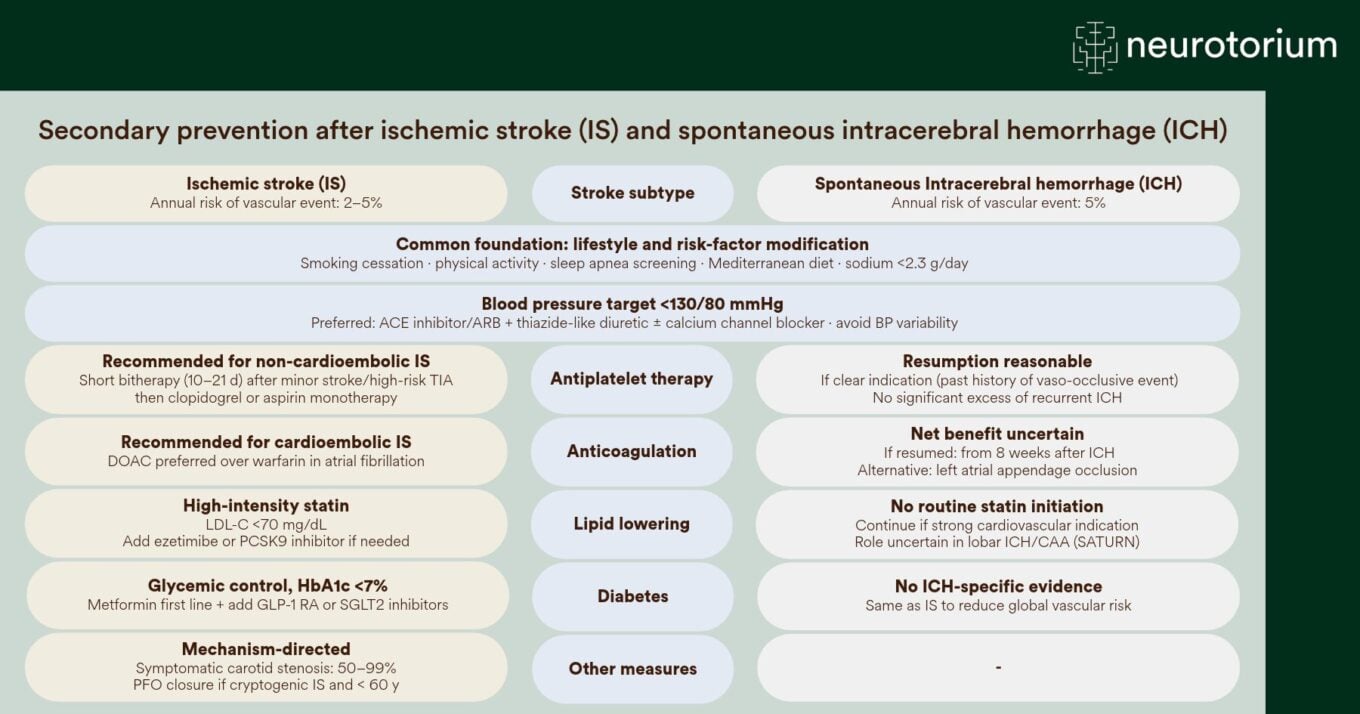
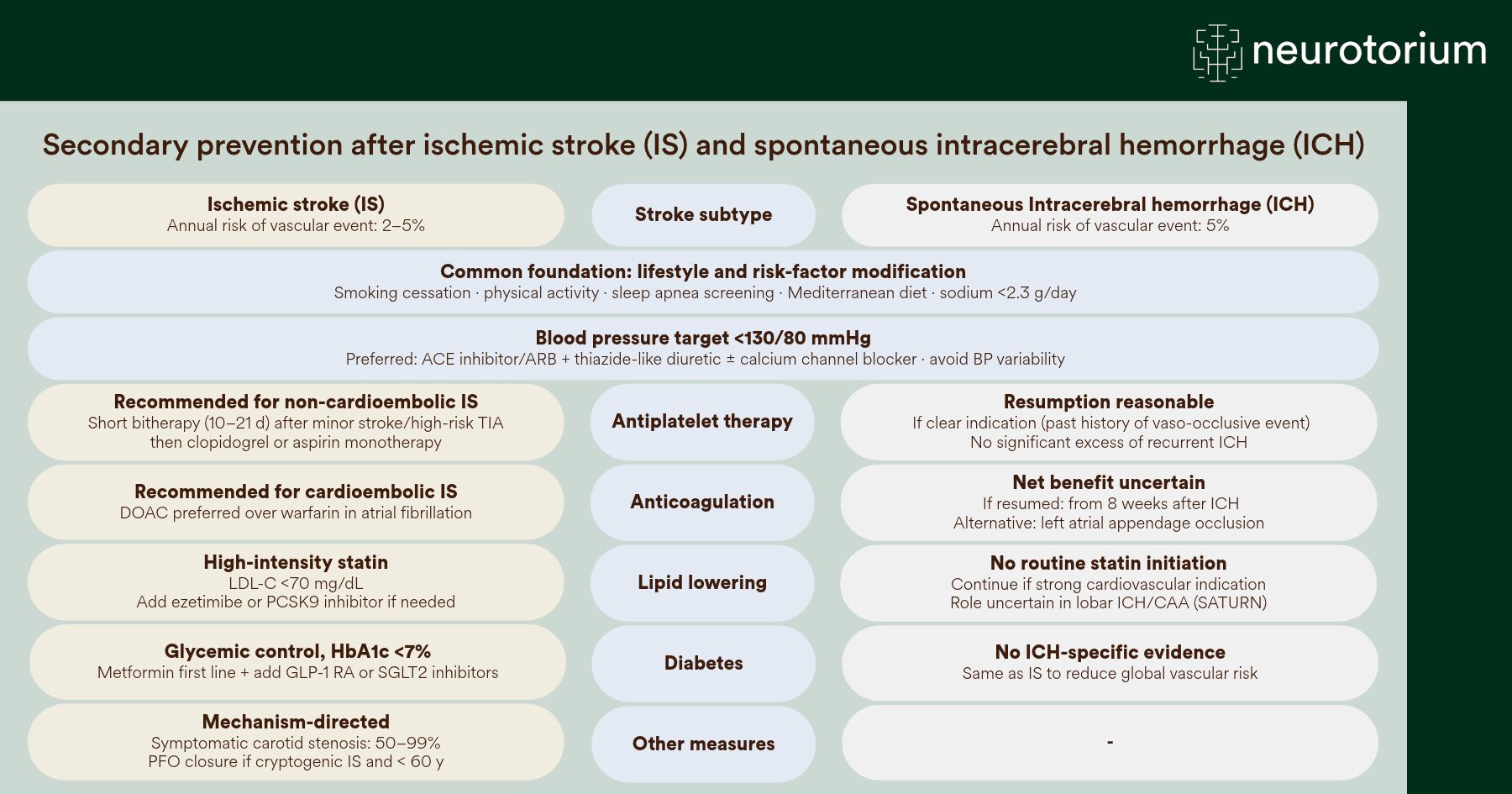
Lifestyle modification and blood pressure control (<130/80 mm Hg) are common to both ischemic stroke (IS) and intracerebral hemorrhage (ICH). After IS, antithrombotic therapy, statins, and glycemic control are recommended; after ICH, evidence is limited and decisions are individualized. CAA indicates cerebral amyloid angiopathy; PFO, patent foramen ovale.
Related content

A narrative review of secondary prevention after stroke, emphasizing the need for an individualized approach based on stroke mechanism, vascular risk, and lifestyle profile, and the competing risks of ischemic and hemorrhagic events.
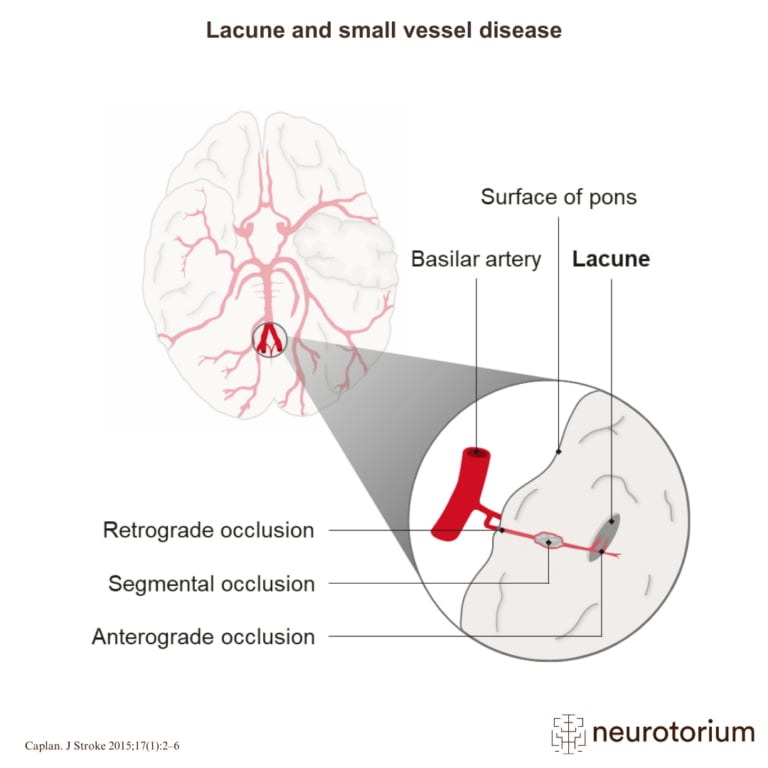
Lacunar infarctions are small subcortical infarcts, <1.5 cm in diameter, within deep areas of the brain. Roughly 1 in 5 strokes are estimated to be lacunar strokes.
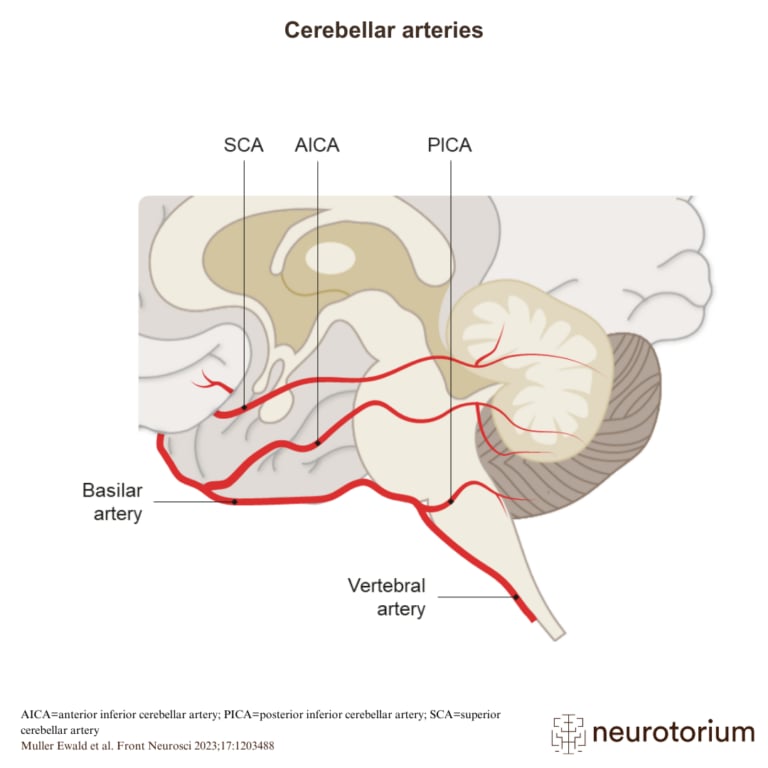
The cerebellum is supplied with blood via three branches of the basilar artery – the posterior inferior cerebellar artery (PICA), the anterior inferior cerebellar artery (AICA), and the superior cerebellar artery (SCA).