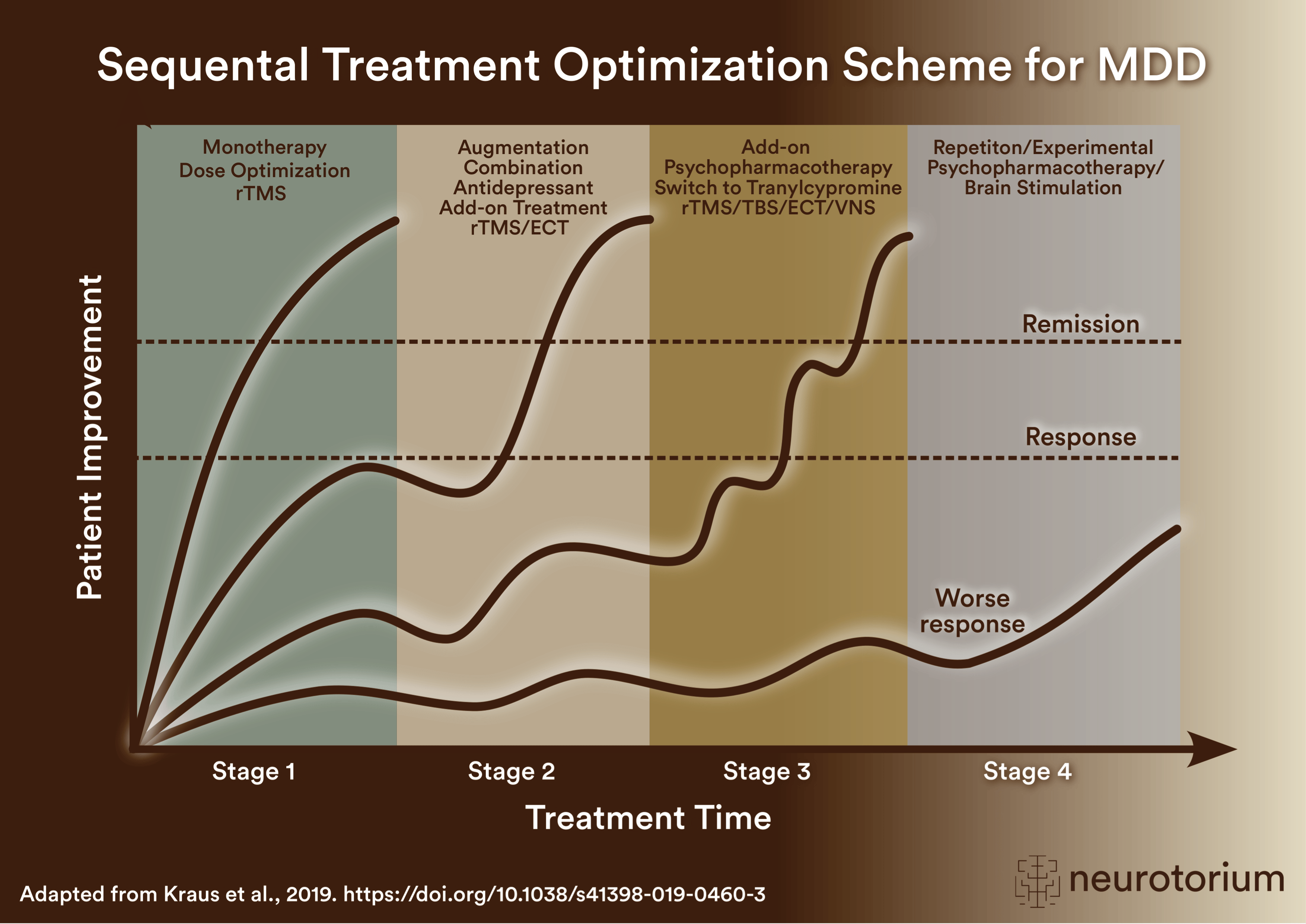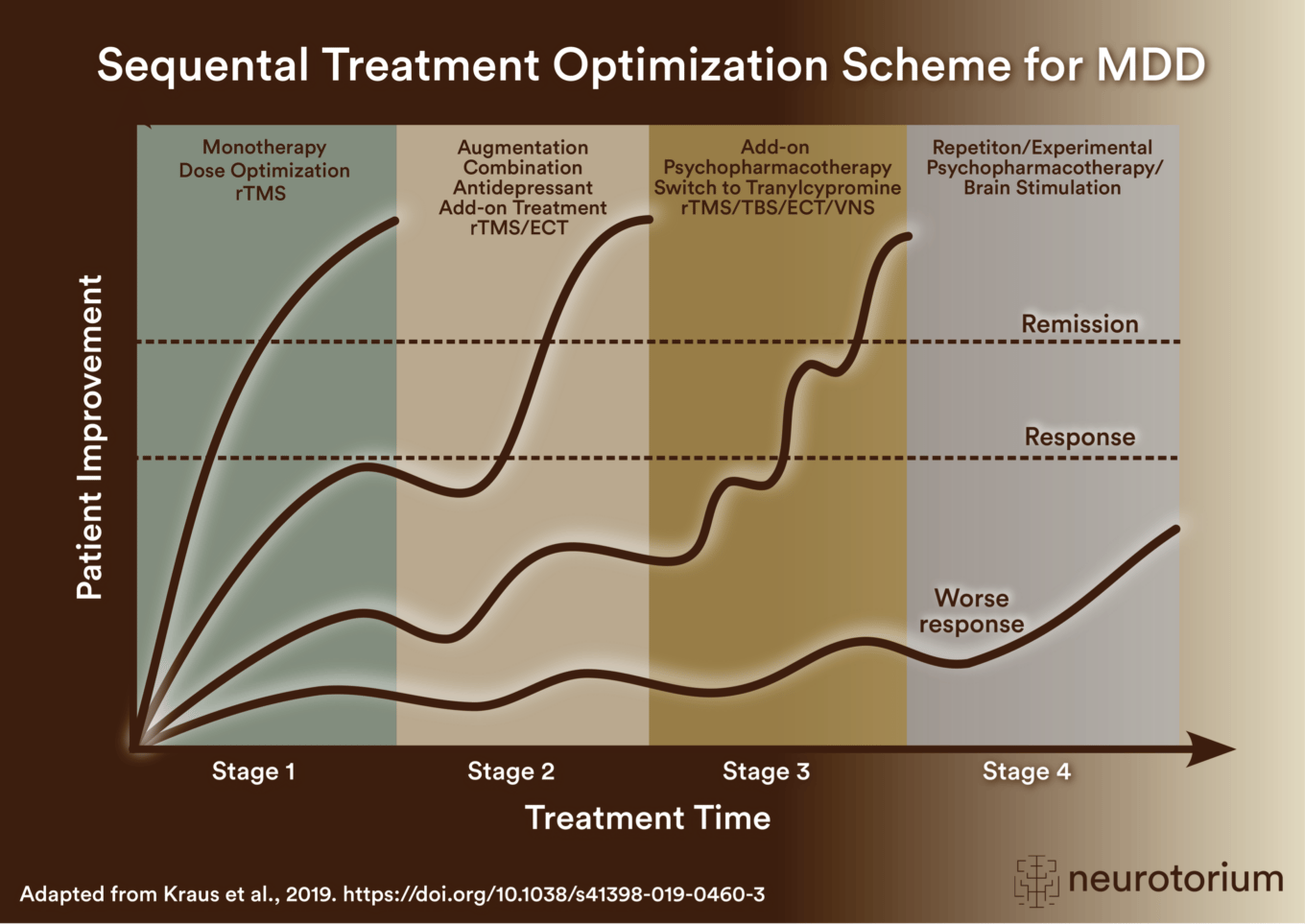
Sequential treatment optimization scheme for major depressive disorder generated according to international evidence.1,2 Treatment optimization steps are recommended for patients being treated for the first time (stage 1: e.g., SSRIs, SNRIs, mirtazapine, bupropion, trazodone, vortioxetine) as well as for patients with insufficient response to first- or second-stage therapies (stages 2-4). Treatment response curves are displayed for four common types of patients, underlining the importance of sequentially introducing the next step upon non-response to previous steps. Currently available treatments should be carefully selected due to the individual patient profiles, including predominant depressive symptoms and comorbidities. Despite the heterogeneity of current classifications, patients classified with TRD are eligible for the suggested second- or third-stage therapies.
Abbreviations: ECT: Electroconvulsive Therapy; rTMS: Repetitive Transcranial Magnetic Stimulation; TBS: theta-burst stimulation; VNS: Vagus Nerve Stimulation.
Related content
Major Depressive Disorder (MDD) is a highly prevalent psychiatric condition with significant individual and socio-economic burden. Despite the broad availability of numerous effective therapeutic interventions, up to 30% of patients fail to achieve adequate symptom relief and are classified as having treatment-resistant depression (TRD). TRD represents a significant clinical challenge, affecting approximately 30% of individuals with MDD who fail to respond to at least two adequate antidepressant trials.
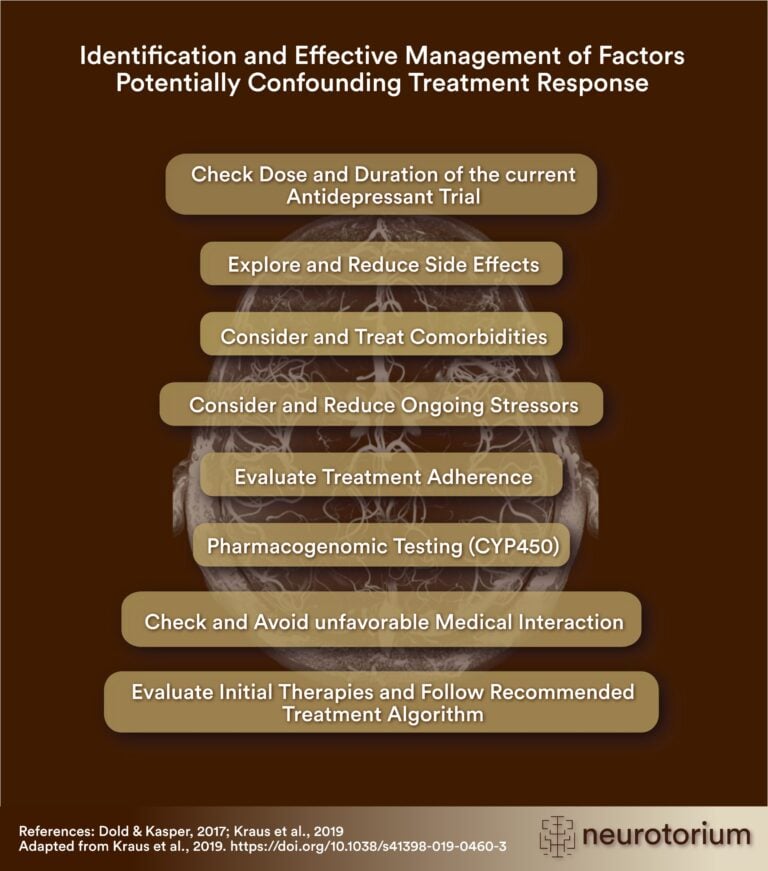
Key steps for managing factors that may confound antidepressant treatment response, including dose, side effects, comorbidities, stressors, adherence, pharmacogenomics, interactions, and treatment algorithms.