

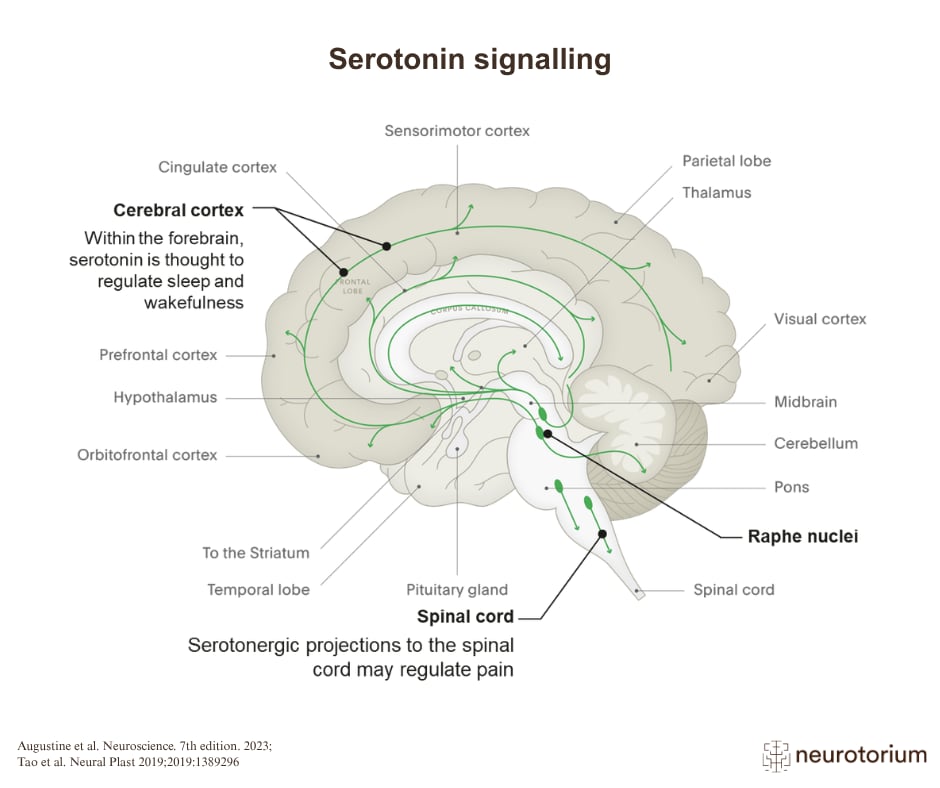
- Serotonin (also known as 5-HT) is a neurotransmitter that is found throughout the body. High concentrations are found in the CNS, blood platelets, and certain cells in the gastrointestinal tract.1
- Serotonin is synthesized from the amino acid tryptophan, and is removed from the synaptic cleft by reuptake or enzymatic breakdown.2
- There are many receptor subtypes for serotonin.1,3
- Serotonergic neurons project widely throughout the brain from their origin in the raphe nuclei of the brainstem.1
The wide dispersal of serotonergic neurons throughout the brain enables serotonin to be involved in modulating diverse body functions:1,3,5
- mood
- sleep
- cognition
- sensory processing
- pain perception
- movement
- regulation of internal temperature
- appetite
- sexual behaviour
- hormone secretion.
Related content
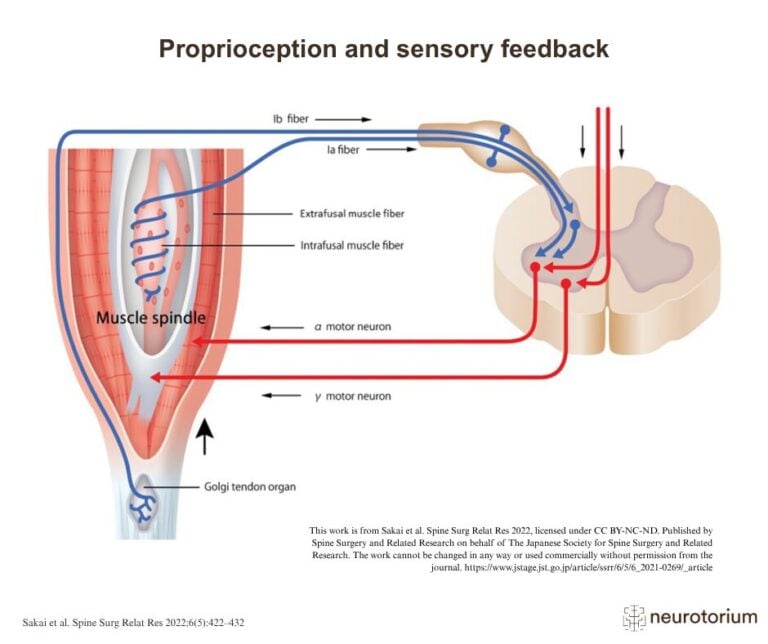
Proprioception and sensory feedback
Controlled movement relies on sensory feedback, particularly proprioception (the sense of body position in space and movement).
22.09.2026
Fundamentals of Neurobiology
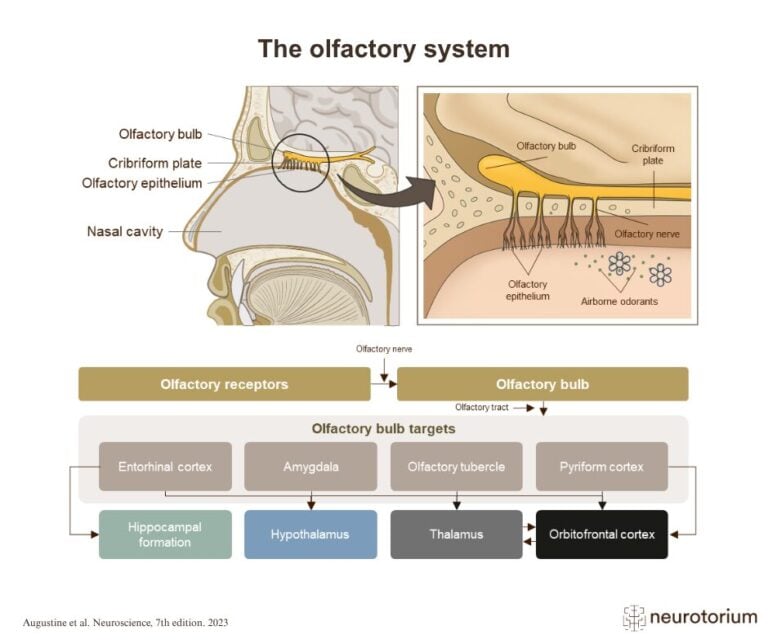
The olfactory system
The olfactory system detects airborne odor molecules in the nasal cavity and transmits this information to the olfactory bulb. From there, signals are relayed to several brain regions involved in smell perception, memory, emotion, and behaviour.
02.06.2026
Fundamentals of Neurobiology
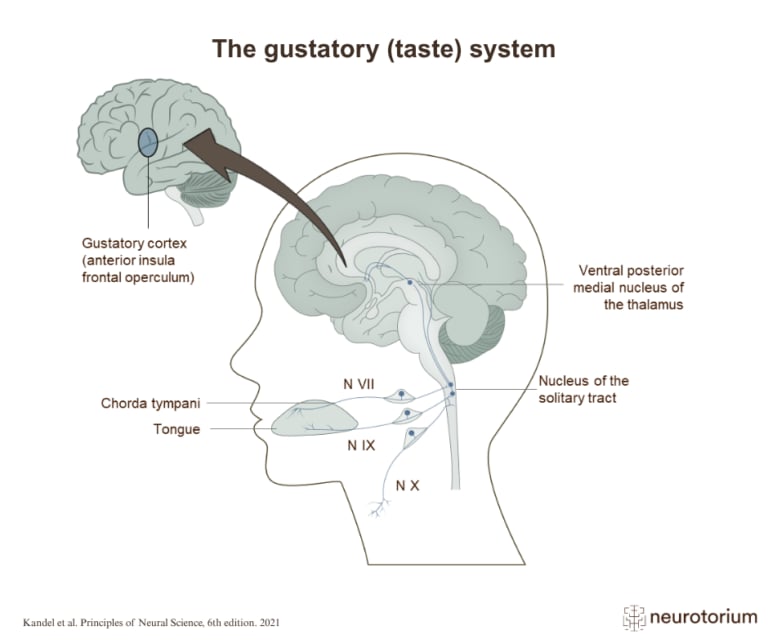
The gustatory (taste) system
The gustatory system detects taste stimuli on the tongue and relays this information through brainstem and thalamic pathways to the gustatory cortex.
02.06.2026
Fundamentals of Neurobiology