

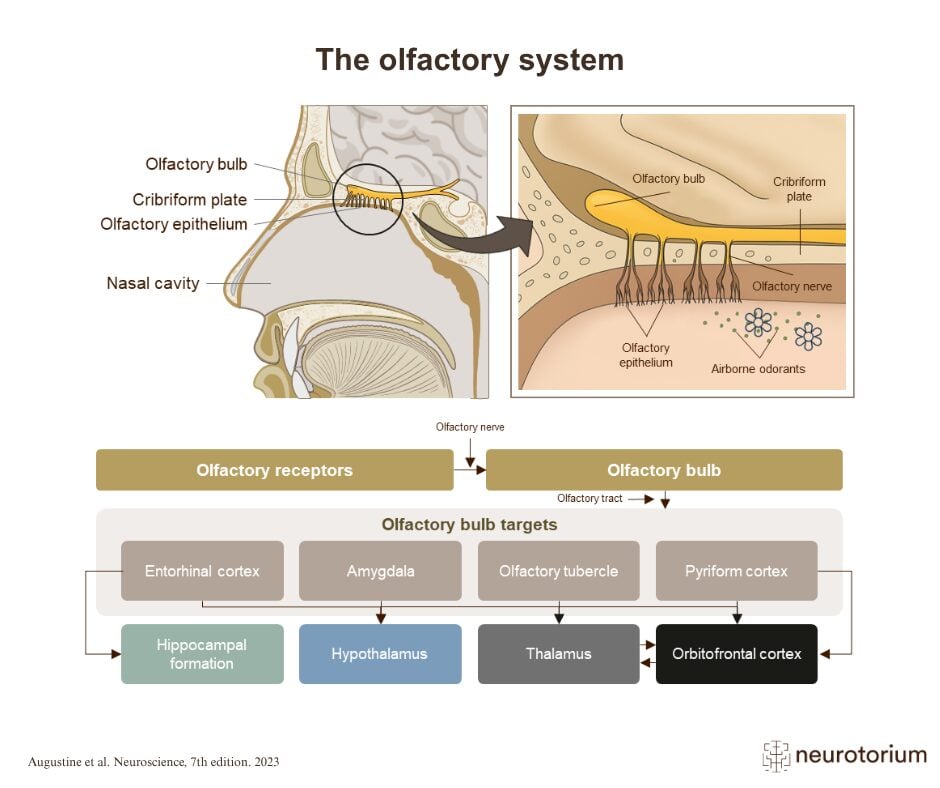
Olfaction, responsible for the sense of smell, is one of the body’s two chemosensory systems alongside gustation. The olfactory epithelium contains specialized sensory cells called olfactory receptor neurons (ORNs), which detect airborne odorants through hair-like cilia in the nasal cavity and convert these signals into neural impulses. ORN axons project through the cribriform plate to the olfactory bulb, where neurons with the same odorant receptors converge in olfactory glomeruli. Signals are then transmitted through the olfactory tract to several brain regions involved in odor identification, memory, emotion, and flavour perception, including the piriform cortex, amygdala, orbitofrontal cortex, hippocampal formation, hypothalamus, and thalamus.1,2
Related content
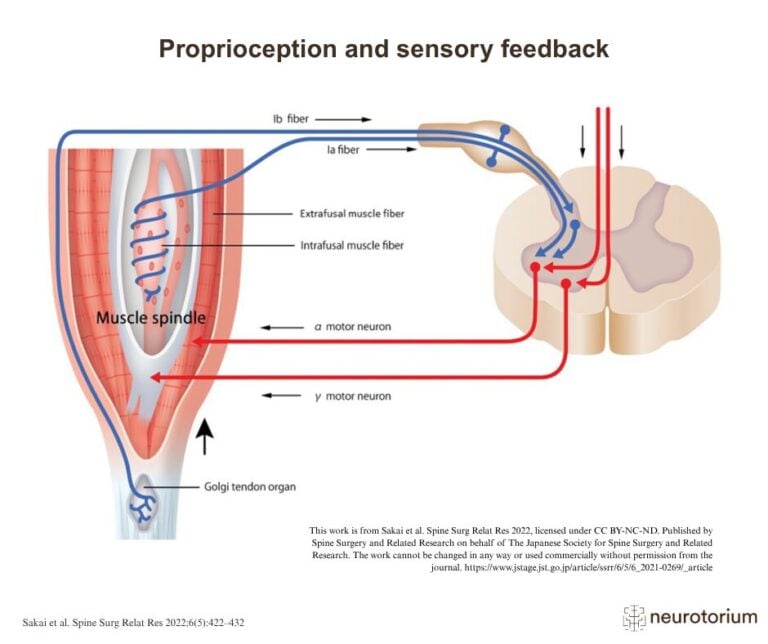
Controlled movement relies on sensory feedback, particularly proprioception (the sense of body position in space and movement).
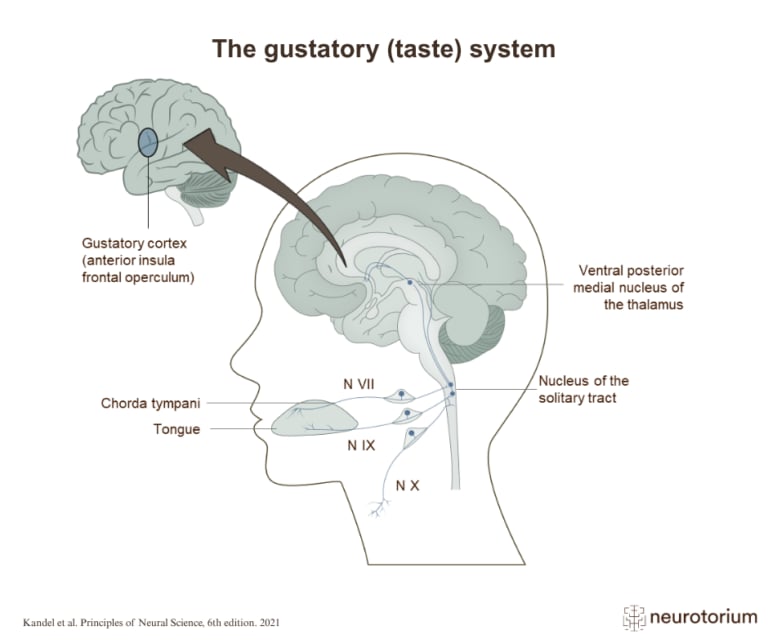
The gustatory system detects taste stimuli on the tongue and relays this information through brainstem and thalamic pathways to the gustatory cortex.
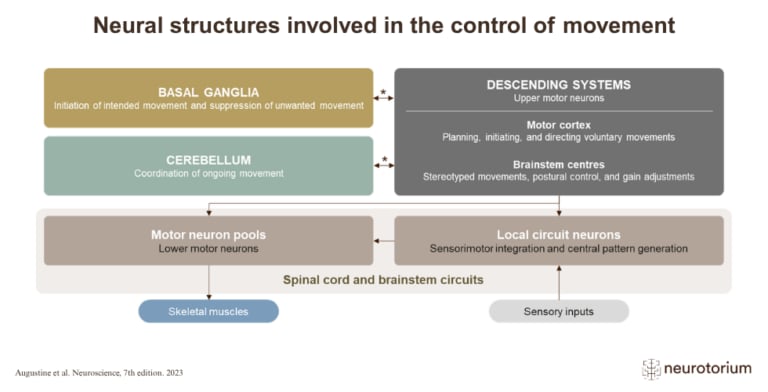
Movement is controlled by a network of brain and spinal cord structures that work together to plan, initiate, coordinate, and execute actions.