

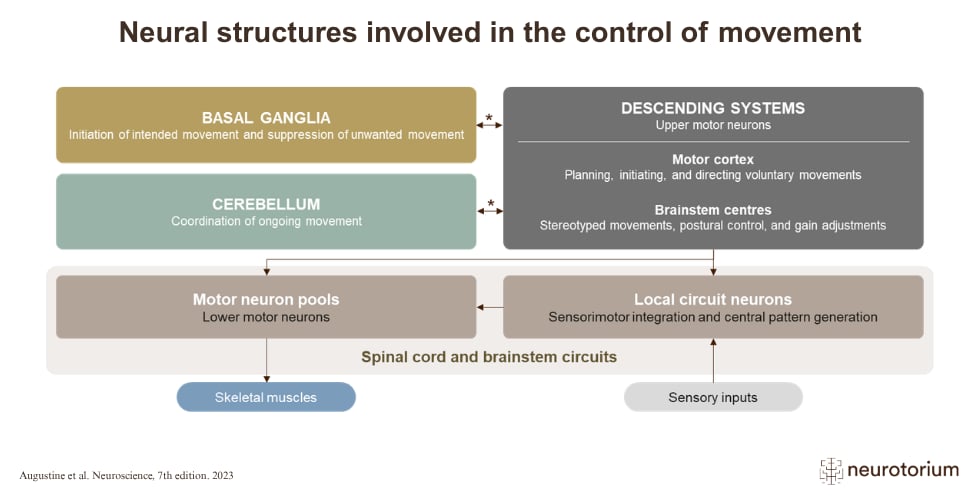
The motor systems control and coordinate both voluntary and involuntary movements of the body through the interaction of the brain, spinal cord, peripheral nerves, and muscles. The basal ganglia are involved in initiating intended movements and suppressing unwanted movements, while the cerebellum coordinates ongoing movement. Descending systems, including the motor cortex and brainstem centres, plan, initiate, and direct voluntary movement as well as regulate posture and stereotyped motor actions. Local circuit neurons and motor neuron pools within the spinal cord and brainstem integrate sensory input and generate motor output to skeletal muscles.
*The connections between the basal ganglia, cerebellum and descending motor systems are indirect and functionally bidirectional. Connections are organized in a loop involving the thalamus rather than simple back-and-forth wiring.1
Related content
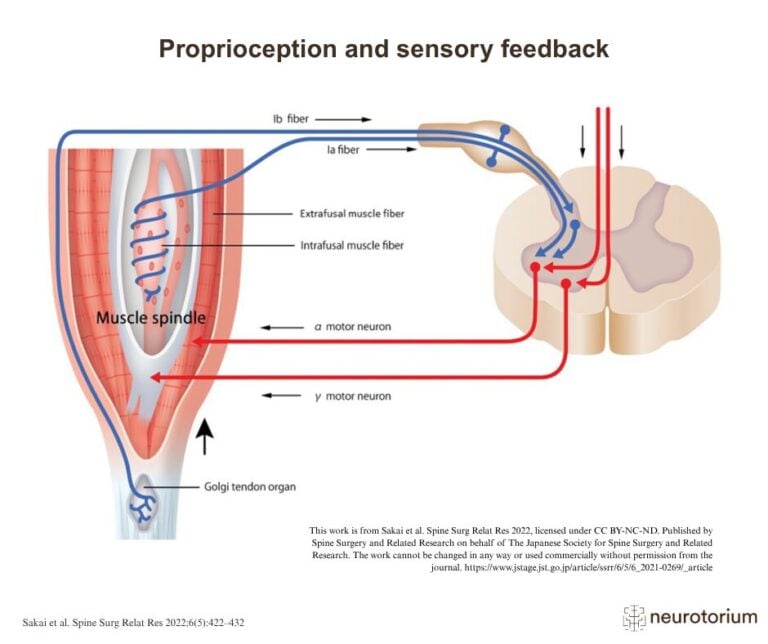
Controlled movement relies on sensory feedback, particularly proprioception (the sense of body position in space and movement).
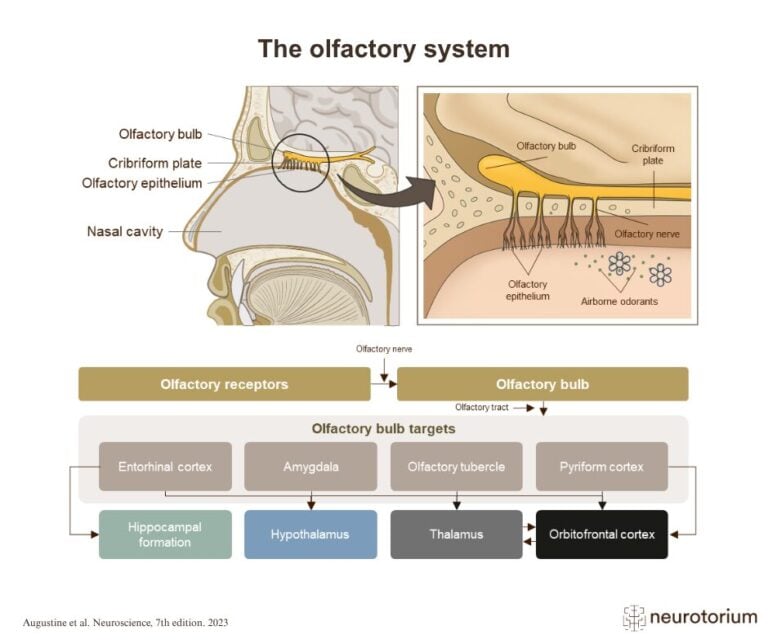
The olfactory system detects airborne odor molecules in the nasal cavity and transmits this information to the olfactory bulb. From there, signals are relayed to several brain regions involved in smell perception, memory, emotion, and behaviour.
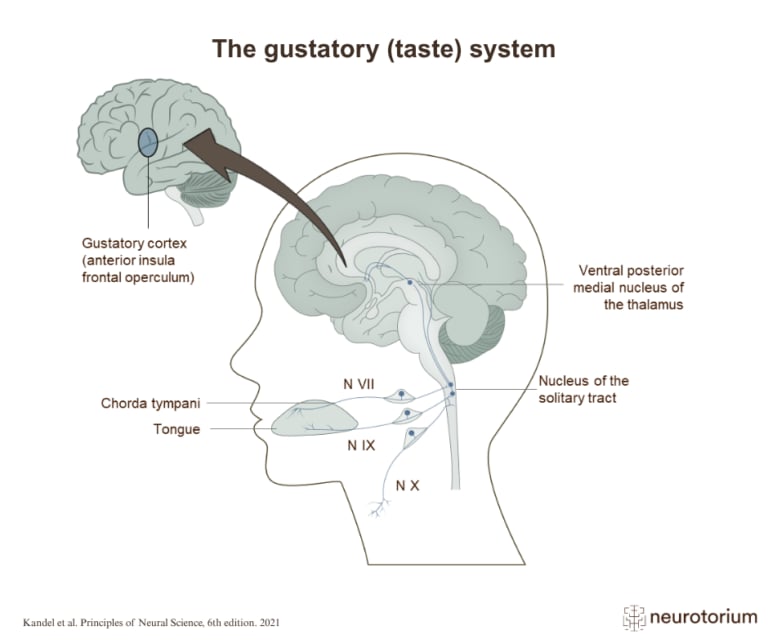
The gustatory system detects taste stimuli on the tongue and relays this information through brainstem and thalamic pathways to the gustatory cortex.