

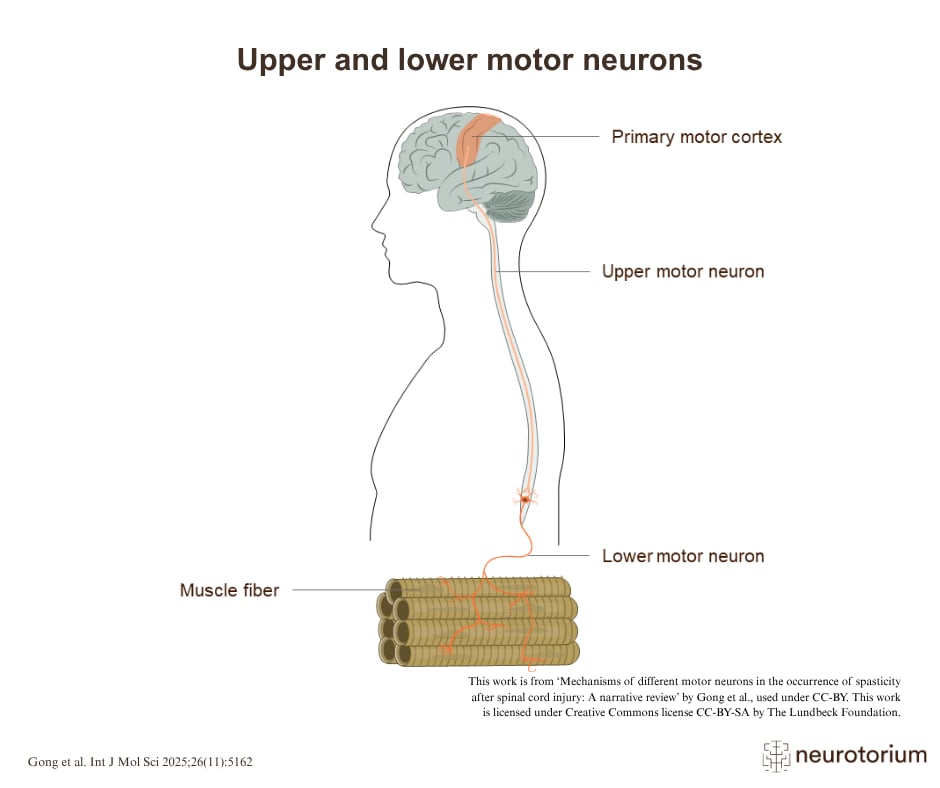
Upper motor neurons (UMNs) originate in the cerebral cortex, including the primary motor cortex, premotor cortex, and supplementary motor areas, as well as in brainstem motor centres, and are responsible for initiating and modulating voluntary movement. Their axons descend through the central nervous system and synapse directly or indirectly with lower motor neurons (LMNs) in the spinal cord. LMNs are located in the brainstem and spinal cord and transmit motor commands to skeletal muscles to produce movement. LMNs also receive input from sensory neurons and interneurons and contribute to reflex pathways.1-4
Related content
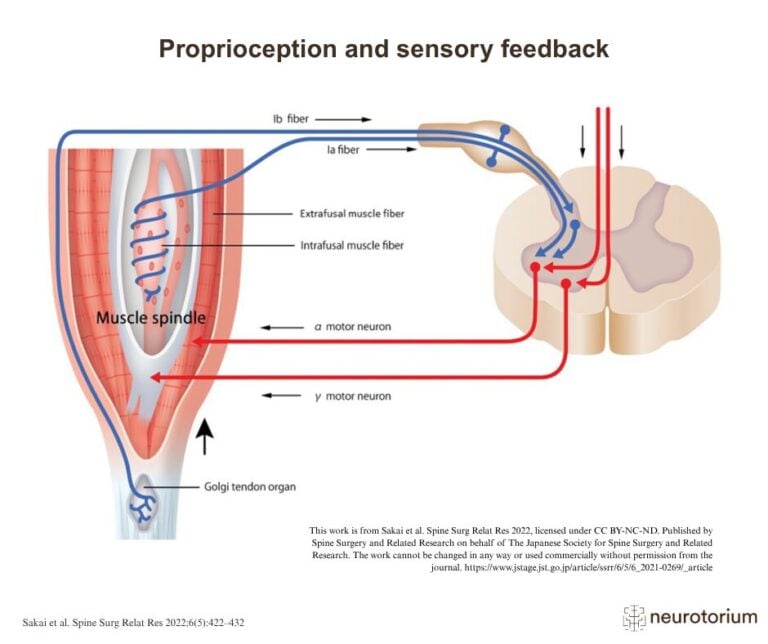
Controlled movement relies on sensory feedback, particularly proprioception (the sense of body position in space and movement).
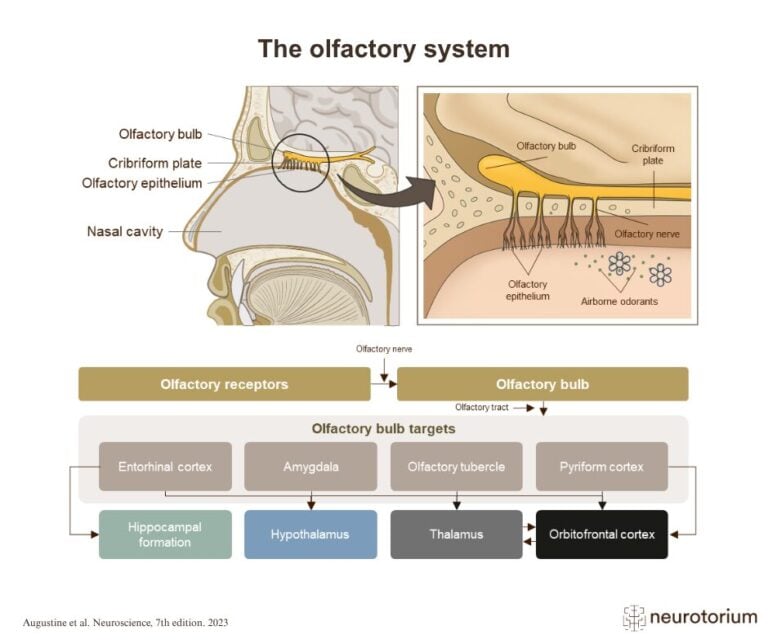
The olfactory system detects airborne odor molecules in the nasal cavity and transmits this information to the olfactory bulb. From there, signals are relayed to several brain regions involved in smell perception, memory, emotion, and behaviour.
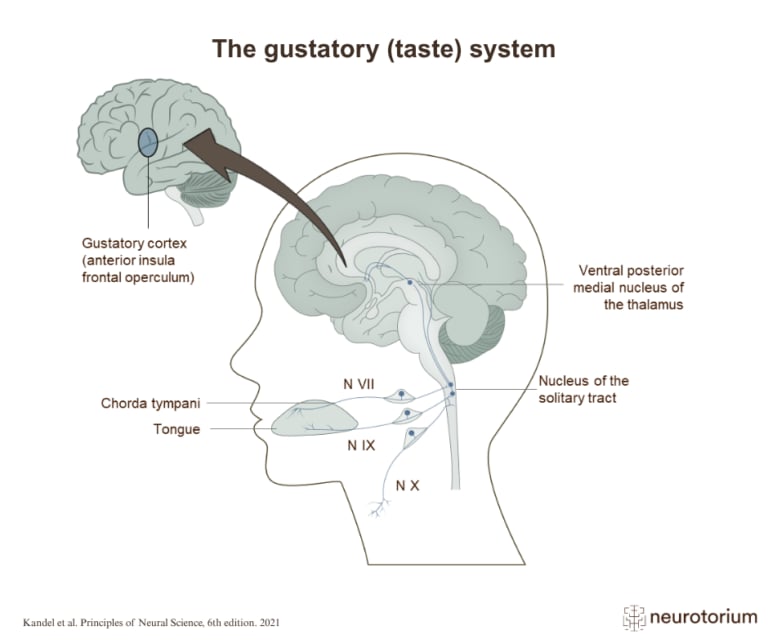
The gustatory system detects taste stimuli on the tongue and relays this information through brainstem and thalamic pathways to the gustatory cortex.