

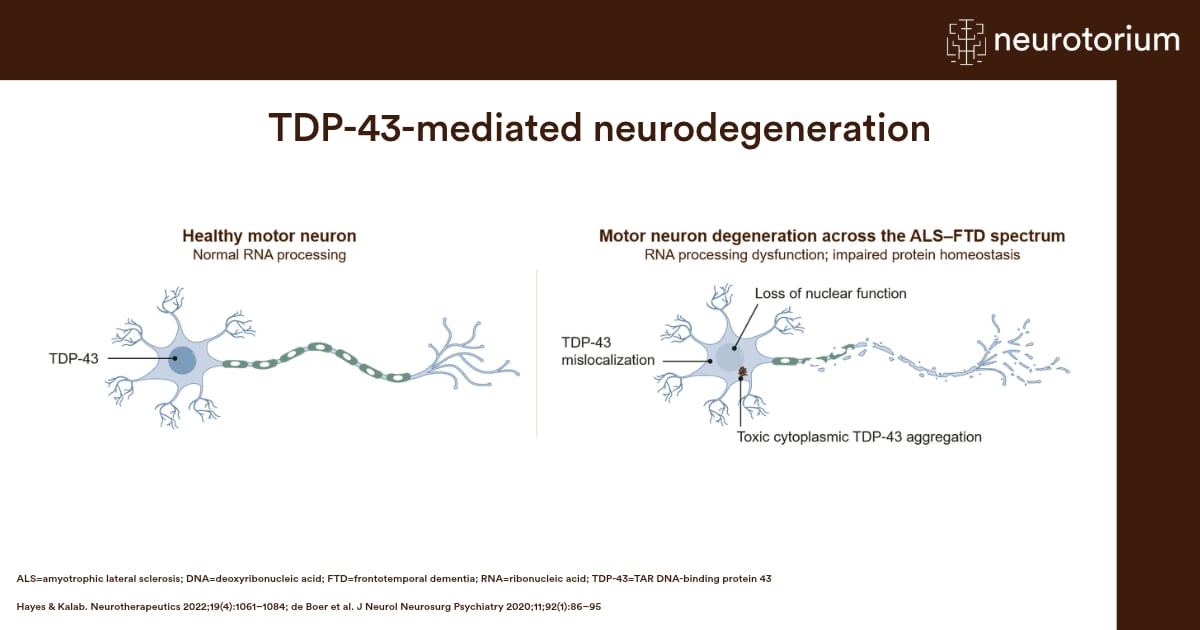
TAR DNA-binding protein 43 (TDP-43) is a 414 amino acid, predominantly nuclear ribonucleic acid (RNA)/deoxyribonucleic acid (DNA)-binding protein involved in RNA metabolism, messenger RNA (mRNA) transport, microRNA maturation, and stress granule formation.2 Cytoplasmic aggregation of TDP-43 can contribute to neurodegeneration through multiple loss- and gain-of-function mechanisms.1,2
In 2006, TDP-43 was identified as the major component of ubiquinated inclusions in amyotrophic lateral sclerosis (ALS) and frontotemporal lobar degeneration (FTLD), providing compelling evidence of a shared molecular pathology between these disorders.3
TDP-43 pathology is observed at autopsy in approximately 97% of ALS cases and 45–50% of frontotemporal dementia (FTD) cases. It is also detected in a range of other neurodegenerative disorders, emphasizing the complexity of the molecular mechanisms underlying these conditions.1,2
Related content
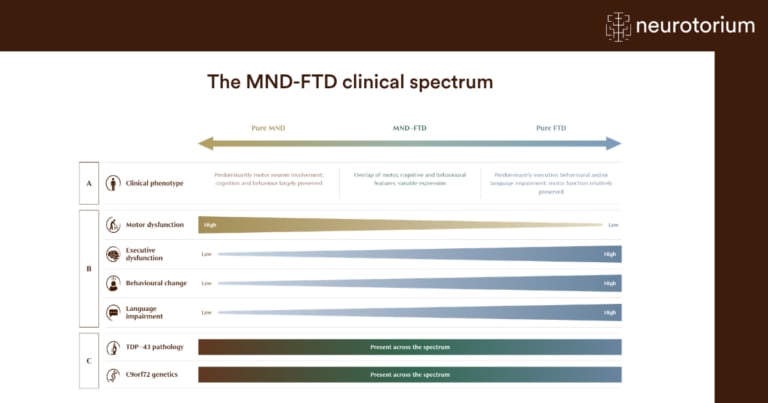
Motor neuron disease (MND) and frontotemporal dementia (FTD) were once seen as separate conditions, one affecting movement and the other cognition and behaviour. Growing evidence now places them on the same disease spectrum, linked by shared clinical features, genetic causes, and underlying pathology.
ALS and FTD were historically regarded as distinct diseases but are now recognised as overlapping disorders within a broader neurodegenerative spectrum. This slide deck introduces their defining clinical features, the development of the ALS–FTD concept, and the approaches used to diagnose ALS, FTD and mixed presentations.
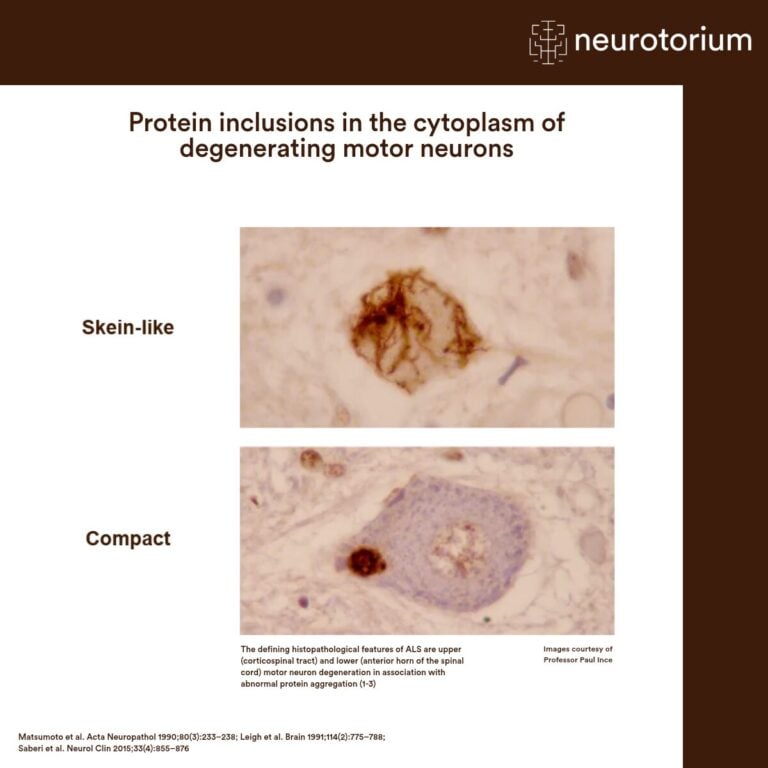
Motor neuron degeneration in ALS is associated with abnormal protein aggregation, including characteristic skein-like and compact cytoplasmic inclusions.