

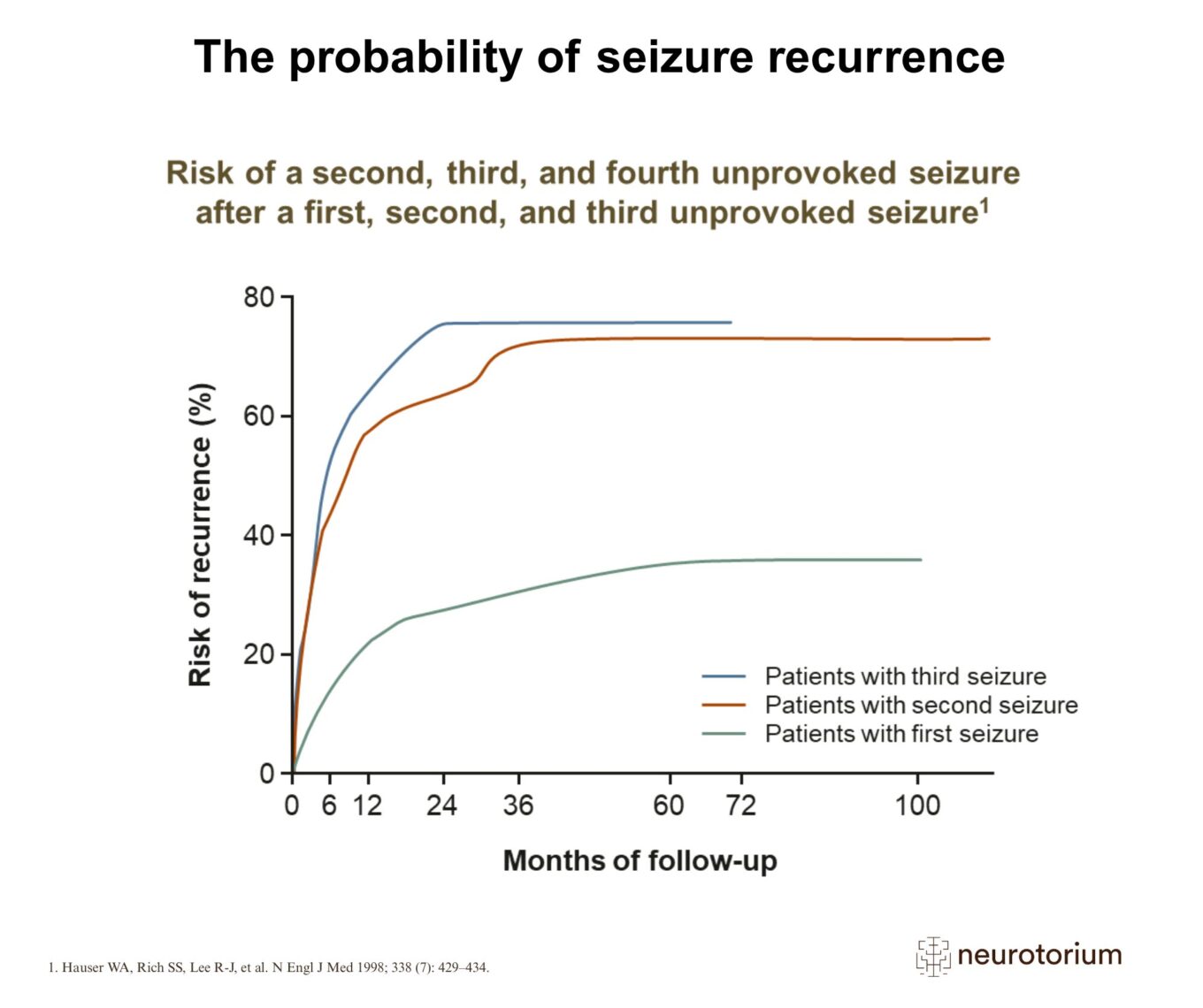
The figure illustrates the probability of seizure recurrence following a first, second, and third unprovoked seizure over long-term follow-up. The study was based on a single-centre surveillance system that was based on hospital admissions, referral for EEG, neurology, or epilepsy clinics for patients who had recently identified seizures.1 Patients were followed up at 6-month intervals for 2 years after the first seizure, and yearly thereafter.1 Of the 204 patients included in the analysis, 63 experienced a second seizure, and 41 a third seizure during the study period.1 In this study of 63 patients who had experienced 2 unprovoked seizures, the risk of a third seizure within 12 months was 57%.
Related content

In this video, Professor Dr. Nathalie Jetté reviews depression as a common yet often under-recognized comorbidity in epilepsy.

In this video, Professor Dr. Gretchen Birbeck examines epilepsy-associated stigma as a global public-health challenge

In this video, Professor Dr. Jacqueline French reviews practical, first-line decision-making for anti-seizure medication selection