

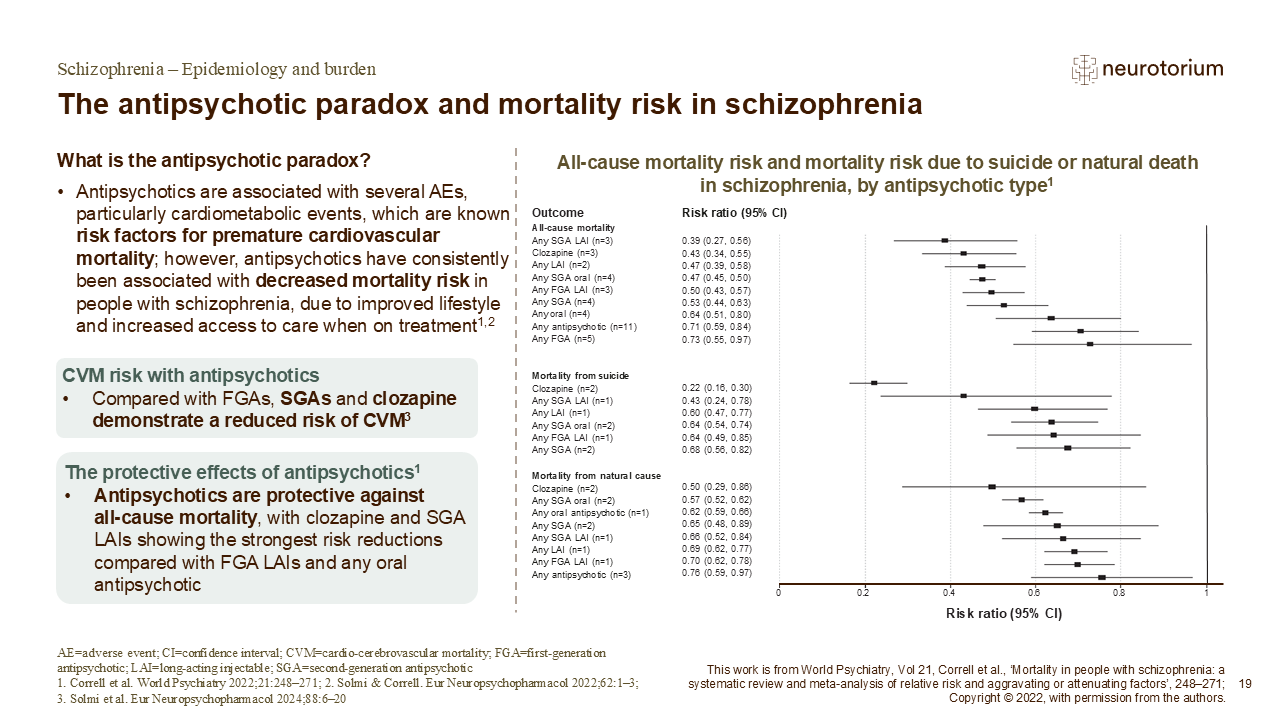
Potential explanations for the “antipsychotic paradox” include antipsychotic-related reductions of stress-linked cortisol levels and inflammation, improved healthy lifestyle behaviours, and a reduction in healthcare disparities between patients with and without schizophrenia.2 Further, antipsychotics are associated with increased adherence to medical and psychiatric care, which may override cardiometabolic risk associated with these treatments.2 This increased access to medical care may allow signs and symptoms to be identified sooner, resulting in timely diagnosis and treatment. In schizophrenia, there is a reduced substance abuse and suicide risk in individuals using antipsychotics vs those who are not.2
Evidence for the protective effects of antipsychotics is not consistently available across regions, with limited data available from South America, Eastern Europe, the Middle East and South-East Asia, highlighting a need for further research in these regions.1,4
References: