

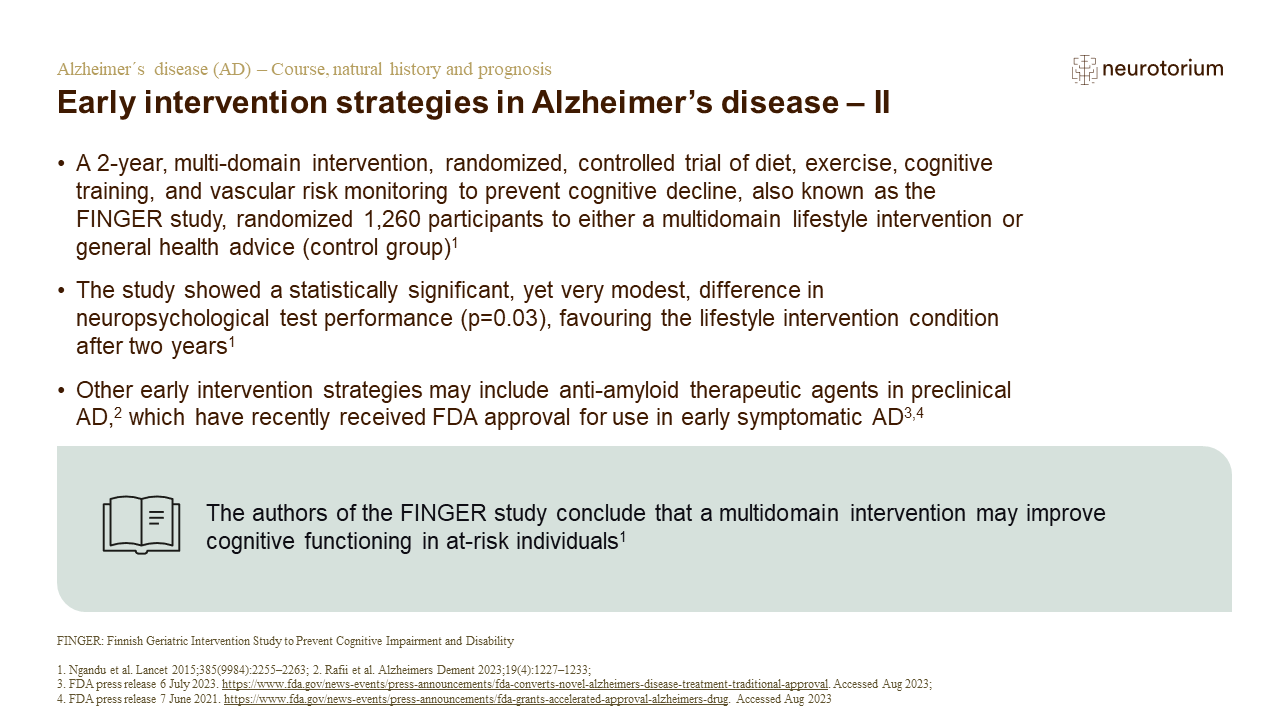
Current strategies to prevent AD include primary prevention strategies which identify risk reduction, and secondary prevention strategies which are based on early detection of pathophysiological hallmarks and preclinical intervention.6 New consensus diagnostic criteria for preclinical AD and identification of at-risk individuals using preclinical biomarkers are important for defining eligible individuals for clinical trials of secondary prevention strategies.6 Several studies are currently ongoing to address this need, and to identify the sufficient trial lengths for delaying cognitive decline, and consequently the onset of symptoms due to AD.6
3.FDA press release 6 July 2023. Available at: https://www.fda.gov/news-events/press-announcements/fda-converts-novel-alzheimers-disease-treatment-traditional-approval. Accessed August 2023.
4.FDA press release 7 June 2021. Available at: https://web.archive.org/web/20210608030558/https://www.fda.gov/news-events/press-announcements/fda-grants-accelerated-approval-alzheimers-drug. Accessed August 2023.
5.Knopman DS, Amieva H, Petersen RC, et al. Alzheimer disease. Nat Rev Dis Primers 2021; 7 (1): 33.