

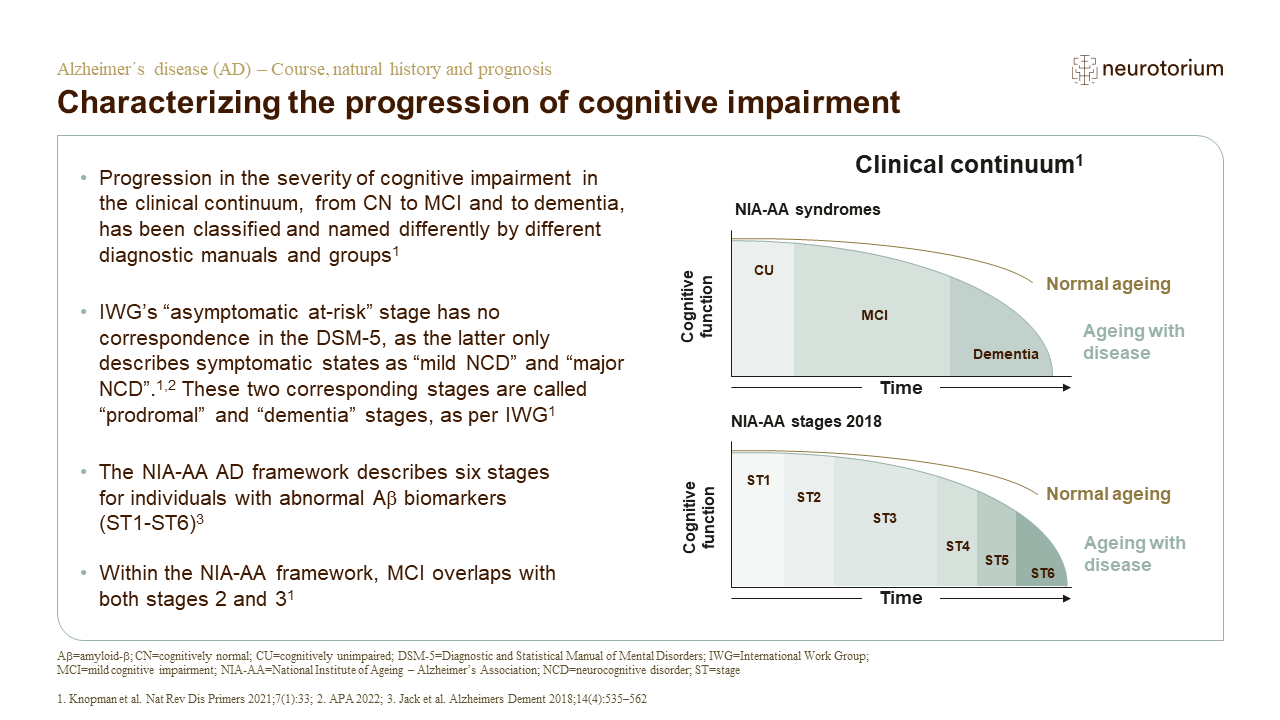
The severity of cognitive impairment in patients with AD varies.1 Clinical diagnosis of cognitive impairment in individuals is important for the overall care of the individual.1 There has been improvement in the level of awareness of dementia in primary care and specialist communities, however increased awareness of the early signs of cognitive impairment within a clinical setting is still needed.1
The diagnostic process is initiated by determination of the presence of cognitive impairment and its severity.1 For a diagnosis, information from an individual familiar with the patient’s daily life, and a cognitive evaluation (mental status evaluation) of the patient by a skilled clinician are required.1 Neuropsychological testing can determine the severity of cognitive impairment in mild or high-functioning individuals, and can identify the cognitive domains which may be involved.1 As a result, this helps the clinician with determining prognosis and understanding the underlying aetiology.1 If cognitive impairment is diagnosed, a provisional determination of aetiology will be made using information from the patient history, the informant, findings of the cognitive evaluation, and other neurological examinations.1
References:
1.Knopman DS, Amieva H, Petersen RC, et al. Alzheimer disease. Nat Rev Dis Primers 2021; 7 (1): 33.