

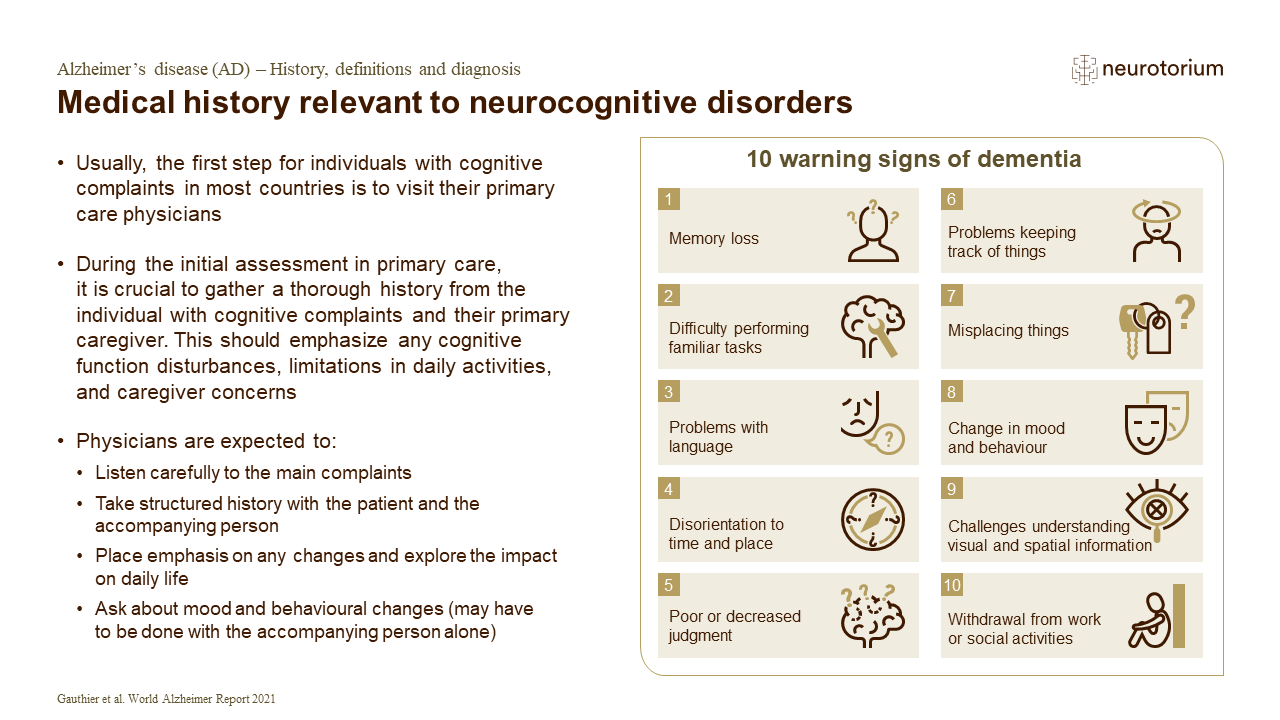
Although the diagnostic journey for an individual with cognitive disturbances may differ around the world, in most countries, the first step involves a visit to the primary care physician.1 In many cases, the primary care physician is supported by a nurse who may record the individuals medical history ahead of the visit, and/or administer some memory screening tests via phone, email, or in person.1 If the individual with cognitive disturbances does not have a primary care physician, it is suggested that they visit a healthcare clinic with multiple primary care physicians or other healthcare professionals who may be able to perform the assessment and diagnosis.1
For an adequate diagnosis, any information about the signs and symptoms of concern from the individual with cognitive disturbance, or from their family and friends, must be shared with the healthcare professional.1 Some available scales can measure general cognitive abilities, allowing a comparison of scores against the scores of an average person in the same age group and level of education as the individual with cognitive disturbances.1 Therefore, healthcare professionals may be able to confirm the presence of cognitive and functional decline.1 However, it is not feasible to provide an accurate diagnosis of dementia and its causes after a single visit based solely on the individuals medical history and basic cognitive testing.1
Reference:
1.Gauthier S, Rosa-Neto P, Morais JA, Webster C. World Alzheimer Report 2021: Journey through the diagnosis of dementia. Available at: https://www.alzint.org/u/World-Alzheimer-Report-2021.pdf. Accessed 15 November 2023.