

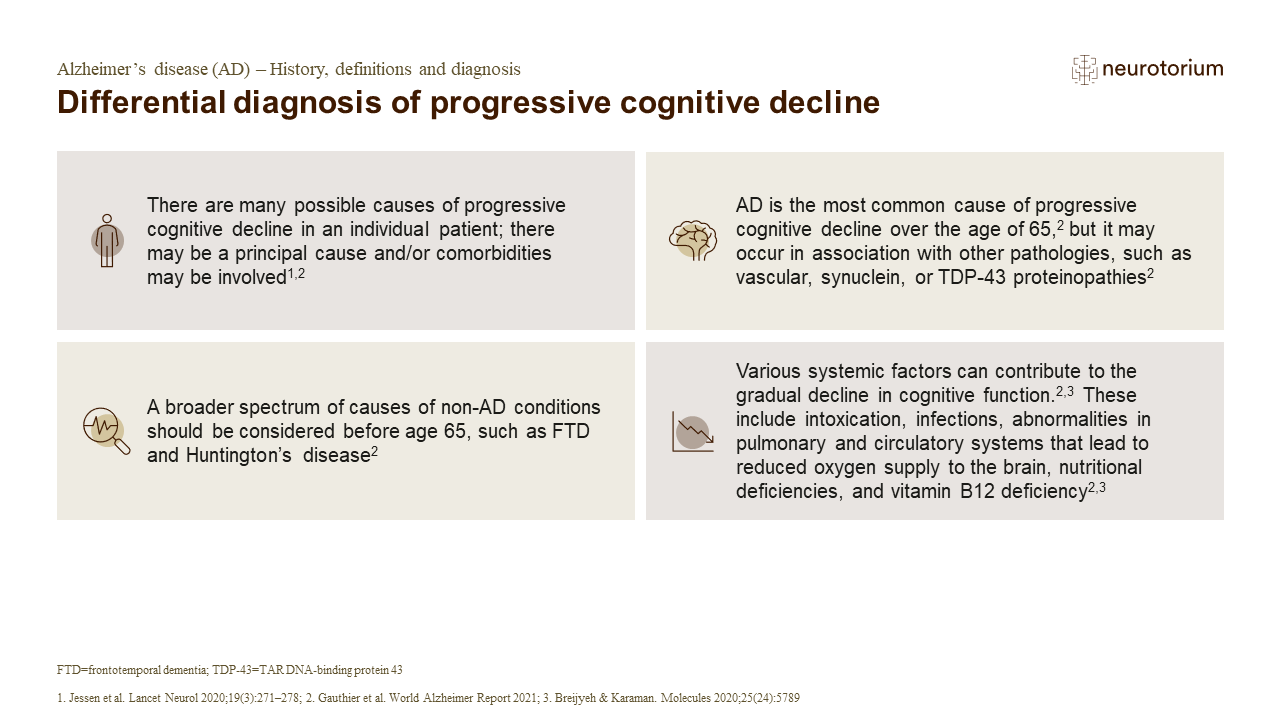
Subjective cognitive decline is a broad condition that can develop over time due to a variety of potential underlying causes.1 Brain diseases and illnesses that may negatively affect cognition include Alzheimer’s disease, Parkinson’s disease, CVD, inflammatory brain disease, and head trauma.1 Additionally, most psychiatric disorders also impact cognition, the most common of which are depression, anxiety, and sleep disorders.1 Other medical conditions that are associated with cognition are metabolic diseases (e.g., diabetes), endocrine diseases (e.g., thyroid dysfunction), heart disease, anaemia, hypertension, liver and kidney diseases, nutritional deficiencies, and infectious diseases.1 There are several other factors that can impact cognition including substance misuse, general drug use, personality traits (e.g., neuroticism), fear of dementia, and somatoform disorders.1 Therefore, to identify the potential cause of subjective cognitive decline in an individual, the cognitive decline should be evaluated by obtaining the following information:1
- Which cognitive domains are affected
- Whether specific worries are associated with the cognitive decline
- When the onset of cognitive decline occurred
- Whether there is an association with any physical or mental condition
- Whether there is an association with the use of medication, alcohol, or other substances
References:
1.Jessen F, Amariglio RE, Buckley RF, et al. The characterisation of subjective cognitive decline. Lancet Neurol 2020; 19 (3): 271–278.
2.Gauthier S, Rosa-Neto P, Morais JA, Webster C. World Alzheimer Report 2021: Journey through the diagnosis of dementia. Available at: https://www.alzint.org/u/World-Alzheimer-Report-2021.pdf. Accessed 15 November 2023.
3.Breijyeh Z, Karaman R. Comprehensive review on Alzheimer’s disease: causes and treatment. Molecules 2020; 25 (24): 5789.