

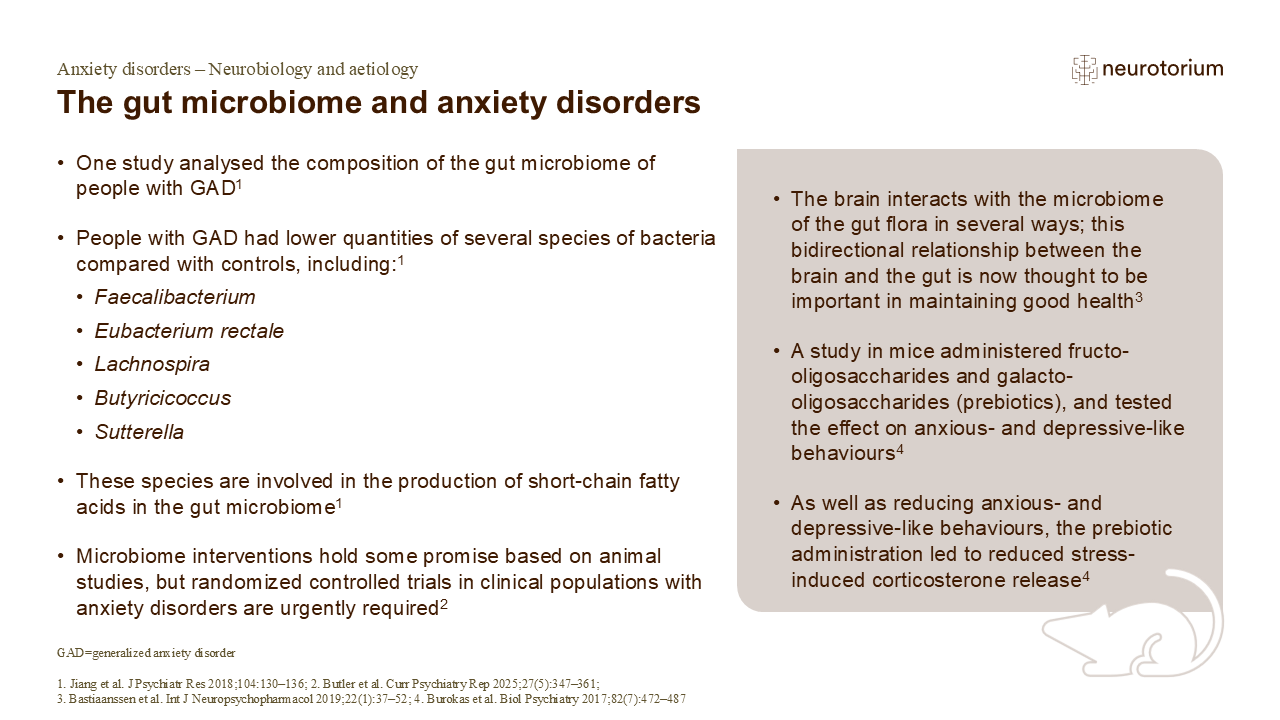
The human body is full of microorganisms that live alongside the human cells, the largest population of these microorganisms is found in the gut, and is referred to as the gut microbiome.3 This complex population of microbes are thought to interact with many bodily functions, such as via the synthesis of metabolites and neurotransmitters, and activation of the vagus nerve.3 The gut microbiome is being increasingly recognized and implicated in the disease processes of many different neuropsychiatric disorders, neurodevelopmental disorders, and as outlined on the slide anxiety disorders.1,3
References:
- Jiang HY, Zhang X, Yu ZH, et al. Altered gut microbiota profile in patients with generalized anxiety disorder. J Psychiatr Res 2018; 104: 130–136.
- Butler MI, Kittel-Schneider S, Wagner-Skacel J, et al. The gut microbiome in anxiety disorders. Curr Psychiatry Rep 2025; 27 (5): 347–361.
- Bastiaanssen TFS, Cowan CSM, Claesson MJ, et al. Making sense of … the microbiome in psychiatry. Int J Neuropsychopharmacol 2019; 22 (1): 37–52.
- Burokas A, Arboleya S, Moloney RD, et al. Targeting the microbiota–gut–brain axis: prebiotics have anxiolytic and antidepressant-like effects and reverse the impact of chronic stress in mice. Biol Psychiatry 2017; 82 (7): 472-487.