

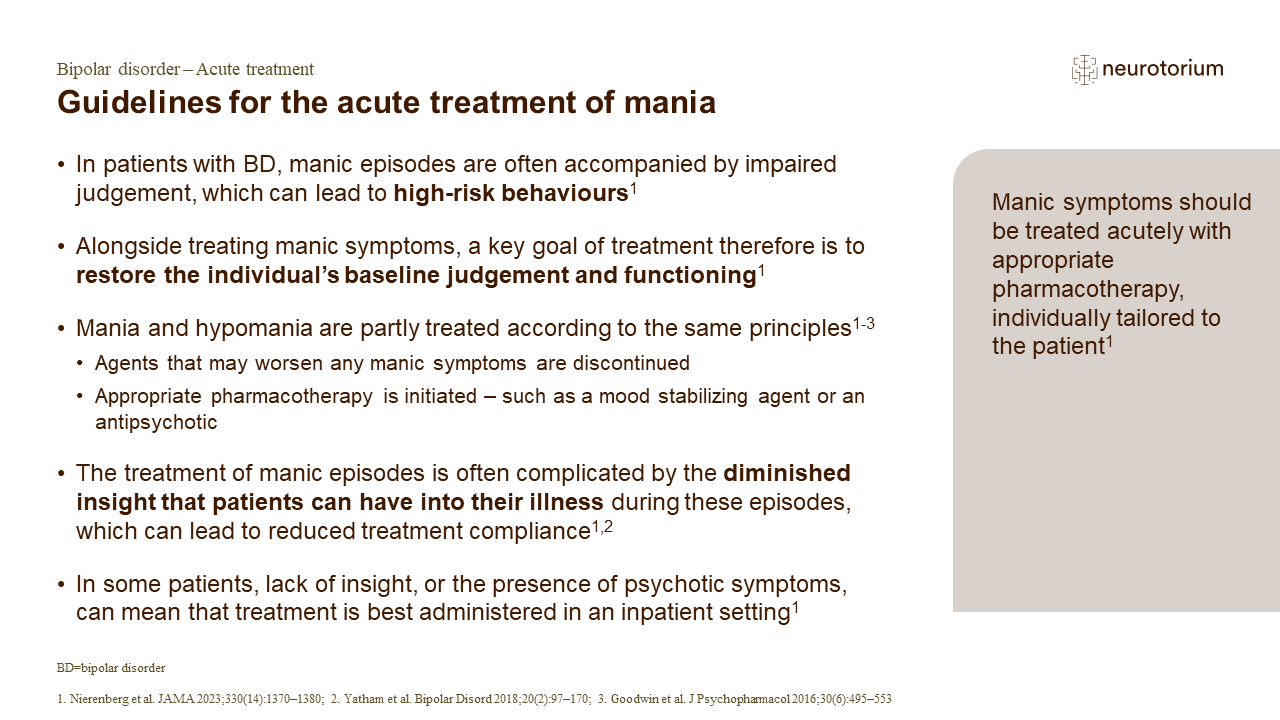
The treatment goals in bipolar disorder are to reduce the intensity of the current mood episode, and to reduce the severity and reoccurrence of subsequent episodes.1 The standard approach to treatment is with mood stabilizing medications, antipsychotics, and psychotherapy – although any therapy should be tailored to the individual, taking into account a patient’s symptoms, their response to any previous medications, and a patient’s preferences for therapy.1
References:
1. Nierenberg AA, Agustini B, Köhler-Forsberg O, et al. Diagnosis and treatment of bipolar disorder: a review. JAMA 2023; 330 (14): 1370–1380.
2. Yatham LN, Kennedy SH, Parikh SV, et al. Canadian Network for Mood and Anxiety Treatments (CANMAT) and International Society for Bipolar Disorders (ISBD) 2018 guidelines for the management of patients with bipolar disorder. Bipolar Disord 2018; 20 (2): 97–170.
3. Goodwin GM, Haddad PM, Ferrier IN, et al. Evidence-based guidelines for treating bipolar disorder: revised third edition recommendations from the British Association for Psychopharmacology. J Psychopharmacol 2016; 30 (6): 495–553.