

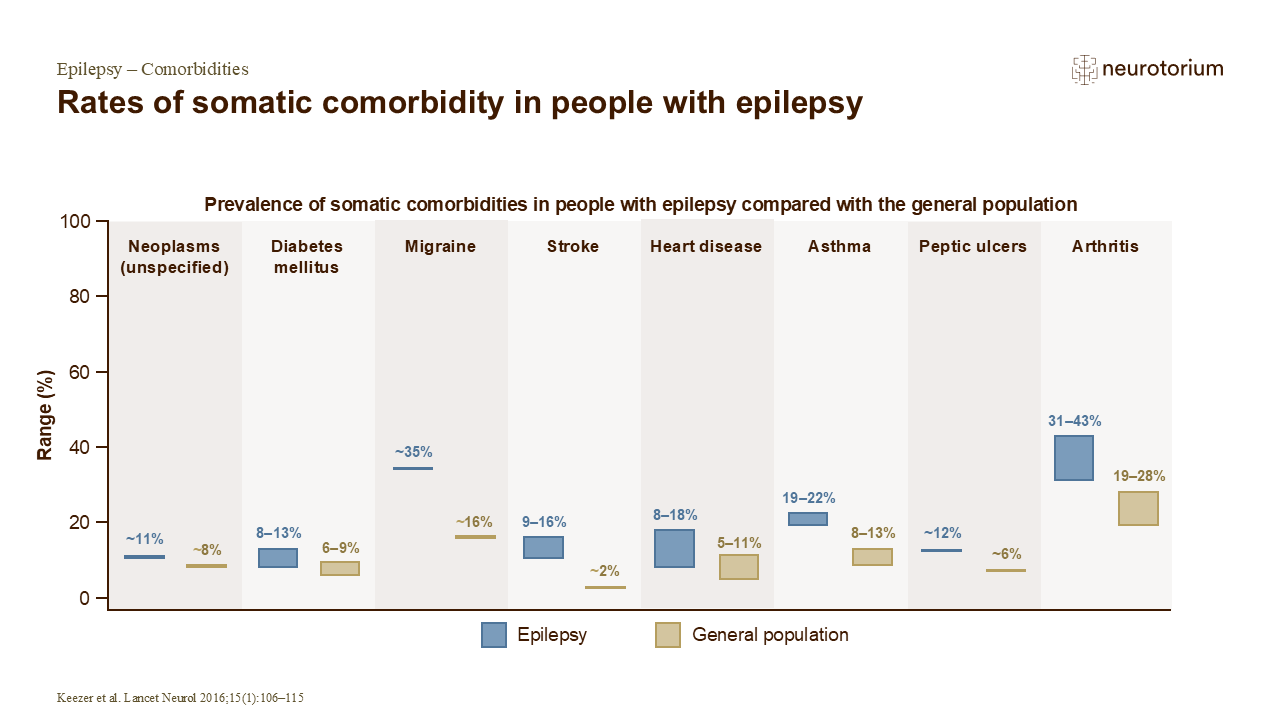
Several large and comprehensive studies have examined the comorbidity burden among people with epilepsy compared with people without epilepsy using population-based cohorts and administrative databases in the UK, Canada and in the US; several physical comorbidities appear to have a consistently higher prevalence among people with epilepsy compared with the general population.1 Apart from the conditions shown on the slide, compared with the general population, people with epilepsy are up to 6 times more likely to get dementia, 8 times more likely to get Alzheimer’s disease, up to ~3 times more likely to get chronic obstructive pulmonary disease, and up to twice more likely to get fibromyalgia.1
Some of the associations between epilepsy and the listed comorbid conditions are not surprising, given their known roles as causative factors of epilepsy (e.g., stroke or Alzheimer’s disease). Arrhythmias might develop due to the effects of antiseizure medication; in addition, shared risk factors (e.g., vascular) could explain the relationship between epilepsy and stroke.1
While the burden of comorbidities in people with epilepsy is higher than in the general population, the distribution of the comorbidities is similar to that of the general population, with brain tumours, asthma and migraine more prevalent in adults under 64 years or age, and cerebrovascular and cardiovascular disease and meningeal tumours more prevalent in people over 64 years of age.1
Reference