

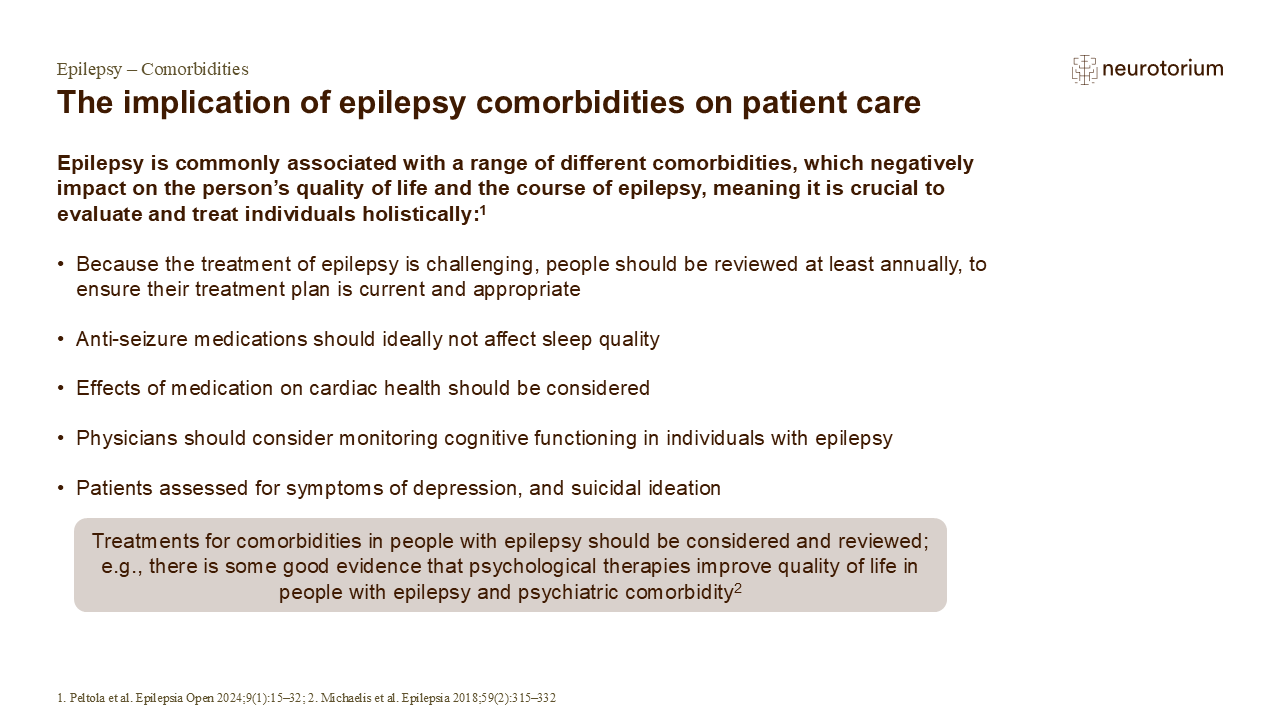
Antiseizure medications (ASMs), treatments for certain comorbidities, and polypharmacy can potentially disrupt sleep.1 Additionally, comorbid hypertension and sleep apnoea are associated with increased risk of sleep disorders.1 Management of sleep disturbances in people with epilepsy therefore needs to take into consideration the adverse effect profile of medications, the specific type of sleep issues, age, risks associated with add-on therapy, and preferences.1
ASMs with sodium channel blocking activity can potentially induce life-threatening cardiac arrhythmias, and high doses of these agents should therefore be avoided.1 Enzyme-inducing ASMs (e.g., carbamazepine, phenytoin) can have detrimental effects on the lipid profile, which in turn may accelerate the development of atherosclerosis, and it is recommended that these should be avoided in individuals at increased cardiovascular risk.1
Some ASMs are known to impact cognitive function, and it is recommended that topiramate and zonisamide should be avoided if this is a concern.1 ASM polytherapy is also discouraged as the risk for deficits in cognitive function increases with each additional ASM.1 Cognitive function should be evaluated with periodic longitudinal assessments as early detection permits prompt treatment and reduces the impact on cognitive and educational development.1
An expert consensus recommends that depression should be managed with an antidepressant (selective serotonin reuptake inhibitor) and also non-pharmacological therapy, e.g., psychotherapy.1 In the case of non-response to treatment, adherence should be assessed prior to switching to an alternative antidepressant, or augmentation.1 It has been demonstrated that SSRIs are not associated with increased rates of seizures.1
References: