

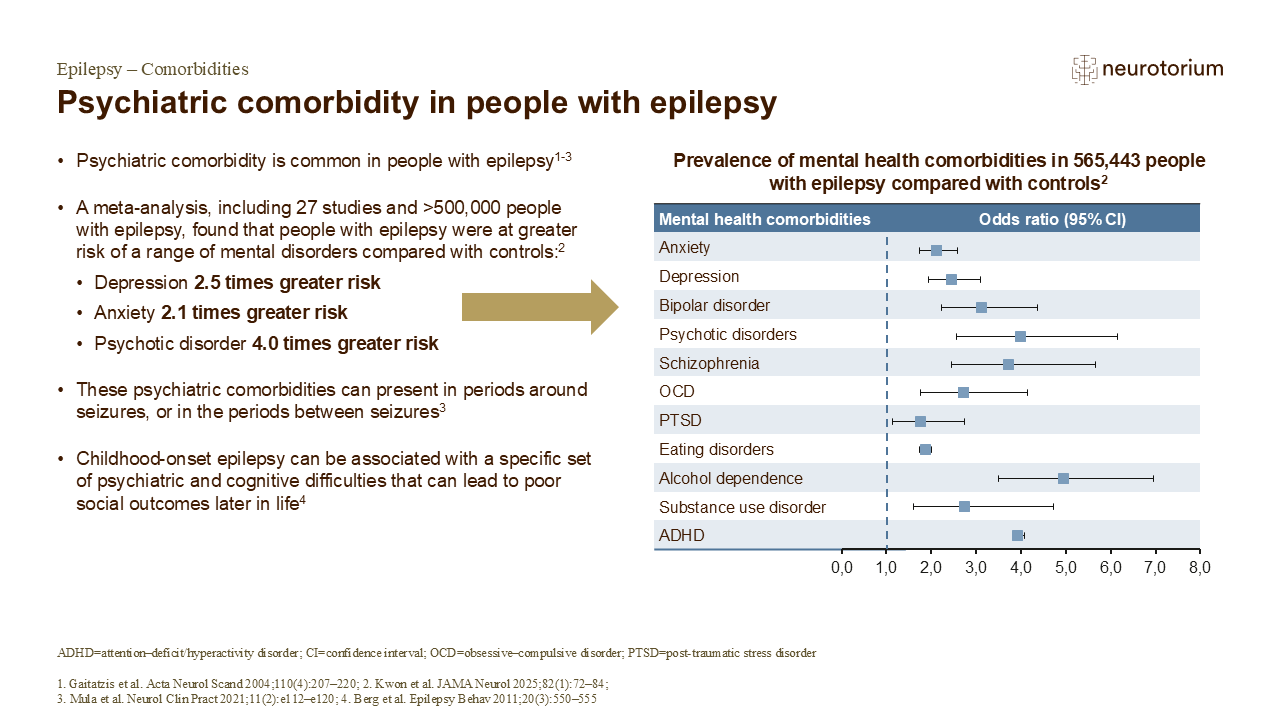
Given the significant impact of psychiatric comorbidities on patients’ overall morbidity burden and their general quality of life, appropriate identification and treatment of any psychiatric comorbidities in people with epilepsy is crucial for effective treatment.2 Moreover, in the meta-analysis by Kwon et al. summarized on the slide, the authors were careful to emphasize that many patients with epilepsy will have multiple comorbid psychiatric disorders, potentially putting them at risk for additional, more severe psychiatric complications, or other adverse outcomes (e.g., cognitive problems, suicidality).2,3 As such, routine screening for psychiatric comorbidities with reliable and validated tools is recommended by multiple epilepsy treatment guidelines,2 and people with epilepsy and any psychiatric comorbidity should receive a comprehensive individualized treatment plan, developed in cooperation with a multidisciplinary team of neurologists, psychiatrists, clinical psychologists and social workers to ensure the best treatment outcomes.3
References: